
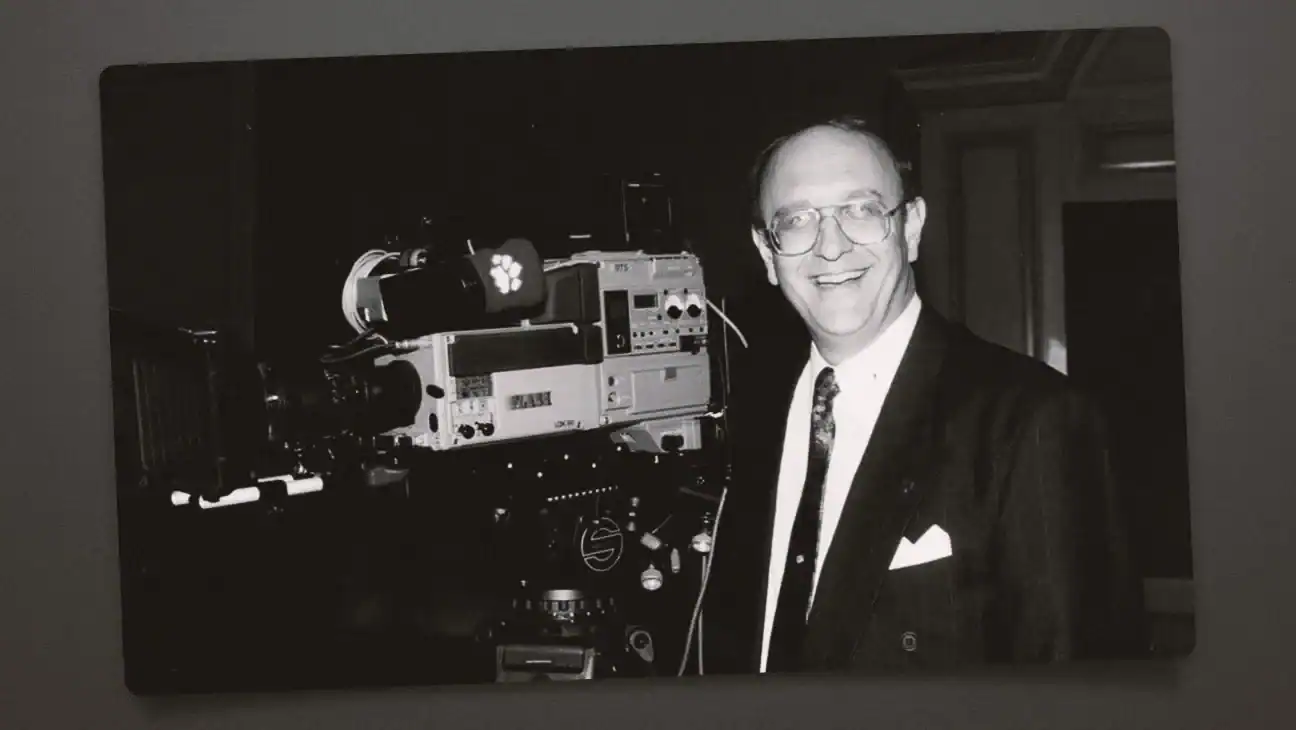
Joe Epperson
Joe Epperson, Camera Operator on ‘The Tonight Show’ and ‘Full House,’ Dies at 80. The three-time Emmy nominee also worked on ‘All in the Family,’ ‘The Jeffersons,’ ‘The Pee-wee Herman Show’ and music projects featuring Liza Minnelli, Glen Campbell and Whitney Houston. Read the full story.

Owen T. Marsh
One of three kids, Owen T. Marsh was born at Hollywood Presbyterian Hospital on May 29, 1930. His family had deep roots in show business.
His mother, Elizabeth, was a violinist who played mood music on movie sets during the silent era. One of his aunts, Mae Marsh, worked for D.W. Griffith in New Jersey and came west to star in the director’s Birth of a Nation (1915); another aunt, Margaret Loveridge, acted in many silent movies as well; and a third, Frances Marsh, was a Hollywood film editor who collaborated with her brother Ollie on Ernst Lubitsch’s The Merry Widow (1934).
Meanwhile, his older brother, Warne Marsh, would become a noted tenor jazz saxophonist.
Marsh’s father shared an honorary Oscar for color cinematography on Sweethearts (1938) and shot other MGM films like A Tale of Two Cities (1935), The Great Ziegfeld (1936), After the Thin Man (1936), and Broadway Melody of 1940 before he died at age 49 in 1941 of a cerebral hemorrhage. He was stricken inside the studio cafeteria.
After his stint in San Francisco, Marsh appeared in another MacDonald-starring film that his father photographed, The Girl of the Golden West (1938). He then attended North Hollywood High School and UCLA before serving with the U.S. Army in the Korean War through 1952.
Marsh worked at Technicolor Laboratories and other Hollywood labs before starting out in the MGM matte department, where visual artists took paintings and transformed them into film.
His credits as a camera operator also included the films Papillon (1973), Alice Doesn’t Live Here Anymore (1974), The Towering Inferno (1974), Uptown Saturday Night (1974), King Kong (1976), and Little Nikita (1988) and such TV shows as The Brady Bunch, The Rookies, Switch, Dallas, Hart to Hart, Dynasty, Murder, She Wrote, and Beauty and the Beast.
In addition to his daughter, survivors include his high school sweetheart and wife of 70 years, Evelyn; son Scot; grandchildren Aram and Yara; and great-grandchildren Omar, Lucia, and Vera.
Marsh retired in 1990 and a year later self-published a humorous memoir, Parking Lots I’ve Eaten In, that lots of people enjoyed.
“If you give a camera operator a camera, he becomes the person represented by the lens,” he wrote. “His moves and thoughts are now those of the character in the story. When you can capture this on film, not just what the camera sees but the feeling that’s behind it — and transfer that [feeling] to an audience — then you have become a professional and are no longer just a person capturing what’s in front of you.”
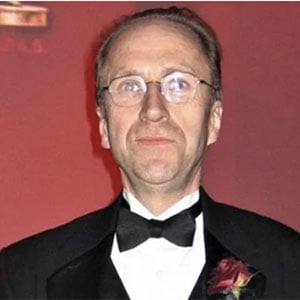
Jean-Marie Lavalou
Jean-Marie Lavalou, the Frenchman who co-created the Louma Crane, the first remote-controlled camera system used in the motion picture industry, died on July 15 in Paris.
It was during his national service in the French Navy film department that Jean-Marie met his inventor partner, Alain Masseron. Together, they created never-before-seen camera movements while making a film inside a submarine by attaching the camera to the end of a wooden pole and tracking through the narrow vessel. The young inventors then brought their device to the camera rental house SamAlga Cinema in Paris. Upon seeing its potential, chief engineer Albert Vigier quickly introduced them to David Samuelson of Samuelson Film Service in London. With the combined teams of engineers and the eureka moment of combining the device with the in-development video assist system that Joe Dunton was working on at Samuelsons, the first remote head for motion picture filmmaking was born.
The story of the Louma Crane is well documented and it was the passionate (some would say obsessive) Lavalou who brought together the many talented engineers who made his and Masseron’s vision possible. He lived his dream of working with the likes of Roman Polanski and Steven Spielberg, and he was forever in awe of Directors and Directors of Photography, striving to create new equipment for them to use on set. Receiving the Academy Award of Merit in 2005 with his co-inventors was most assuredly a career highlight for Lavalou. In later years, he was also responsible (alongside the development of the Louma 2 telescopic crane) for bringing the Spydercam system to France when he designed the stadium roof fittings and pulleys on which the wires are attached.
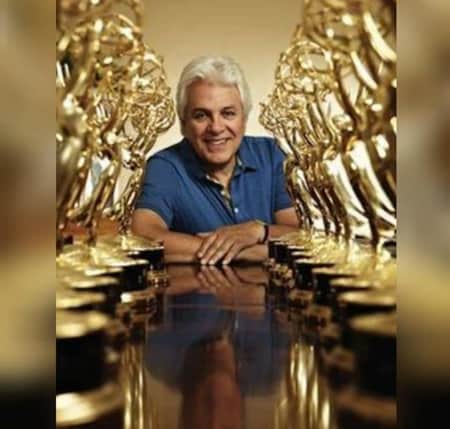
Hector Ramirez
Hector Ramirez passed away January 11, 2023 after losing his battle with cancer. Mr. Ramirez received the Lifetime Achievement Awards in 2019 for Camera Operator, Live & Non-scripted.
Hector’s television career began in 1968 at KLXA channel 40, a Spanish station and then KTLA where he first became aware of the SOC. After about a year he worked with independent producers and did a brief stay at ABC. In 1973 he landed a job at CBS Television City. During the 8 years at CBS, he had developed relationships with various directors like Dwight Hemion, Walter Miller, Louis J Horvitz and producers like Marty Pasetta and Pierre Cossette who began seeking him out to work for them in the freelance arena.
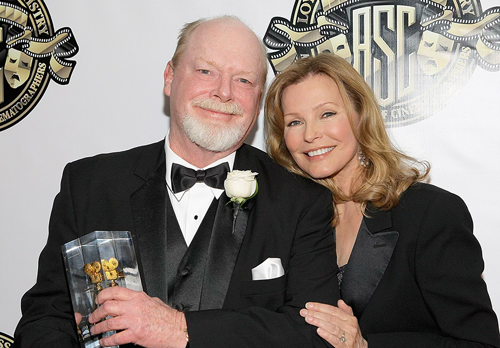
Richard M. Rawlings Jr.
Richard M. Rawlings Jr., the four-time Emmy-nominated cinematographer who divvied up third-season episodes of Charlie’s Angels with his father and shot other shows like Matt Houston, L.A. Law, Boston Public and Desperate Housewives, has died. He was 82.
Rawlings Jr. died June 30 in Flagstaff, Arizona, his family announced.
His father, Richard L. Rawlings, was a two-time Emmy-nominated cinematographer, and their careers overlapped in 1978-79 on ABC’s Charlie’s Angels, with each of them handling half of the 22 episodes that season.
When his dad left the series, drafted by producer Aaron Spelling to serve as the main D.P on the new primetime soap Dynasty, Rawlings Jr. continued with Charlie’s Angels for its final two seasons through June 1981.
In February 2014, he received the Television Career Achievement Award from the American Society of Cinematographers, and Charlie’s Angels star Cheryl Ladd was on hand for the occasion. “This talented man worked his ass off for years to make me look good,” she said.
Richard Maxwell Rawlings Jr. was born in Hollywood on Oct. 9, 1943. His father shot Don Siegel’s neo-noir classic The Killers (1964) but worked mostly in television, shooting multiple episodes of such shows as Highway Patrol, Home Run Derby, Bat Masterson, Sea Hunt, Gilligan’s Island, The Wild Wild West, The Doris Day Show, Kung Fu and the Kate Jackson-starring Scarecrow and Mrs. King.
Rawlings Jr. was raised in North Hollywood and spent many summers as a teenager at Culver Academies in Culver, Indiana, before graduating from Ulysses S. Grant High School in 1961.
He started out a year later as a messenger at Warner Bros. and soon was working for his dad as an assistant camera operator on Gilligan’s Island and The Doris Day Show. Those gigs, he told the ASC, were “the most important in my career. In his own patient way, [his father] passed to me his great knowledge of lighting and composition.” (He was known as “Junior” to many in the industry.)
The younger Rawlings continued as an operator on shows including The Blue Knight, The Waltons and Eight Is Enough. When he made his cinematographer debut on the seventh episode of Charlie’s Angels, which aired on Nov. 1, 1978, he had just turned 35 and is thought to have been one of the youngest D.P.s in Hollywood history.
(Rawlings Sr. had started work on the Spelling show by shooting all 24 episodes of season two. His son did 52 episodes, so for those keeping score, the pair shot 87 of the series’ 109 installments.)
Rawlings Jr. then segued to two other Spelling-produced shows at ABC, the Robert Stack-starring Strike Force for its lone 1981-82 season and the Lee Horsley-starring Matt Houston for three seasons, from 1982-85.
He received his Emmy noms in 1988 for his work on the ABC police procedural Ohara, starring Pat Morita; in 1989 for Paradise, the CBS Western starring Horsley; in 1993 for the NBC cop drama Reasonable Doubts, starring Mark Harmon and Marlee Matlin; and in 1995 for Big Dreams & Broken Hearts: The Dottie West Story, a CBS telefilm starring Michele Lee as the country singer.
He also spent a season (1993-94) on NBC’s L.A. Law, parts of three seasons (2000-04) on ABC’s Boston Public and parts of two seasons (2005-07) on ABC’s Desperate Housewives and shot episodes of Stingray, Square Pegs, Chicago Hope and Gilmore Girls as well.
Survivors include his daughter, Kami; his son, Matt; his grandsons, Chase and Wyatt; and his sisters, Carole and Colleen. His wife, Diane, whom he married in 1967, died in 2003.
Photo: Cinematographer Richard M. Rawlings Jr. and actress Cheryl Ladd at the ASC Awards in February 2014. Mike Windle/Getty Images

John Bailey
The SOC mourns the loss of John Bailey, the legendary cinematographer of 86 films including American Gigolo, The Big Chill, In the Line of Fire and Groundhog Day. John will be remembered for his boundless passion for art in all its forms and his encyclopedic knowledge of cinema. He was a respected member of both the ASC and the Academy of Motion Picture Arts & Sciences, being the only cinematographer ever to serve as Academy President. The SOC honored John with both a Governors’ and a President’s Award, acknowledging a lifetime of devotion to filmmaking and five decades of generous collaboration with his camera operators.
As President I must disclose that John’s passing is profoundly personal for me. We made 16 movies together over 27 years. He was a friend, a mentor and father figure. Every time I moved up it was John who took the chance on me. He taught us all so much, myself included, not the least of which was the duty we all have to ensure knowledge is passed from generation to generation.
In that very spirit, the SOC continues its work and our thoughts are with John’s wife, the legendary editor Carol Littleton.
Sincerely,
Matthew Moriarty, SOC President
Photo credit: Betty Baston
Dale Myrand, SOC
My dear friend Dale, a tribute
I write this with great sadness over the sudden loss our colleague Dale Myrand, SOC. He was 64.
Through it all, it gives me great comfort knowing how Dale touched so many of us.
I was very fortunate to have Dale in my life for over thirty years.
We shared a great and LASTING friendship.
Dale had the most amazing spirit. He was always so comforting to talk with.
And that infectious laugh that would let you know if he was enjoying the conversation. Or not.
He had a heart that completely cared.
His talent as an operator, and the love of filmmaking were his passion.
Dale was instrumental in contributing to the success of the SOC Awards.
He took upon himself to do whatever was necessary. And delivered.
That was completely Dale.
My admiration and respect for his devotion to his lovely wife Kim, and the loyalty he showed to all his family and friends. And the immense pride he had in the SOC.
He always offered the best of himself.
He was always authentic and one of kind.
A beautiful soul.
His invaluable and truthful advice, that I will truly miss.
A life like Dale’s filled with love and passion is an inspiration to us all.
In loving memory always,
George
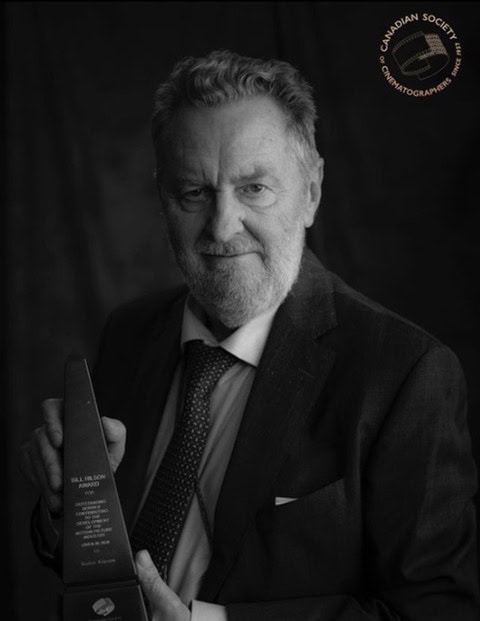
Walter Klassen
July 09th, 1947 – May 24th, 2025.
Walter passed away peacefully in his rooftop garden at age 77, surrounded by nature and the view of the city he loved. Proud father of Jennifer (Mark), and adoring grandfather to Benjamin, Andrea, and James. Brother to Henry and uncle to Aaron and his children Cylus and Bronson. Friend, mentor, co-creator, and “materializer” to the many people he touched throughout his life.
Walter was born near Curitiba Brazil in a small Mennonite community and moved to Kitchener Ontario at age 7 with his parents Reinholt and Katherine and his brother. While studying Mechanical Engineering Technology at Ryerson he met his future wife Lorna. After graduation they moved to Europe living the life of artizan hippies for 5 formative years before returning to Toronto in 1977 after Jennifer was born. While in Europe he fine tuned his creative skills working with leather which he turned into his first business in Toronto, Asylum Leather on Queen St East.
In 1988 he started Walter Klassen FX and ventured into the film and television industry. His original focus was animatronics, but his passion for invention took him and the Klassen team into all areas of props making. He also connected with the Steadicam community which led to the creation of the back mount Steadicam vest. The “studio” became his chosen family and a space for so many people to nurture their creative sides. He built a place where people learned to conquer what feels impossible and grow from every experience. Walter’s passion and drive is the heart of Walter Klassen FX and the team that carries on that legacy.
After he retired he took on his final and most poignant project through Materializer Inc., to make a film project about his life and his visions called The Colourblind Hippie. This project allowed him to connect and work with many of the friends he’d met through the industry and encapsulate a piece of himself and his essence in a film. Working on this film brought him joy, fulfillment and a sense of peace to reflect on a most incredible life well lived.
In lieu of flowers please consider donating to Indigenous Arts Collective or an Indigenous run charity of your choice.
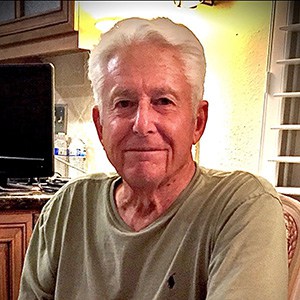
Chris Schwiebert
Chris Schwiebert was born on April 24, 1934 in Los Angeles, California. He is known for Starman (1984), Over the Top (1987) and Christine (1983). He died on August 13, 2022 in San Diego, California, USA. https://www.imdb.com/name/nm0777940
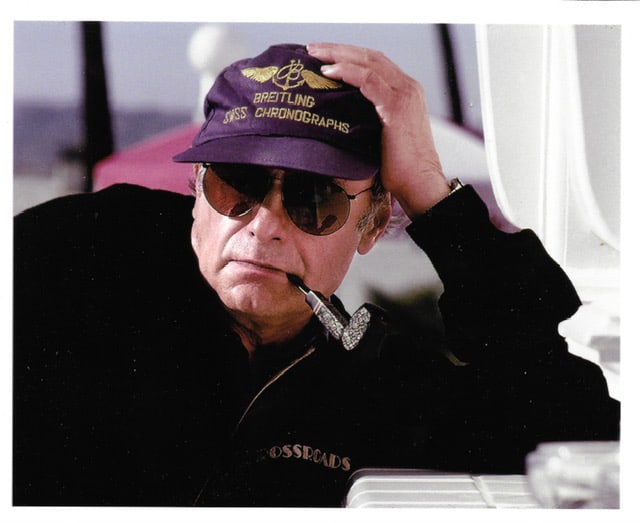
Lou Barlia
Motion picture cameraman Lou Barlia, who was behind the camera on many well-known films from the 1970s through the late 1990s, died at the age of 92 on June 25th, 2022, after a brief battle with mesothelioma cancer. His two sons were with him at his home in Las Vegas when he passed.
Born and raised in New York, Barlia’s career in photography began in his early teens when his father brought home a camera that he had found on the train tracks in the city. Thus began Lou’s lifelong passion for photography and cameras that never ended.
Starting with work at a photo studio during and after his high school years (the School of Industrial Arts in New York) Barlia was later drafted into the army and served as a combat cameraman during the Korean War (for which he received the Bronze Star, and other citations, for his service).
Barlia’s work in film continued in the 1950s and 1960s with commercials, documentaries, and TV shows, eventually leading into feature films starting in the 1970s. From that point until his retirement in 2000 Barlia was behind the camera on many popular movies (Love Story, Superman, Slap Shot, Jaws, The Big Chill, The Accidental Tourist, Silverado, to name a few). https://www.imdb.com/name/nm0055181/
In recognition of his work, Barlia received a lifetime achievement award from the Society of Operating Cameramen (SOC) in 2000.
Up until very recently Lou had been an active, independent, youthful and sharp minded retiree who never lost his interest in photography, cameras, cars, flying (licensed and instrument rated), fitness, and all kinds of technical gadgetry. Above all was his love for his family.
Lou was preceded in death by his ex-wife Betty, with whom he reconciled before her passing, as well as his beloved sisters Lilly Mogel, Anne Meranchick, and Lorraine Grunor.
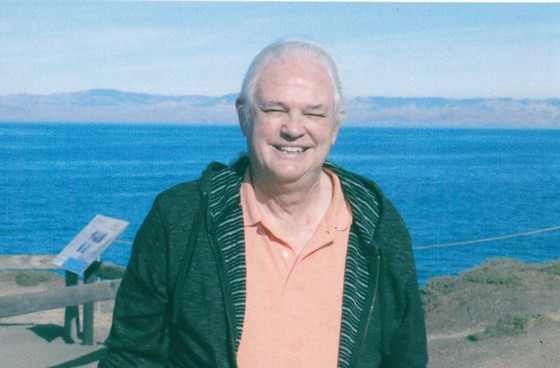
Jay Nefcy
Jay Nefcy, 74, passed peacefully on December 8, 2022, in Florence, Ore., surrounded by family. Jay was a beloved husband, father, and grandfather. He was always filled with love and joy, happy to talk to anyone. Jay was a longtime Hollywood camera operator and a local IATSE 600 SOC member. He is survived by his wife of 39 years, Denise, his children Daron and Dillon, his son-in-law Bobby and his grandson Griffin. Jay grew up in Detroit, MI. One of 14 kids in a family filled with love. He had a fulfilling retirement in Florence, enjoying his hobbies of guitar playing, photography and his love of the beauty of nature. He will be greatly missed.
