
One Battle After Another
Battle-Ready Operating
A Conversation with Colin Anderson, SOC & Sergius Nafa
By David Daut
As members of the radical revolutionary group, the French 75, Pat Calhoun and Perfidia Beverly Hills are no strangers to danger. Raiding immigrant detention centers, robbing banks, and planting bombs is all in a day’s work. But after Col. Steven J. Lockjaw develops a fetishistic fascination with Perfidia during a French 75 raid he begins relentlessly pursuing the group, ultimately capturing Perfidia and forcing Pat and his newborn daughter into hiding. Sixteen years later, Pat—now living under the alias Bob Ferguson—has put his revolutionary days behind him to focus on raising his daughter, Willa. Unfortunately the past catches up with him as Lockjaw returns, intent on capturing Willa with a full battalion of United States immigration officers at his disposal. One Battle After Another is written and directed by Paul Thomas Anderson and stars Leonardo DiCaprio, Sean Penn, Benicio del Toro, Regina Hall, Teyana Taylor, and Chase Infiniti.
One Battle After Another is Paul Thomas Anderson’s tenth feature film, and it also represents the largest canvas he’s yet worked on. With a reported budget over $130 million, Anderson has crafted an epic about what it takes to fight against oppression and the way that struggle becomes a relay race that spans generations. Yet even given its weighty subject matter, the film still manages to feel breezy and fun, never for a moment overstaying its welcome even with a 160-minute run time.
To find out what went into crafting this film—from its large-scale set pieces to the unusual film format—Camera Operator reached out to Paul Thomas Anderson’s longtime collaborator, camera and Steadicam operator Colin Anderson, SOC, as well as 1st AC Sergius Nafa.
Speaking to this long running creative partnership, Anderson muses, “When shooting with Paul, every now and then I have to take a moment to pinch myself as a reminder of how fortunate I am to be working with one of the all-time great American directors.” One Battle After Another is the sixth feature film Anderson has worked on with Paul Thomas Anderson, following Licorice Pizza, Phantom Thread, Inherent Vice, The Master, and There Will Be Blood.
“I have never allowed myself to take it for granted, especially as Paul has allowed me to express my thoughts and ideas in a truly collaborative way. When I first met Paul on There Will Be Blood, it was definitely a case of following direction, but over the years I feel that a level of trust and understanding has developed between us. I am comfortable speaking up if I feel I have something to contribute. Sometimes Paul will go with what I’ve suggested, and sometimes he’ll say that he’d rather stick to his original thought, but what is so gratifying is that Paul will always listen.
“Being my sixth collaboration with Paul, one thing I have come to understand and admire is that very seldom will we do anything that is standard or conventional. Paul’s fingerprints are literally on every frame of the film and he is absolutely fearless. He trusts his actors and the core crew around him, and everyone fully understands—and appreciates—that we are making a significant film.”
Underscoring that penchant for the unconventional, One Battle After Another is shot on VistaVision, a competing format to the more widely adopted CinemaScope that quickly fell out of fashion and ceased being used by the early 1960s. VistaVision utilizes 35mm film stock, but with frames oriented horizontally rather than vertically, allowing for more resolution to be captured in a single frame than typical 35mm film.
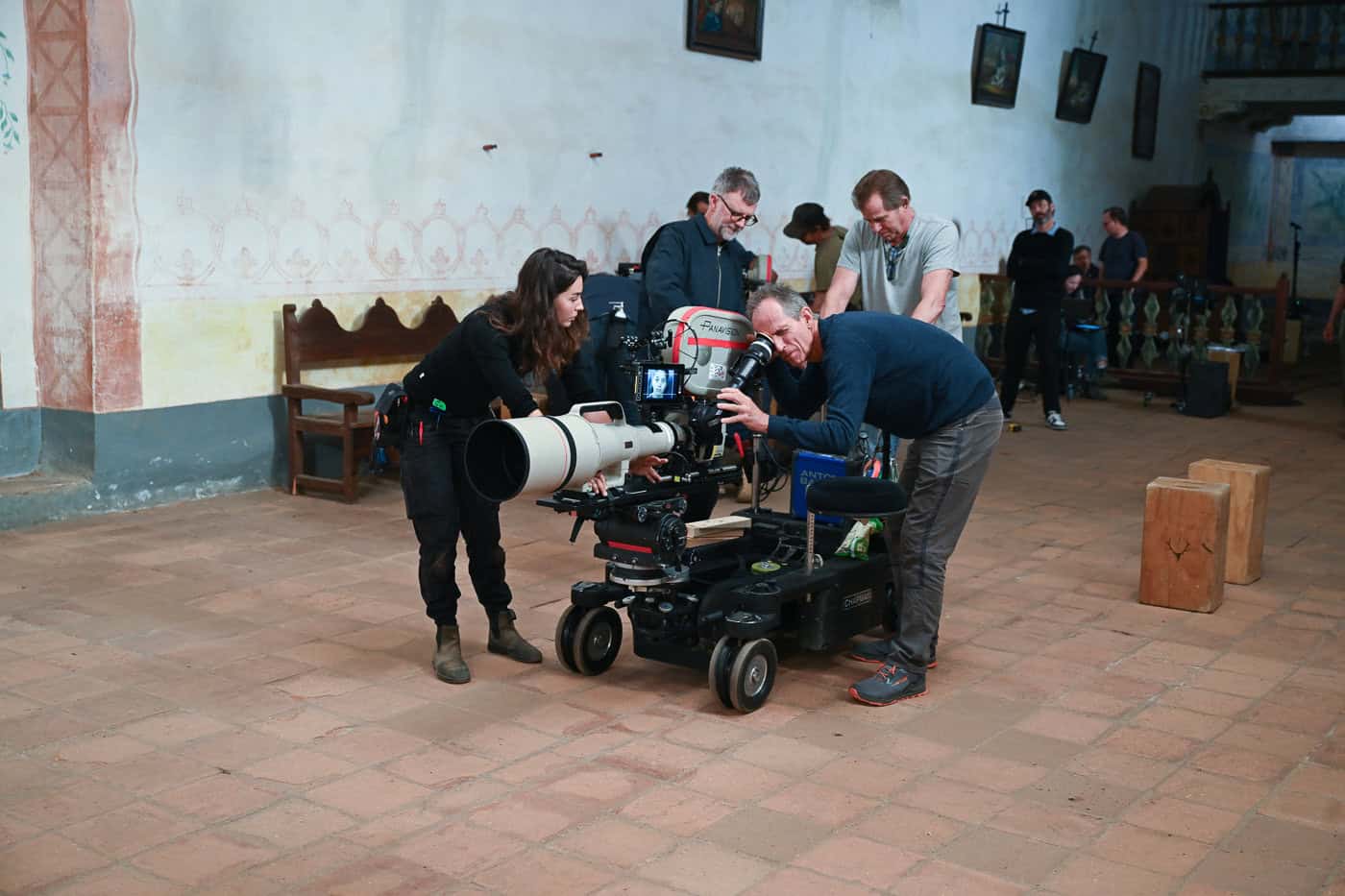
“We settled on three bodies,” Anderson recalls. “Giovanni Ribisi’s lovingly restored Beaucam became our A camera, with two additional camera bodies supplied by the Geo Film Group. Sergius Nafa spent months at Panavision getting them all battle–ready.”
Expounding on the nature of these cameras, Nafa adds, “We had very old cameras from various sources that were never intended to shoot a full length narrative, so it was a career challenge to get them working to a uniform and modern standard. Geo Film Group and Panavision collectively worked tirelessly to deal with power supply issues, fabricating parts to allow modern peripherals to function, and, of course, an upgrade from the standard 400-foot mag to the 1,000-foot. Thankfully, Ribisi’s Beaucam had a great starting template from which to build, and Geo had some fine options for Steadicam and handheld.”
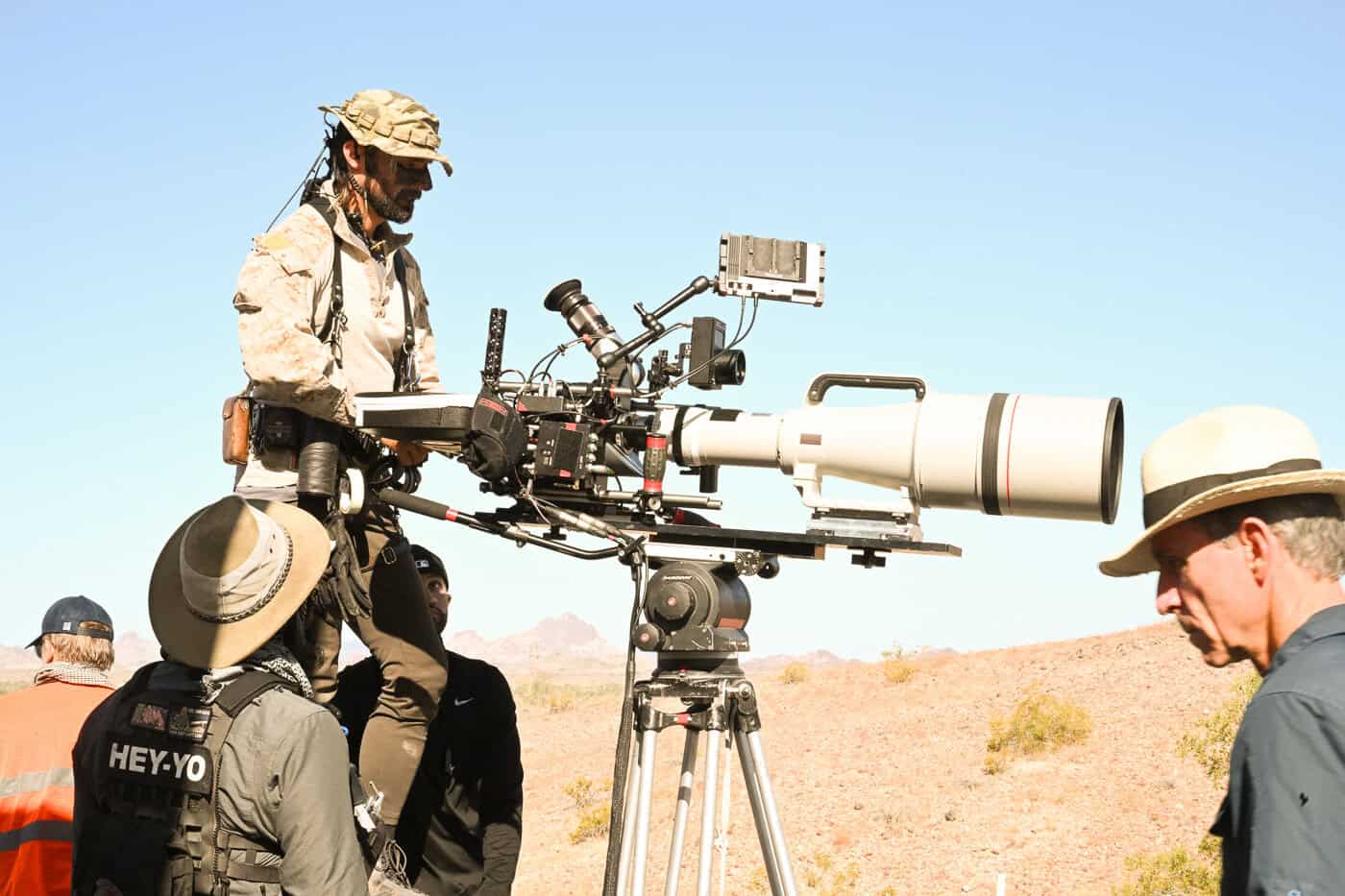
Anderson chimes in, “Even though Serge performed miracles, we still had issues with video taps, voltage, and trying to run 1,000-foot mags without them jamming at 800 feet because of the load. Looking through the eyepiece was also a challenge for me as the eyepiece is mounted on top of the camera with the horizontally mounted magazine underneath it. As a result, almost every shot that was above waist height required standing on a ladder—or a platform on the dolly—to be able to look down into the eyepiece. Complex dolly moves became an exercise in contortion and seemingly simple 180-degree pans presented a real challenge.
“Steadicam also offered up a unique challenge because of the horizontally mounted magazine. As the film runs through the camera, there is a huge weight redistribution taking place from right to left, which then has to be counteracted by mounting a traveling weight synchronized to the motor traveling left to right in order for the Steadicam to remain balanced to a certain degree. We had discovered this traveling weight device years ago when we used it on Anima—also shot on VistaVision using Steadicam—and we managed to track it down again for One Battle After Another. I believe Garrett Brown had used it on Steadicam in 1983 for the speeder bike sequence through the trees in Return of the Jedi, and that is perhaps when it was designed. Paul is known for doing extended takes and a lot of them are on Steadicam, so this became a vital piece of equipment, along with a more contemporary piece by Tiffin called the Steadicam Volt System, which replaces the regular gimbal on the Steadicam and introduces roll stabilization.”

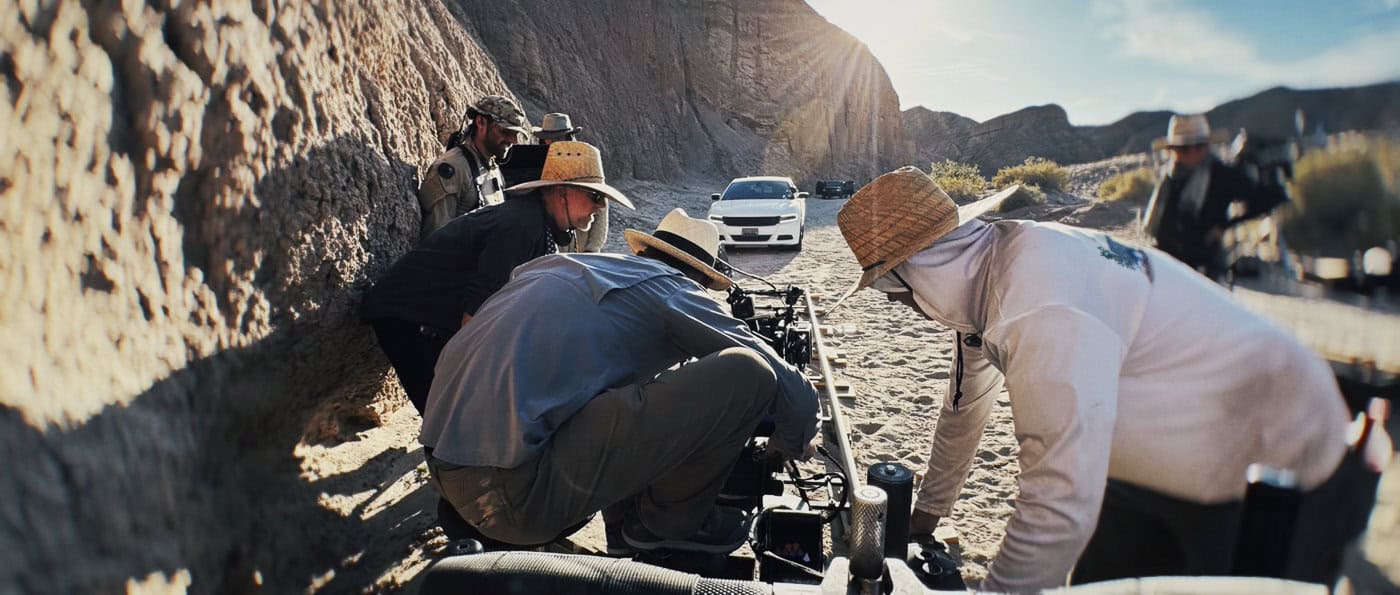
“Handheld shots with the camera resting on the shoulder were also impossible because of the eyepiece location, so we ended up using a prototype Mantis rig from BLKBRD with an Easyrig vest. We had a lot of success with it hard–mounted on a dolly or sled as well, allowing me to concentrate solely on the operating.”
Despite the challenges the VistaVision format presented, the camera work in the movie feels nimble and light on its feet. The film opens with a bang during an extended set piece in which the French 75 raids an immigrant detention facility.
“From the first Steadicam image of Perfidia walking over the bridge to the 250-foot dolly track bringing in the French 75 members, the camera never stops moving,” Anderson observes.
“Because it all takes place at night, the one thing I hadn’t considered was that our VistaVision camera didn’t have illuminated frame lines on the ground glass. We were working with black frame lines against the night sky! There is a spectacular shot leading Leo [DiCaprio] along the fence of the migrant detention center with the fireworks going off behind him. We hard–mounted the Steadicam on John Mang’s SteadiSled with John (a/k/a “Mango”) tracking me back in a medium close-up. It’s a technique we used repeatedly in the movie. Mango is one of the top dolly grips in the world and having him tracking while I operated the Steadicam allowed for the perfect symbiosis of two pieces of equipment to achieve a great shot.”
But technical concerns weren’t the only challenges involved in that sequence.
“That was an ‘active’ border wall so we had to contend with all that goes into that,” Nafa notes. “It was quite spread out and we had some dusk-to-night transition work, which made for tricky planning and logistics regarding having the right kit. I actually had the rare opportunity to scout this scene, which gave me the crucial details needed to keep things running at pace. The team of ACs and loaders were magnificent.”
Among the many qualities of One Battle After Another, maybe the most striking is just how fast the film moves. It’s a story that spans decades and a movie that runs just over two hours and forty minutes, but there’s a propulsive momentum to the picture that carries you through as an audience member. I ask Anderson and Nafa what it took to imbue the film with that feeling of urgency.
Nafa wryly shoots back, “An ability to quickly thread the camera and a willingness to pull instinctive focus.”
Honing in, Anderson adds, “Even though there are a lot of wide shots in the film, I feel like it was a predominantly long–lens film. Coupled with Paul’s predilection for tracking, being close to the actors with a handheld camera and tight editing, the film feels like it does not take a breath. What I love about Paul’s way of making films is that he tends to keep things old school. Very seldom will we use the latest technology or gimmicks to create urgency; he adheres to classic filmmaking techniques allowing the camera, script, and actors to speak for themselves.”

Never is that momentum more on display than in the middle section of the film as Bob tries to get the coordinates to rendezvous with other ex-French 75 operatives while simultaneously escaping a crackdown on the city by Col. Lockjaw’s goons. There’s a Rube Goldbergian quality to the sequence as pieces intersect and play off each other with precision timing. It’s like an intricate dance captured in a succession of long takes.
Nafa speaks to the planning of this section of the film required. “In many instances we were working with non-actors, so while I suspect Paul had concepts roughed out, it was he and legendary 1st AD Adam Somner’s ability to charismatically and efficiently communicate what needed to occur en masse to make shots work. Colin is a surgical gazelle, so I mostly tried to stay out of frame while perhaps looking like a beginner–level capoeira performer with a Preston in hand.”
The sequence culminates with a rooftop escape as Bob struggles to keep up with the younger and much more agile kids leading him to safety.
“The rooftop sequence involved a lot of planning as the logistics were pretty tricky,” Anderson remembers. “We could not put any heavy equipment on the rooftop so had to rely on Steadicam, handheld, and sticks. As we were about three stories high, we couldn’t use Technocranes either, even though I’m not sure Paul would have wanted to. I think Mike Bauman did an amazing job lighting the skateboarders—at times in silhouette—which made for a poetic sequence ending with Bob falling from the roof.
“For the interiors there were a lot of corridors and tight spaces contributing to the claustrophobia and urgency. What I also believe contributes to the sense of urgency is the Steadicam shot following Bob and Sensei [Benicio del Toro] into his apartment where he introduces the family, and the camera lands in the living room and Bob finds his phone charging port. The bookend of that scene continues with the Steadicam leading them out into the corridor where they separate. The use of a single shot entering and leaving the apartment is classic Paul move, keeping the viewer with the protagonists.”
Keeping the viewer with the protagonist becomes key to building tension in the film’s climactic car chase, playing with perspective as the camera closely follows the dips and curves of the winding desert highway, obscuring and revealing elements in line with what is in Willa’s field of view. I ask what went into filming that sequence.
“Really clutch driving by Allan Padelford and brilliant coordination by Adam Somner,” Nafa replies. “Camera team and loader Jackson Davis kept support close and mags hot and ready. We had some long-range antennas attached to mobile digital recorders in the event we were placed further than ideal. I recall one driving setup with seven cameras rolling simultaneously on three vehicles; ACs were hiding in backseats or wherever we could fit them. We’d do a run and reload all the cameras then go back to one and do it again. Tana Dubbe [key grip] and her team were lightning fast with mount rigs and always were very accommodating and helpful. Definitely one of my prouder moments from a teamwork standpoint.”

Speaking specifically to framing, Anderson also notes, “The sequence also benefitted hugely from the VistaVision format as there is a lot of verticality in the sequence. The terrain with the steep hills and dips fit into the 1.5:1 aspect ratio in a far more pleasing way than 2.40:1, for example. Regarding aspect ratios, I was also framing for 1.43:1 as well as 1.90:1 for the IMAX releases, so there were a lot of lines on the ground glass to consider.
“One of the operating challenges I had during the end car chase was trying to anticipate where the road and the cars were as we were traveling. The camera was mounted on an Arm Car, expertly driven at high speed by Allan. Every time we came out of a dip and over the hill, I was momentarily unsighted as to where the road or the cars were. I tried to memorize the road and which rise would lead to a slight left or right turn but found it to be a huge challenge, to say the least. We also used really long lenses at times during the pursuit, so it meant trying to anticipate a car appearing over a rise three or four hills away.”
One Battle After Another has been met with tremendous praise for its timely story about what it means to fight back against hostile government agents motivated by white supremacist beliefs, as well as for the look of the film and its dynamic camera work. Vanishingly few theaters are equipped to show the film in its original, VistaVision format—only four worldwide—but for those fortunate enough to see it in that format, they’re treated to a remarkably rich image that showcases the scope and scale of this film as well as the work that went into crafting it.
“On looking back at my experience,” Anderson says, “my overriding emotion is one of gratitude. Gratitude for a crew that gave everything to make it a success, often in extremely demanding situations. I think of our amazing camera crew led by the extraordinary Serge Nafa. We started in the mud and rain in Northern California and ended up in the searing heat of the Sonoran Desert. Apart from the many months and the huge effort it took for Serge to get our cameras ready before principal photography began, along with the rigors of the shoot and running the department, his focus pulling was exceptional, to say the least.

“Tana Dubbe, our key grip, James Coffin, and the rest of the grip crew were amazing in the support that they gave us. And an extra special mention to Mango, who was my dolly grip. Mango is the best in the business. I view him as a fellow operator, as his feel for moving the camera—no matter what platform it is on—is incredible.
“And, of course, there’s Paul. Working with Paul is a massive privilege and one I will never take for granted. Knowing you are working with an elite cast on a Paul Tthomas Anderson film is a pinch-me moment for anyone in our industry. Paul will go down in history as one of the all-time great directors and to be entrusted with operating one of his films is truly humbling.”
Nafa echoes this sentiment. “Working on One Battle After Another can easily be summed up in the title of the film. The honor of working for Paul can be explained by observing the longstanding crew behind him. ‘Esprit de corps’ would be translated to ‘ride or die’ where I’m from, and that’s what you see day-in and grueling day-out. I’m not sure if it’s the raucous dailies sessions or the weekend screenings of classic films from yesteryear. Maybe the bold venture of shooting on an awesome but forgotten format, or the way he just has incredible charm when it comes to soothing young infants or toddlers making their first appearance on screen.”
Nafa also makes a point to highlight the One Battle After Another’s first assistant director, who passed away last year and whom the film is dedicated to. “Lest we forget the venerable Adam Somner. May his light shine back at us.”

BEHIND-THE-SCENES
Select Photo for Larger View


Camera Operator Fall 2025
Above Photo: Camera/Steadicam Operator Colin Anderson, SOC, shooting ONE BATTLE AFTER ANOTHER
Photos courtesy of Warner Bros. Pictures
TECH ON SET
Beaumont VistaVision Cameras
Panavision Millennium XL Camera
ARRIHEAD
Steadicam PRO with a Tiffen Volt Gimbal
Titan Crane
Allan Padelford Camera Car
MATRIX Remote Head
RELATED CONTENT
Watch the trailer for One Battle After Another
Colin Anderson, SOC
Learn more about Colin’s career and projects at IMDb.com
“The Fabelmans: Thinking Through the Lens,” Winter 2023 Camera Operator
“Star Wars: The Force Awakens–An Operator’s Perspective,” Winter 2016 Camera Operator
Content Portal
SOC Lecture Series, Class 10: Roundtable Discussion
Sergius Nafa
BEHIND-THE-SCENES
Select Photo for Slideshow
SIGN UP FOR THE FREE
DIGITAL EDITION OF
CAMERA OPERATOR
Click Here
ENJOY PAST ISSUES OF
CAMERA OPERATOR
Click Here
Colin Anderson, SOC
Born and raised in South Africa, Colin Anderson developed a love of photography early on and, with the encouragement of his journalist father, joined the film industry. He worked his way up through the ranks for ten years before moving to the United States. Based in Los Angeles, he started working as a camera operator in 1995. To date Colin has worked primarily on feature films with notable directors such as Paul Thomas Anderson, J.J. Abrams, and Ben Affleck. His collaboration with Paul Thomas Anderson includes There Will Be Blood; The Master; Inherent Vice; Phantom Thread; Licorice Pizza; and One Battle After Another. Work with J.J. Abrams include two Star Trek and two Star Wars films amongst others, and work with Ben Affleck include The Town; Argo; Air; and the upcoming Animals. Other films include Martin Scorsese’s Silence and Steven Spielberg’s The Fabelmans along with upcoming projects Madden with David O. Russell and Josh Safdie’s Marty Supreme.
Sergius Nafa
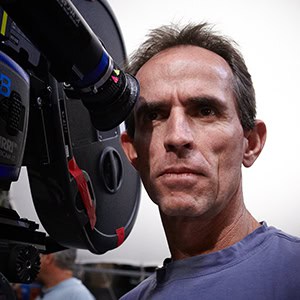
Sergius Nafa is a focus puller living in Los Angeles, California. He began studying still photography at Fairfax High School in the early ‘90s, whereupon graduating in 1995 he began working as a film loader. Through his three decades in the industry he has worked as both a 2nd and 1st AC with credits including Enemy of the State; Mission: Impossible III; Star Wars: The Force Awakens; and Black Panther: Wakanda Forever.
A writer and critic for more than a decade, David Daut specializes in analysis of genre cinema and immersive media. In addition to his work for Camera Operator and other publications, David is also the co-creator of Hollow Medium, a “recovered audio” ghost story podcast. David studied at the USC School of Cinematic Arts and works as a freelance writer based out of Long Beach, California.
SPECIAL THANKS TO OUR ADVERTISERS

