Building Trust
Disclosure Day
An interview with David Emmerichs, SOC and Buzz Moyer, SOC
By David Daut
Even amidst an illustrious career, Steven Spielberg’s films about visitors from other worlds stand out. Close Encounters of the Third Kind and E.T. the Extra-Terrestrial remain some of the filmmaker’s most enduring, beloved works. At a glance Disclosure Day appears to follow in their footsteps, and though thematic lines can be drawn between these movies about mysterious wonders from outer space, perhaps the more interesting parallel is found in Spielberg’s previous film, The Fabelmans. What do you do with a preternatural gift for understanding and communication rooted in past trauma, and how do you react when your efforts to make sense of that become critically important to millions of people you’ve never met? It’s a master filmmaker wrestling with his own legacy and how the tool of visual storytelling can be used both to divide, suppress, and impose one’s own perspective on another as well as to illuminate, enlighten, and bring people together.
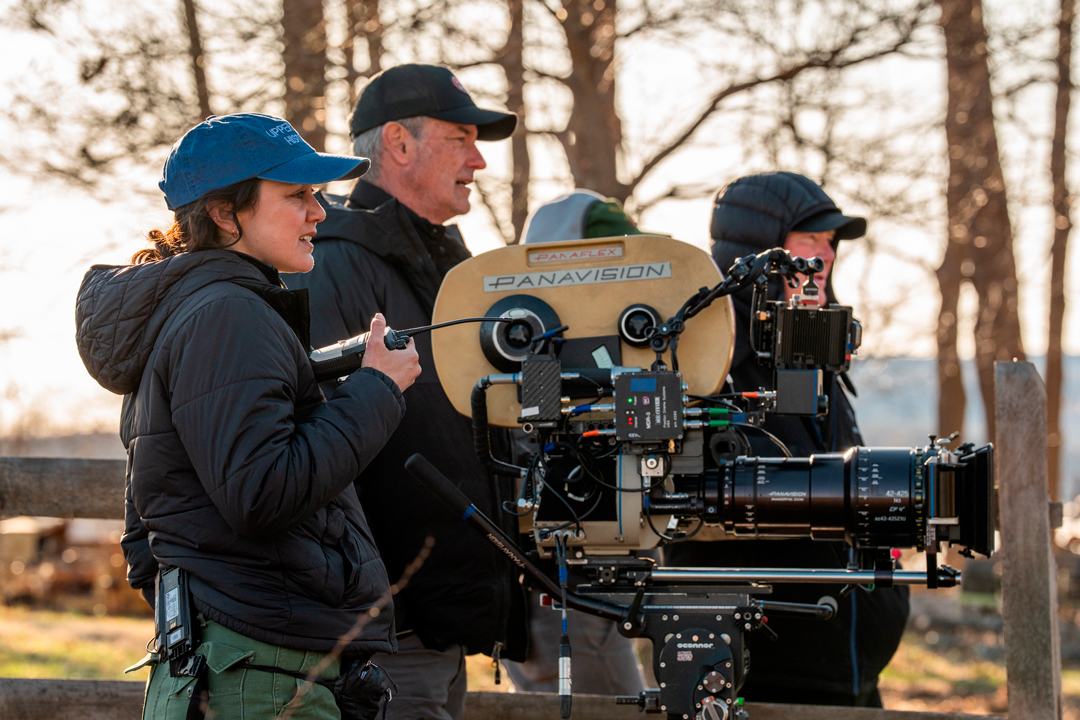
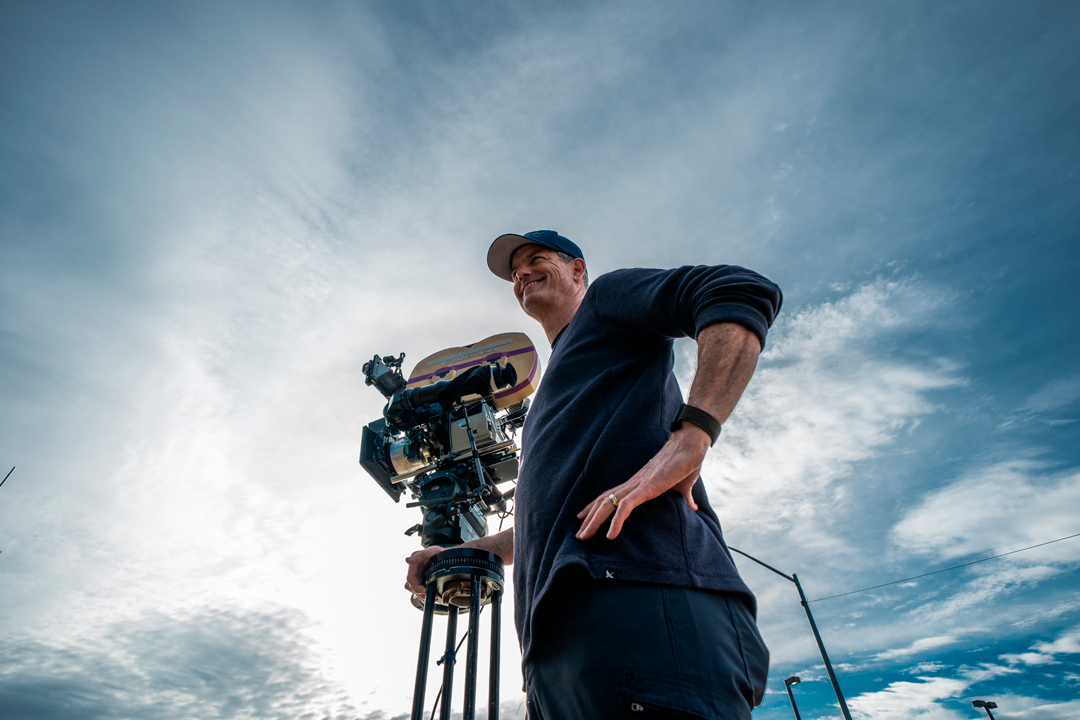
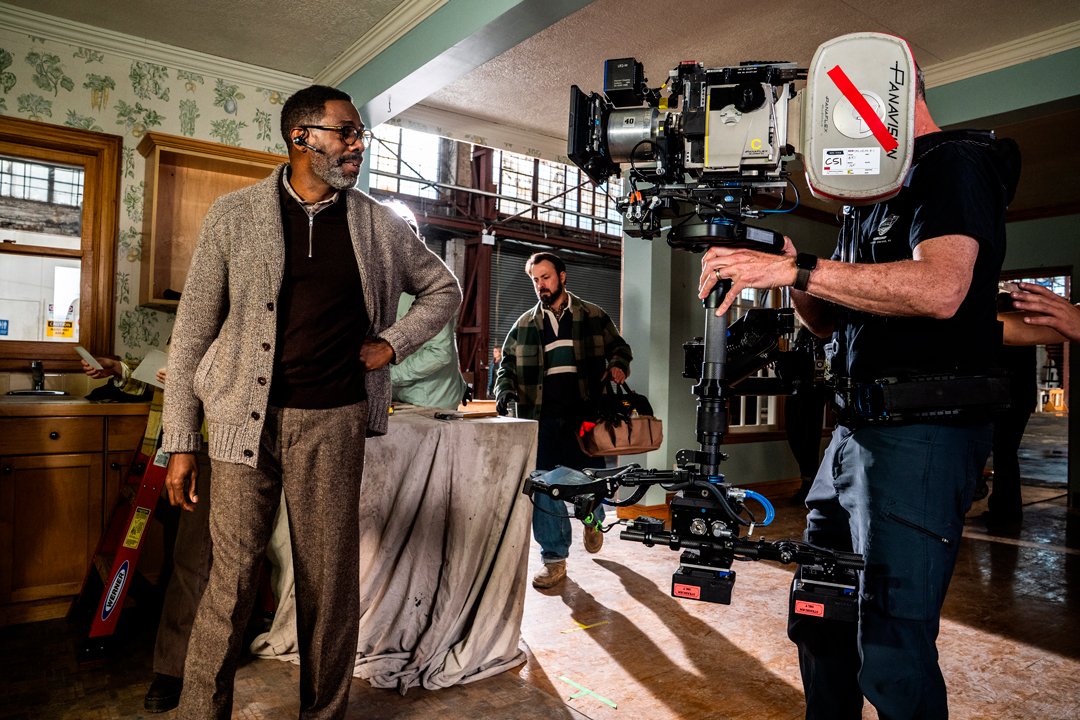
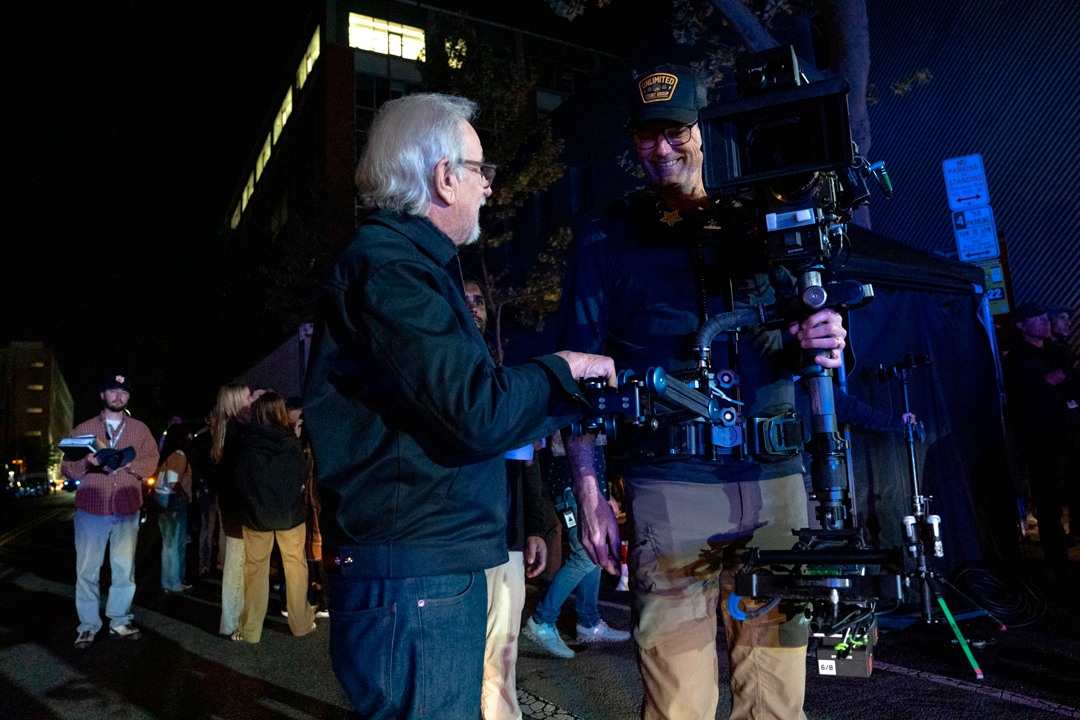
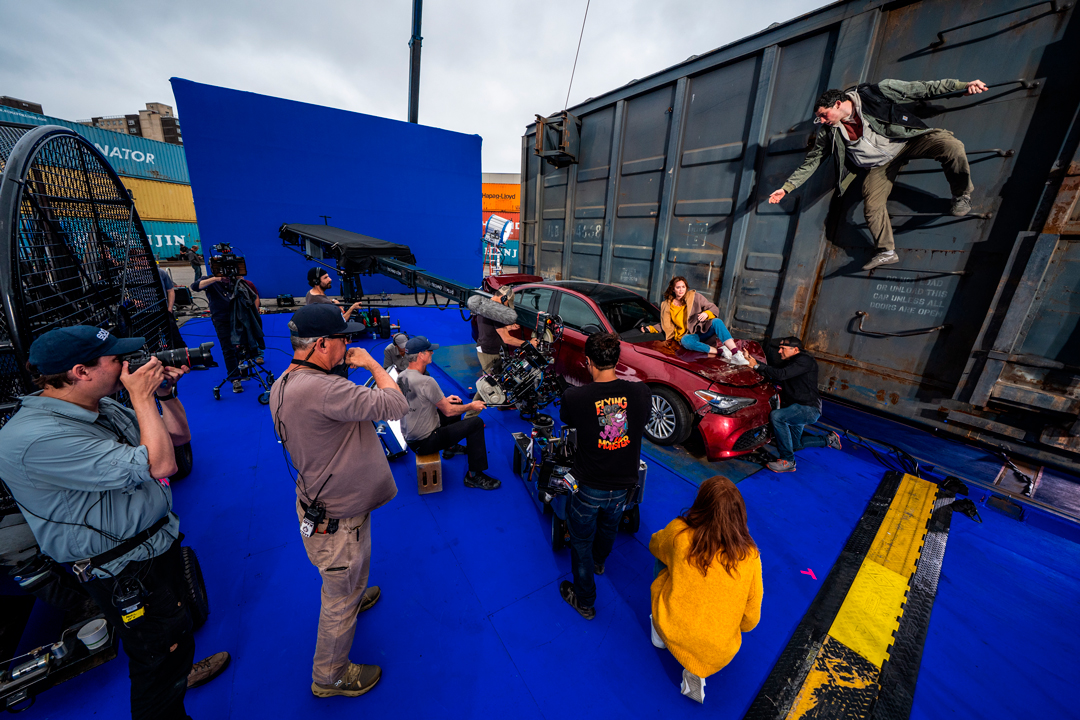
From digging into how Spielberg crafts his oners to working alongside the director while he discovers the movie in the process of making it, Camera Operator had a chance to speak with A camera operator David Emmerichs, SOC and B camera and Steadicam operator Buzz Moyer, SOC about their work on this film. We also spoke with drone operator Dexter Kennedy to learn about the new creative doors that the drone work in Disclosure Day unlocked for Spielberg.
On the run from his former employer, the shadowy agency Wardex, Daniel Kellner intends to reveal the truth that the agency has kept secret for decades about the existence of extra-terrestrial life, but he can’t do it alone. Meanwhile, after a strange encounter with a cardinal that flew through the window of her home, KCXE meteorologist Margaret Fairchild suddenly finds herself knowing other people’s most intimate thoughts and able to speak languages she doesn’t know—including those not of Earth. As Margaret and Daniel’s paths are drawn together, they will have to face revelations not just of the nature of their world, but also their own pasts. Disclosure Day is directed by Steven Spielberg from a screenplay by David Koepp and based on a story by Spielberg. It stars Emily Blunt, Josh O’Connor, Colin Firth, Eve Hewson, and Coleman Domingo.

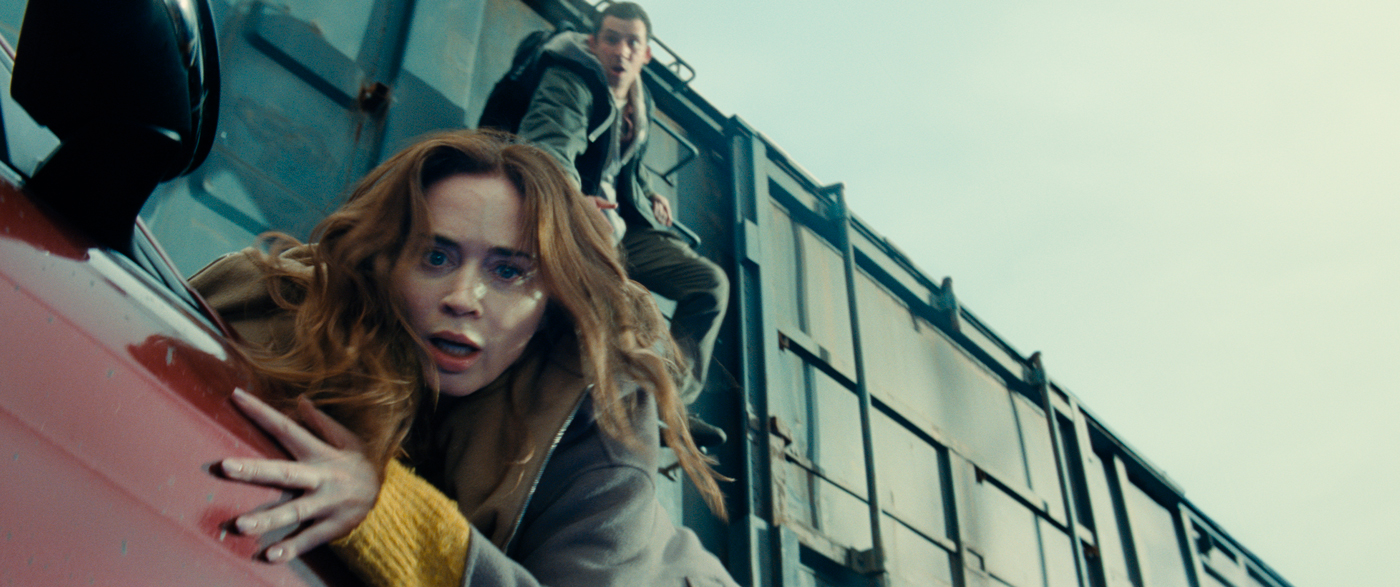
Photo by Niko Tavernise, courtesy of Universal Studios and Amblin Entertainment
Camera Operator: Disclosure Day very much begins in medias res with the audience thrown right into the deep end of this conflict already in progress. Underlining that sense of disorientation the audience feels at the start of this, the first shot of the movie has the camera—and by extension the audience—being pummeled by a wrestler in the ring. Can you tell me about how that opening shot developed over the course of making this movie?
David Emmerichs: This is going to be one of those answers where we say that we had very little to do with it, because that was a surprise to all of us. Steven wanted the movie to start in a way that was unlike any other Steven Spielberg movie. He wanted people to see the opening shot and think, “Am I in the right place? Is this the right theater?” That stuff was shot with the equivalent of a little GoPro camera. It was done by Brian Machleit, our second unit director and stunt coordinator.
Buzz Moyer: Yeah, Brian Machleit was in with that wrestler, hand holding and making all the moves. We were all kind of thinking, there’s no way Steven’s seriously starting this movie with a GoPro, but he did. It definitely didn’t look like the right movie, so his point was made, and it worked.
Emmerichs: The reason the stunt coordinator ended up doing it was because they threw him around the ring while he was holding onto the camera, and neither of us wanted to have anything to do with that.
CO: I did want to talk about some of the oners in this film. Spielberg is known for his more subtle, so-called “invisible” oners, but by my estimation, there are two pretty big oners in this movie as well. The first is Margaret’s initial walkthrough of KCXE newsroom as she’s starting to experience these weird phenomena in the wake of her alien contact. Can you walk me through what went into planning and filming this shot?
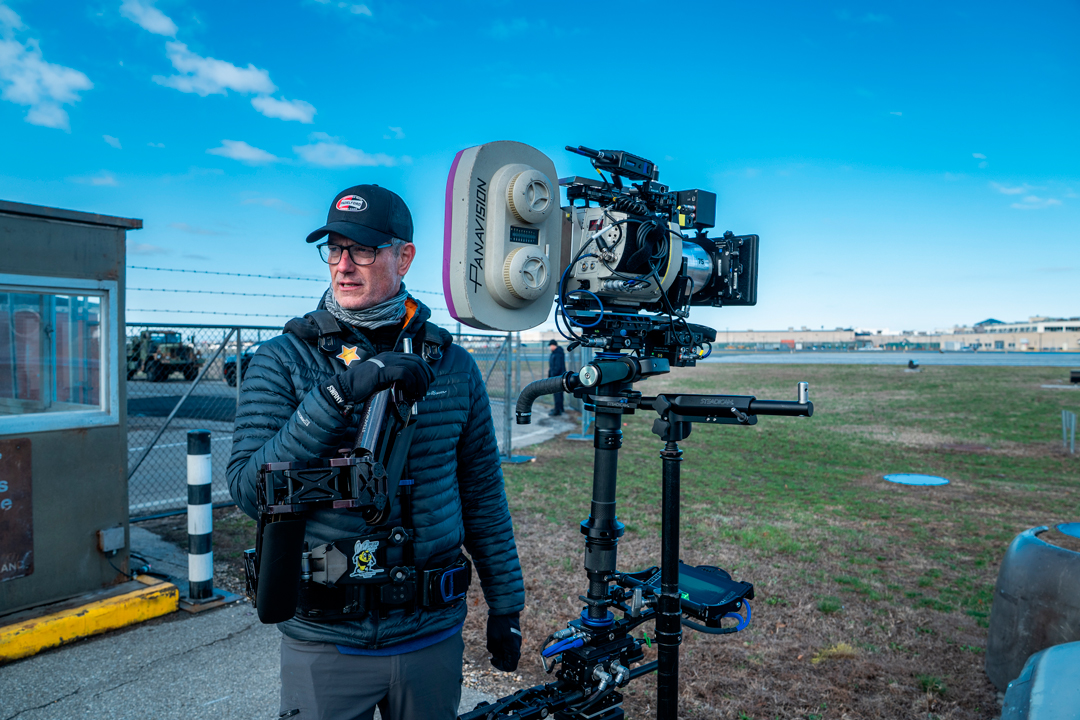
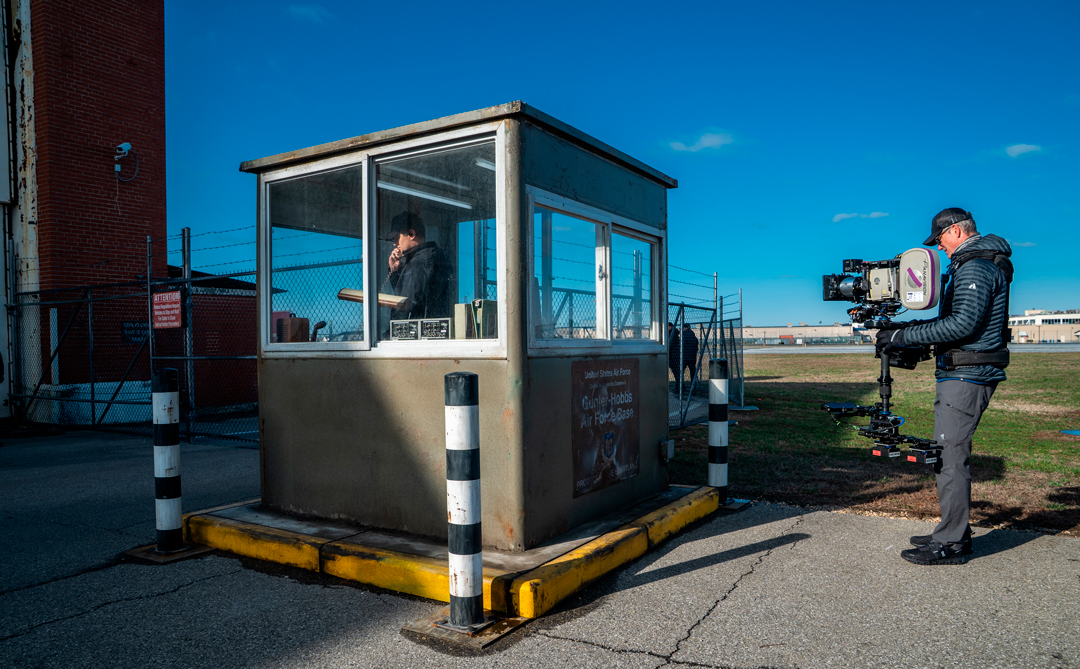
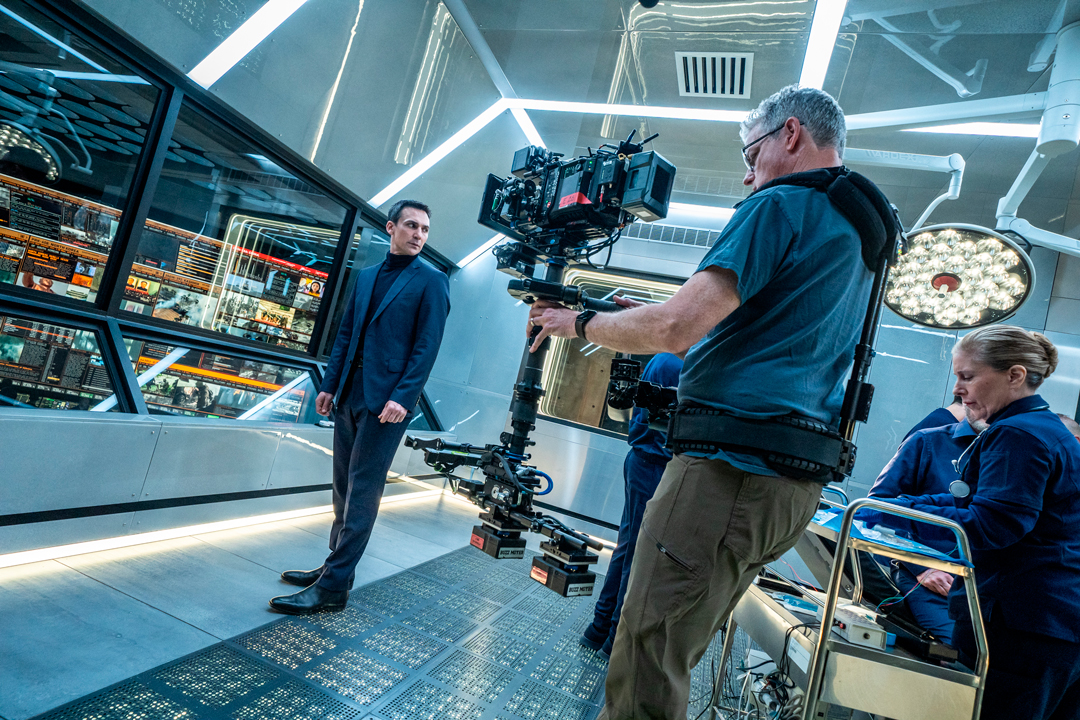
Moyer: That was all Steadicam. We were supposed to rehearse that the day before. I don’t remember what happened with that, but we ended up not rehearsing. So, we came in that day, and Steven knew he wanted to do it as a oner. He came up with an initial idea while I went off to take care of something, and by the time I came back, he said, “No, I’ve got a better idea.”
That was the shot you see in the film, which actually starts looking outside as Emily pulls up. That scene starts outside, pushing her in, and then we catch her coming in, going into the makeup room, and onto the floor of the Newsroom. We did five or six takes. I don’t know which take he used—I think it was the last one, only because I committed too early coming off the Korean dialogue.
Emmerichs: We’re always our own harshest critics. It’s interesting because this was the first movie where I didn’t do the Steadicam. You don’t usually end up with two relatively top-tier Steadicam operators on the same movie, so it was interesting to stand there and watch someone else do what I would normally be doing. This was the one time on the movie I was envious of what Buzz got to do. Usually, I could sit back and think, “I’m glad I’m not doing that right now,” but that was a cool shot, which he executed flawlessly. And the little thing that bothers him about it? Honestly, I didn’t even notice it. I was watching the movie, thinking that is just a great take, and it was really put together well.
What’s interesting about it is—in light of this movie coming out—there’s been a rash of people on YouTube talking about Steven’s blocking. They go back and analyze stuff from earlier movies, and there’s labels stuck onto the video identifying each of the individual shots within the larger take. What Steven’s a master of in a oner is using the actors’ positions to do the editing. What would normally be over, over, single, single, he accomplishes with camera moves and the people switching positions. There are classic versions of this in Jaws and Raiders of the Lost Ark, and he’s better at that than anybody else. What I thought was interesting about the one that Buzz got to do in Disclosure Day is that it was basically a variety of wide shots. There are some closer moments in the hallway where you had to be physically close to them because you’re in a confined space, but on the over to Emily in the makeup room, you’re hanging back kind of wide. There’s no coverage on her, there’s no reverse on the guy at the door. The stuff when Emily is speaking Korean, you’re wide enough that you can see her changing her shoes. They’re full body shots. It’s basically a variety of wide shots, looking 360 degrees, starting at the entrance and eventually turned all the way around.
Moyer: Yeah, I saw the whole room. I walked into the room, pan right, pan right, pan right, and then back left, then we came back around her off the stage.
Emmerichs: The closest moments are when other people come up to Emily and she locks eyes with them and can tell them things about their personal lives that she shouldn’t know because of whatever the aliens have done to her. Those are the closest moments in that shot, but otherwise it plays out fairly wide. Making a good composition when you’re not sure if the person is going to hit their marks is challenging. And by person, I mean not Emily, because she was spot on, but there were some issues with some of the other characters—day players—not necessarily hitting marks exactly when and where you’d like them to, and Buzz had some frustration with that. But it all came together, and on that last take, I think that was about as good as that could have been, and it really worked.
Moyer: Yeah, Emily was great. She nailed it. Never flubbed a line, never flubbed an emotion. She was totally dialed in. The pace of her performance matched the pace of the first scene in the apartment, which was all Steadicam, too. Just frantic panning, pushing, and pulling, all cut together to show her mindset at the time.
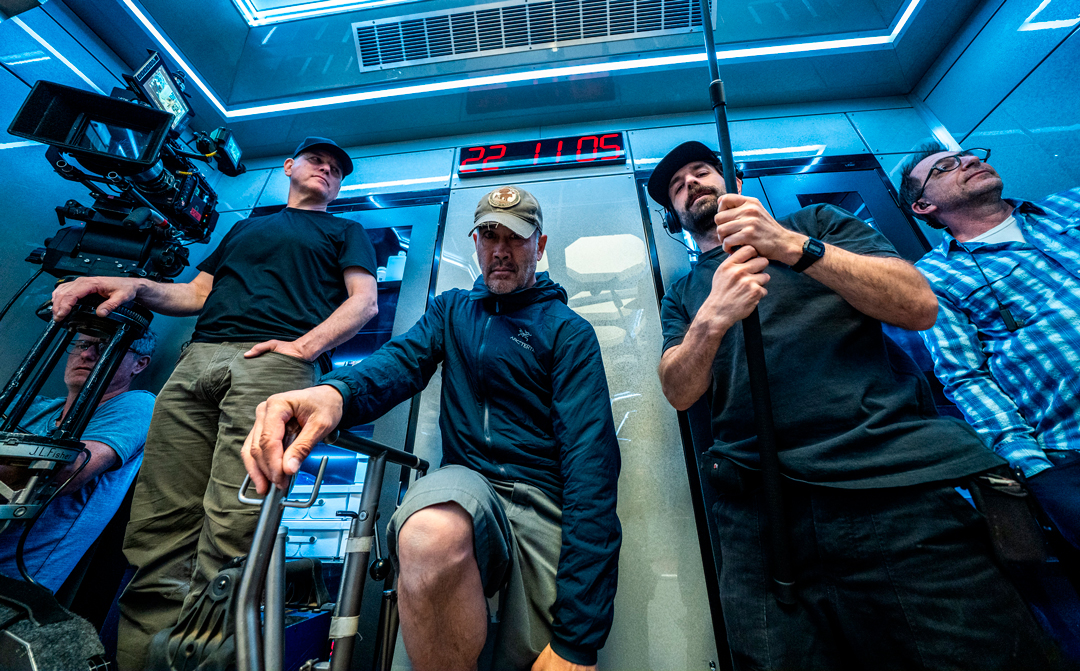
Photo by Niko Tavernise, courtesy of Universal Studios and Amblin Entertainment
CO: One of the things I’m interested in hearing your take on is—as I understand it—Spielberg is a very intuitive filmmaker. He doesn’t typically tend to work from storyboards or pre-planning his shots, instead he tends to find a lot of these shots on the day, on set, figuring things out in the moment. What is it like working with Spielberg to develop these oners like the one you did in the newsroom, or some of the other ones later in the film? Or even something like the opening shot, which you said was an idea that kind of came to him during the process. What’s it like finding the movie alongside him?
Moyer: For an operator, it’s amazing to be that connected to his thought process. This is the third film I’ve done with him. I did The Post, West Side Story, and now this one. The Post was very heavy Steadicam, just to keep things moving, and then West Side Story, because the dancing was all choreographed, it’s a lot easier to shoot because you know where they’re landing. Each of those had a different feel. When Steven gets on set, he watches the rehearsal, which is very important to him. He sees the performance, and from that rehearsal he will basically edit the scene in his head. At least for the first day, the first pass of that big scene was just a oner on Steadicam. I think Steven wanted to wrap his head around Emily’s performance. Because it was the first day, he wanted to see how she was connecting with the character, which then gives him ideas of how to shoot it. He’s always thinking about the edit. You’ll see him standing and looking at things, and you know he’s editing the scene in his head.
To be able to feel safe with suggesting something, knowing that it was the right suggestion, to build that relationship over three movies has been fantastic. Mitch Dubin has said Steven could be talking to the Pope in the tent, and if you poke your head in, he’ll say, “Hold on, Pope,” and talk to you for a minute and let you go back out and do the job.
Emmerichs: There’s another oner in the simple scene in the hotel room that’s just Daniel talking on the phone. That was kind of a funny one, because I actually woke up that morning looking at what we were going to do, thinking, “Okay, it’s one guy on a phone in a hotel room. What kind of curve balls are we going to get today?” I’ll cut to the chase on this one and say at the end of this shot, I went up to Steven and told him that shot was why I took this job, because it was a challenge that I would never have expected.
What seemed so simple turned into a 12 or 15 point Technocrane move. It started on a macro shot of the note in Josh’s hand, then up to a macro close up of his eye, then back out to a wide of the room, and then started moving all over the room as he paced about. It was intercut with Coleman Domingo on the other side of the conversation, but it was all done initially as a oner.
The challenge for the operator becomes, first of all, making sure you’re doing what Steven wants. The communication has to be there. Steven will lay out the shot with a finder and you need to be sure of what the frame should be for every moment of the shot. Then it’s a matter of working out how to get Steven what he wants. Getting the equipment in the right place, getting the lights out of the shot, Janusz figuring out how he’s going to light it, because most of the time there’s going to be a 180 thrown into the shot somewhere, so Janusz rarely has a simple place to put his lights. Then comes execution, actually doing the shot. Like Buzz was saying, Steven is editing and figuring out stuff while he’s coming up with the shot, but he’ll also change it while you’re doing it. For instance, he’ll change it while you’re in the middle of shooting the take, and he’ll call something out from the monitor as he realizes, “Oh, I could do this, I could do that.” He’s editing it while he’s watching it being shot and figuring out what he needs, and so the shot will evolve, and you’ve just got to be on your toes, and you need a really good crew that can handle that. I was very lucky that I had a dolly grip in Darin Wong who had worked with Steven on The BFG, and knew what he was in for, and was able to handle that. The guy we had on the pickle with the Technocrane was Craig Striano, and he was great. They were able to take anything that was thrown at them and make it work.
And on top of all of that, you don’t get a lot of takes because Steven likes to work quickly. Once he sees what he needs on screen, he’s done. If you think you can refine it and do it a little better and you ask for another take, it’s not likely to happen because he’s seen what he needs for the edit and he doesn’t want another take because he knows he’s got what he needs. That’s one of the things Mitch Dubin told me to be ready for. This is the first movie that Mitch wasn’t able to do with Steven in, I think, 29 years.
Moyer: Yeah, this would have been their 19th movie together.
Emmerichs: So, I talked to Mitch a lot before I took the job, and he gave me a lot of hints and tips about what to expect. He was right in all cases, and his advice was really welcome and on the nose. I think twice over the course of the whole movie I got an extra take. Mitch had said that after he had done four or five movies with Steven, he stopped asking for extra takes because even though it really frustrated him in the moment, he’d go see the movie and realize once it’s edited, the music’s there, and you’re emotionally involved in the movie, he never once saw one of those moments that bothered him. It may have gone by on screen, but it went right past him, because it was all part of the flow of the film. I tried to take that to heart and not get frustrated when I couldn’t get another take to perfect it, and when I saw the movie, the little things that had bugged me, I didn’t see any of them on the screen.
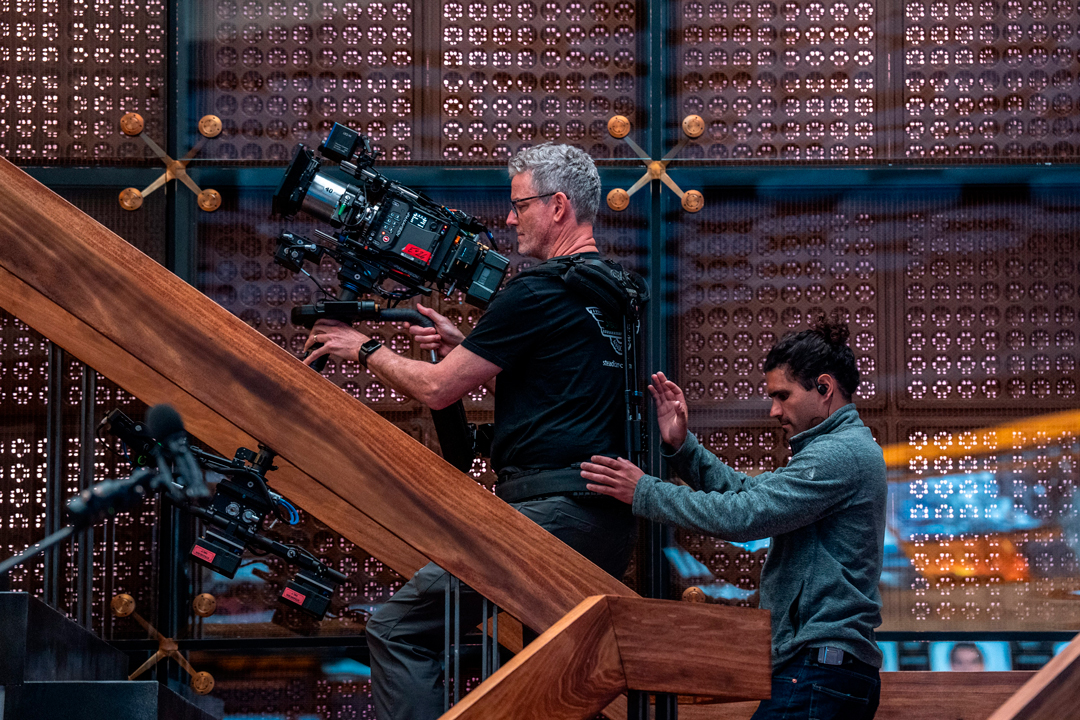
Photo by Niko Tavernise, courtesy of Universal Studios and Amblin Entertainment
CO: Buzz, like you said, you’ve worked with Spielberg a few times now, and Dave, you did B camera back on Catch Me If You Can, but this is the first time you’ve done A camera for him. Having those conversations with Mitch, and knowing going into it that this is the way he works, how do you prepare for that? What do you have to do going in to make sure that you are ready to rise to the occasion when he comes up with a crazy idea like the oner in the hotel room?
Emmerichs: I found myself being very thankful for all the jobs I had done before that gave me the experience necessary to handle it when someone of his caliber turns to you and says, I need this. The initial reaction might be, “Are you kidding?” But instead, it’s a challenge that you’re excited to rise to.
Moyer: I think so too. We’ve both done a million shots. We’ve done all the shots he’s asking us to do, it’s just the pace and the pressure that you’re under to get it done, and how precise it has to be. Without those 10,000 hours plus that both of us have been fortunate to get, I think you would be lacking in being able to keep up. You kind of have to have that previous experience to be on a set like this. Not just being able to tilt and pan and do everything correctly, but to interpret the pace of the pan based on how the cut’s going to be or how long to stay in a certain state, and all these nuances of operating that no one notices except for the operator until the story’s all put together.
Emmerichs: It takes experience and a firm knowledge of the script to be able to make suggestions that make sense from a visual storytelling standpoint. It took a couple weeks, maybe a month, before I’d earned Steven’s trust. Mitch and Steven had a dialog between them that I was never going to be able to approach. I’m not going to suddenly have the same relationship that it took them 29 years to develop. So, initially I was fairly cautious, but as he got more comfortable with me, he was open to ideas, and there are a few things I suggested in the movie that I’m proud are there.
And like Buzz was saying, it’s not just the panning and the tilting, but the communication, knowing how to approach someone and make a suggestion, or if something’s not working, having a solution and figuring out how to make it work. That’s the kind of thing that it takes a lot of time on set doing what we do to be confident in suggesting and working out.
CO: Dave, you mentioned some suggestions you came up with that you were particularly proud of. For both of you, what moments like that come to mind that you want to highlight?
Moyer: There are a couple shots I just threw out saying, “Would you use this?” and it’s nice to see them in there. Either turning a corner on an edit or just adding a certain moment that takes you out of a wide shot, and seeing them in there is really great. Quite a few times, I would go out and shoot inserts or second unit stuff with Brian on the Arm Car, just to get little parts, and we’d always come back with options. We’d show Steven the takes that we liked, and he might say, “I think you’re a little too long here, a little too short there,” and I’d say, “Well, I have this one too,” and then show him that. Having a backup, and having two or three options in there, he knew that I was paying attention and understood what he needed. Again, it’s building that confidence.
Some of those days when we were on the Arm Car or the insert car, Dave and I would switch. He’d go off and do something somewhere else, and B camera became the priority shot. That was something new I hadn’t experienced with Steven. That was a confidence builder for me, because I knew that he trusted me at that point to do the shot and do the shot well. It’s good feeling.
Emmerichs: One of the shots I’m proudest of is a very small thing. It was toward the end of the shoot, and it was when we were in the New York newsroom at 30 Rock. It’s near the end of that sequence where they’ve been revealing all the classified footage to all the networks, and there’s the feed of the newscaster, played by Courtney Grace. Buzz and I were both handheld, walking around, and Steven was just calling stuff out: “go to this, go to that.” After you do it enough times, you get the pattern of what’s going on and the rhythm of the scene. I’ve got her dialog down, and I know how the storytelling is progressing. There’s a moment where Steven told me to go to her on a mid-distance monitor. If you remember that room, there were monitors hanging from the ceiling, there were monitors on the control consoles, there were hundreds of them. I was watching Courtney talk and thinking she’s about to say something that could be a really good button to the scene, and I knew that up to my right was another monitor that was much closer to me. I also knew she had been consistently pausing in her dialog right before she said the thing that I thought would make a nice button.
I thought, well, I’ve got Mark Spath pulling focus, and he’s very flexible, very good at his job, and really good at helping with visual storytelling with the focus pulls. I knew he would catch this if I did it. So, in the brief pause right before she was going to say the line, I tilted up to the monitor above me and got what she was saying in what was now a more dramatic close-up, instead of a medium-wide shot. It felt like the kind of thing Steven would do, because it’s still in the same shot, but it’s effectively editing within the shot, but I was doing it without talking to him. I didn’t have his permission. I took a chance and did it, and at the end of the shot, he clapped and said, “Yes, Dave! That’s great!” and it’s in the movie.
That made me really happy, because it means I got it. I understood how he was thinking about stuff like that, and I felt confident enough to do it. It wasn’t always that way, but it’s nice when one of those works.
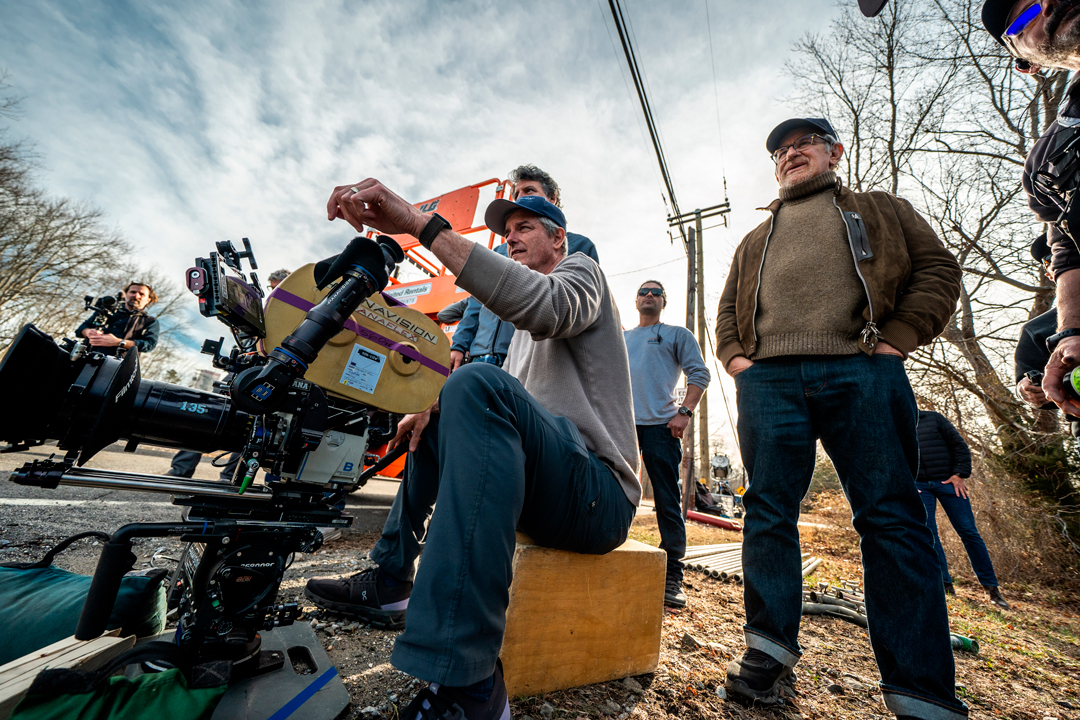
Photo by Niko Tavernise, courtesy of Universal Studios and Amblin Entertainment
CO: I did want to circle back to the sequence in the middle of the movie where they’re at the farmhouse, the agents are coming in, and you have Daniel sneaking back to rescue Jane. That shot following him back to the farmhouse is the other big oner in the film, and then that transitions into one of the film’s big chase sequences. Can you talk about what went into both halves of that sequence?
Moyer: That was Flying Monster. Dexter Kennedy was the operator on that, and Jon Graham was the drone pilot. They’d kind of proven their merit with Steven on a shot earlier. Those guys have completely mastered the art of flying the drone artfully, not just following the ball. They’re motivating shots, they’re operating artistically; they are really good at what they’re doing. I know Dexter was very excited to do that shot.
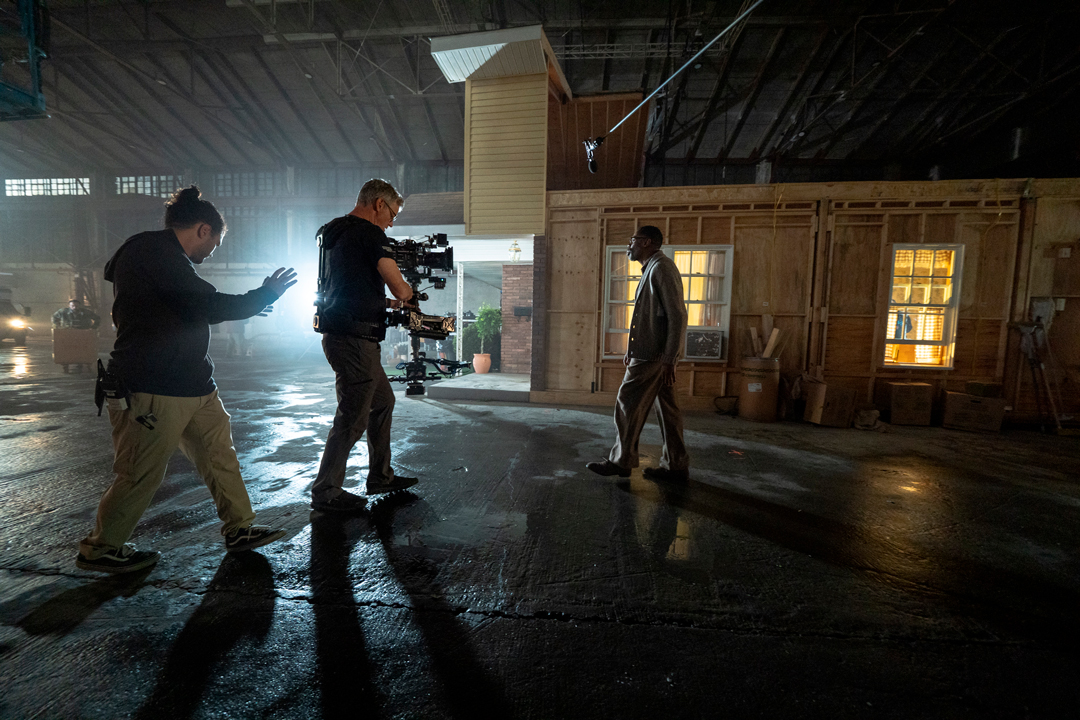
Emmerichs: The biggest question I’ve had when people have written to me about this movie is how that shot was done. When you see it, it’s not hard to figure out that there’s a stitch at the back of the car, but I think people don’t realize that the circle around Josh O’Connor at the fence is a drone. It doesn’t look like a drone shot, it looks like something else. They had to go in and pick up all the loose leaves, because every time the drone flew that close, it blew all the leaves up in the air. It took some doing to refine it, but it’s a drone shot all the way up until the back of the car, which is a remarkable bit of flying and operating.
I had the little DJI 4D and ran past the bumper on the same trajectory as the drone, hopped in the car, and then I was along for the ride for the rest of the shot. At the stitch, they switch out the car and it becomes a stunt car with a driving pod on the top, so a stunt driver on the roof can make it look like Josh O’Connor is actually driving the car. That went all the way until we slammed into the tree.
Then after that, there’s the great shot where they drive the car through the side of the house. That was a combination of a stunt team driving one car up to the house, which we see through the window—it was a Technocrane retracting as it was coming—then that car is blocked by the wall of the house for a moment, and the car that actually comes crashing through the window was one rigged up on tracks by special effects and rammed in with cables. It was all just timing and making sure it looked like it was the same car. Josh was in the second car, and he’d get out, grab Eve, hop in the car, and we took it right up to when they were about to leave. The trailer shot of the car blasting out the side of the house is, once again, Flying Monster. Dexter and Jon again.
Moyer: That was supposed to be shot with an Arm Car. Allan Padelford was asked to go from zero to literally 55 miles per hour within one second. We were standing there having a discussion, and Brian is looking at Allan, Allan’s looking at Steven, and Steven’s looking at Brian, and someone suggests, “Maybe we should ask if the drone boys could do this one.” I think that was probably a good call, because that drone went from zero to 40 instantaneously. There’s almost a collision, but that was what makes it so exciting. You think the car is going to hit or it’s going to go out of frame, but then he just takes off, which was incredible. He definitely put the spurs to that drone on that one.
Emmerichs: It’s a great shot. Then as they’re driving through the field and crashing through the fence, the camera could get higher and higher and see the whole thing. It was originally going to be done as a couple of cuts, but he was able to do it all in one. Is that the first time Steven’s used a drone much?
Moyer: I know on West Side Story, we used it for the opening shot, but I think that was the only drone shot on that.
Emmerichs: He used it a lot on Disclosure Day, and he really liked it.
Moyer: You’d have to ask Mitch about that. He embraced the GoPros, he embraced the drone. I wouldn’t say it was a departure for him, but it was something he was definitely interested in experimenting with.
Emmerichs: That’s why people are wondering how we did that. He didn’t think about it in terms of the limitations most people would with a drone, he thought this is what I want to do, make that happen.
Moyer: And you had people who were absolutely, completely in control of that art form in every sense. Not just physically, but artfully. It’s almost like the magic of having a Technocrane and an operator, it’s not just one person. That drone pilot has to put the drone in the right place so the operator can get the shot, and then the operator has to say we need to be here for that, because it’s more powerful emotionally. Those teams have worked together for a long time, and they definitely are good at what they do.
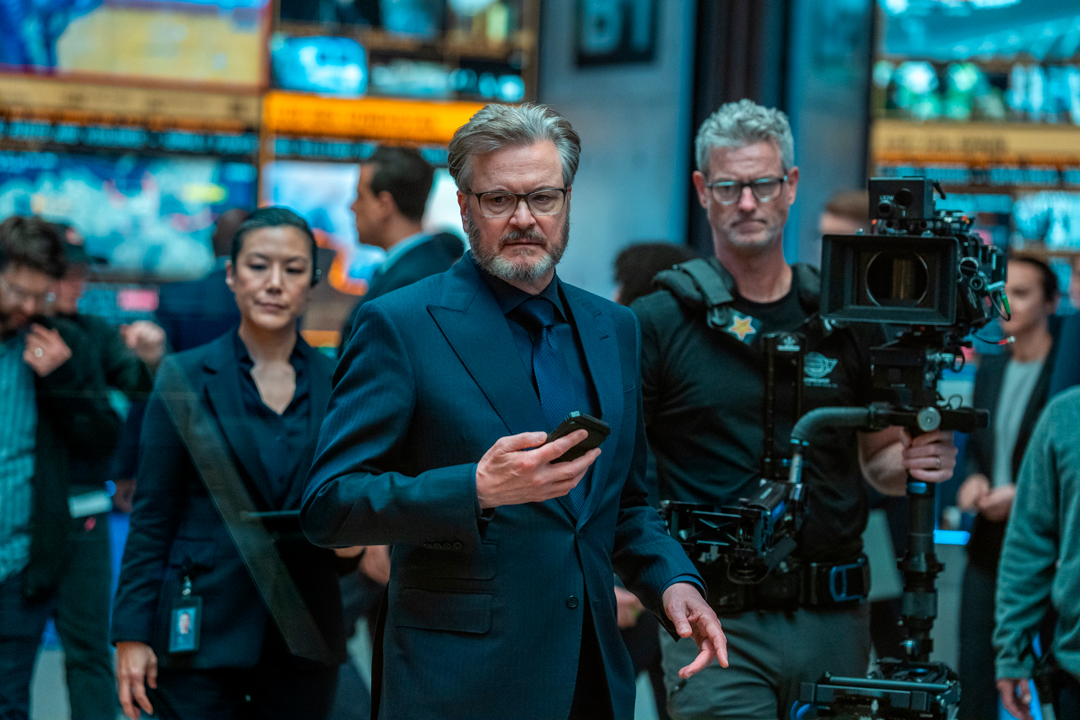
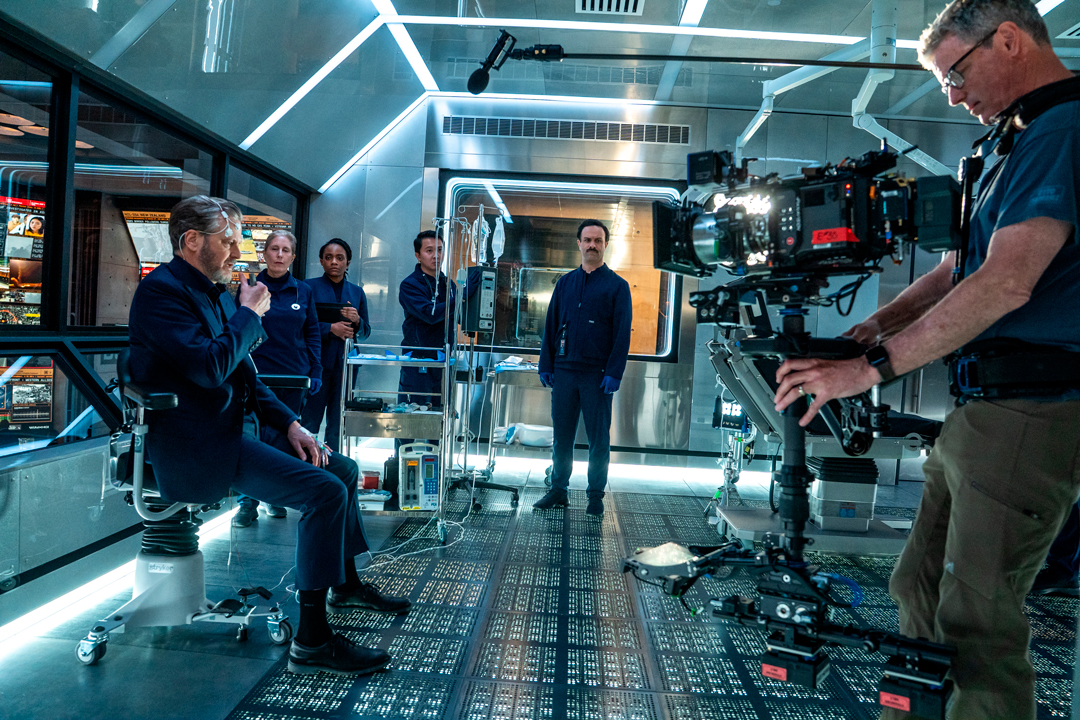
They even did the big introductory interior shots of the high-tech Wardex set with the huge TV walls.
Emmerichs: They’re behind Colin and the other actor coming out of the elevator into that set, and then they go up and around. That drone was pretty close to them.
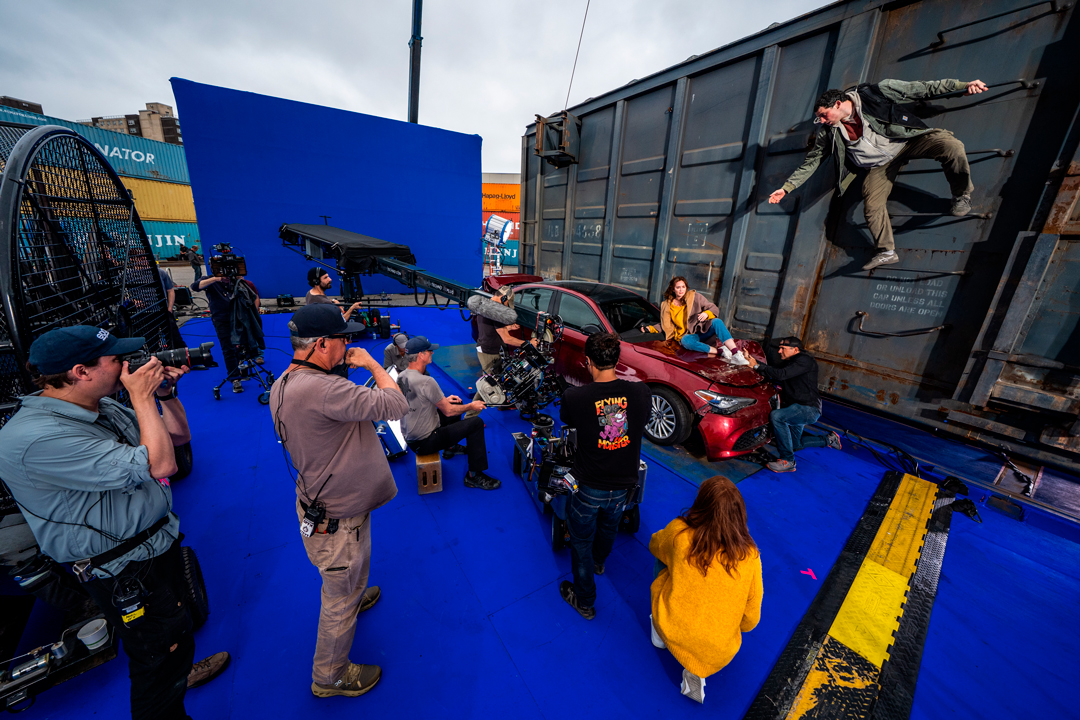
Photo by Niko Tavernise, courtesy of Universal Studios and Amblin Entertainment
CO: Is there anything else that stands out in your memory about this film? Any particular shots or sequences, or just stories from your time on set?
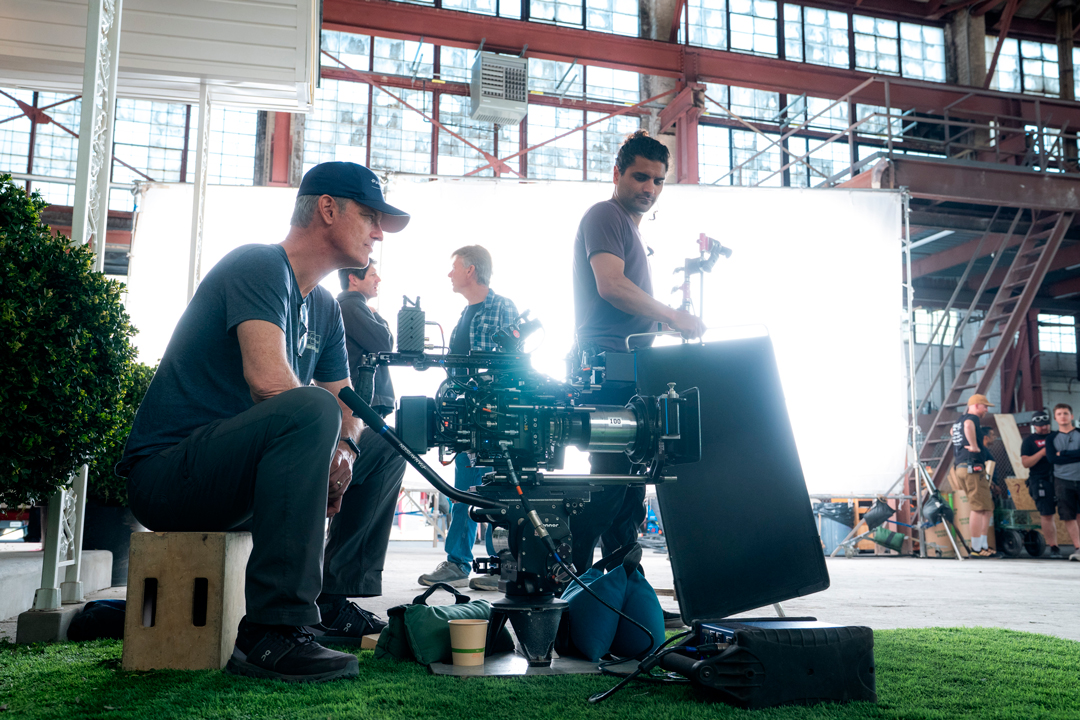
Emmerichs: The handheld stuff, running around and reproducing the old crash footage, was really fun. We shot that with film for the daylight stuff, digital for the nighttime stuff, and the terrain was really rough. Steven wanted it to look like it was done by people who weren’t professional, so he’d yell out to me, “Too Hollywood, too professional! Run over here and get this, run over there and get that,” and my dolly grip and I were just stumbling over broken rocks and through muddy trenches, grabbing what we could.
That was our last night of shooting, and it was really fun to do. It was a fun way to end the shoot.
Moyer: There’s one moment where Josh is holding the alien device and Colin is walking towards him. To get that shot, Steven was holding Josh’s arm, I had the Steadicam jammed in behind Josh with my elbow, trying to get his shoulder in the right spot, backing up, and trying to boom down to get those flares that Janusz so much loves. All four of us were in this pretzel of a position, then Steven says, “That’s the shot! We got it.” Working like that, those are those are fun moments for sure.
Emmerichs: One thing that was great was working with Buzz, because, like I said, I haven’t had a chance to work with another top Steadicam operator on set. It’s usually my job to do the Steadicam, so it was fun to watch someone else doing it, someone who’s really good at it. And it wasn’t like I ran off to the camera truck to relax while he was doing it. I was really interested in what he was doing, and we could bounce ideas off each other. It was a really fun interaction. I’d never worked with Buzz before, and we got to be friends during the course of making this movie. That was definitely one of the highlights of the film for me.
Moyer: And as Steadicam operator, having another Steadicam operator of a caliber above mine was great. I’d slam the rig down and he’d come over, say, “Okay, I know exactly what happened there. I know you thought you were late. You weren’t late, because that emotion was so great.” And also vice versa. He would end on the wheels and I’d say, “No, Dave, listen. That moment is great because you know he’s going to cut right there, and even if he doesn’t cut, it doesn’t matter, because it’s forcing the perspective of the eye.” It was pretty cool to have that, to be able to bounce off of each other was fantastic.
And just being challenged every day, as Steven will challenge you. Then to finally see the work that’s up there is really terrific.
Emmerichs: Yeah, it was really rewarding to see the movie and see that it really did look good. We put a lot of hard work into it, and it shows. It’s been nice having peers write to congratulate us saying, “You guys did a really great job.” That’s rewarding. There isn’t a director out there that pushes the camera team harder than Steven.
Moyer: I was glad to have Tim Metivier with me on focus and Drew Verderame on dolly supporting me always. We definitely were all pushed on this film, including Janusz Kaminsky.
Emmerichs: Yeah, he pushes Janusz so hard. Like I said, I’d done Catch Me If You Can, but that was 24 years ago now. Watching from the perspective of the A camera operator, seeing what Janusz had to do, his speed, flexibility, and creativity are remarkable. To be able to keep up with Steven and do what he does is actually a monumental achievement, and I’ve got immense respect for the man for doing what he does.
Moyer: And then keeping things consistent between film and digital. Sometimes we’d have to go to digital for certain reasons.
Emmerichs: And then throwing in the drone camera.
Moyer: Having to match all those things in post, he’s always up against it with Steven, but he always comes to work smiling and happy, making things very light on set, for sure. It’s a Spielberg movie. What can we say?
Emmerichs: It’s an honor.
Moyer: It really is. And it definitely tests everything that you’ve learned to that point, and also will learn on a job like that. Then after you see it, and what he’s done editorially, it’s just right.
Emmerichs: I actually got fairly emotionally involved in the movie, and that’s Steven working his magic. I had read the script, been there every day, and still got wrapped up in Emily’s character and what her journey was. He did it again.
Unlocking a Door
Drone Operating on Disclosure Day
An interview with Dexter Kennedy,SOC
By David Daut
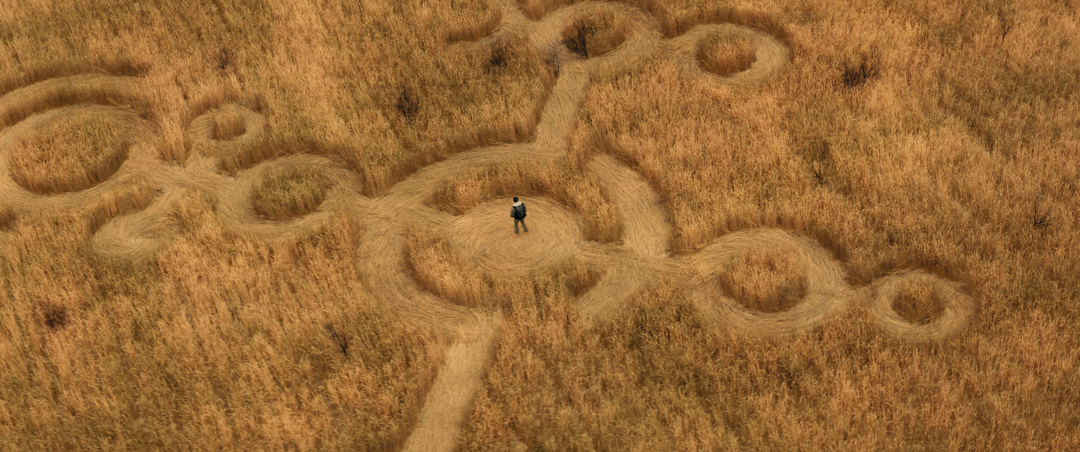
Photo by Niko Tavernise, courtesy of Universal Studios and Amblin Entertainment
Camera Operator: What’s interesting about the drone operating in Disclosure Day is that it blends in pretty seamlessly with the mostly classical film language that Spielberg uses in the film. Can you talk a little bit about what the approach to operating was like on this movie?
Dexter Kennedy: The approach to operating this movie was very unique. We were slated to come into the job doing eight days heavy lift drone work. They wanted us to fly an ARRI 235 camera with anamorphic lenses, which we’re able to do, but that heavy lift setup is a little bit limiting in terms of how Steven and Janusz want to use a camera platform. It’s big, it’s kind of clunky, you can’t fit it through tight spaces.
On our first day of shooting, Steven described a shot to me for the gas station scene, where we fly through a crowded gas station parking lot and the camera lands right in front of talent. For both safety reasons and stability at the end of the image, I pitched doing the shot as a drone catch on an Inspire 3 platform. A drone catch involves flying the drone into an operator’s hands without the need to cut, so you can go from aerial to handheld in the same shot. Steven wasn’t necessarily aware of this technique, so we showed it to him, and he was kind of blown away by it. Our next day of shooting wasn’t supposed to be for another eight to 10 days, but the next morning we got a call saying, “Steven thought of another drone catch, and he wants to do it tonight. Are you guys available?” So, we went in and did another one, and then that process kept repeating itself. It became any time that they were filming exterior, we were also there. We took what was supposed to be eight days of heavy lift drone work and flipped them into 38 days of Inspire work thanks to the creativity of that tool.
Steven loves a oner. The fact that we could go from aerial to handheld or vice versa, in Steven’s mind, it was an amazing tool. A lot of times Steven would approach a scene not necessarily knowing how he was going to cover it, so always being ready and being sharp was a requirement for this job. We went to set not knowing we were going to do the biggest stunt of the whole film where the car breaches the wall of the farmhouse. That wasn’t slated as a drone shot, but it became a drone shot after it was discussed how they might do it on other platforms. There was discussion of doing it on an Arm Car, but the Arm Car didn’t have the acceleration to get out of the way once the car had breached the wall.
The key was just rolling with the punches and being open with Steven, which was a little intimidating in the beginning, but he’s very collaborative—as are Dave and Buzz, giving me pointers on long oners. It’s having the confidence to say, “Hey Steven, that shot sounds great, but at the end we’re going to have to move this person or move the camera in a different way.” He was always open to anything I had to say. It was a very unique experience in a lot of ways, but at the same time, it was the most fun I’ve ever had on set.
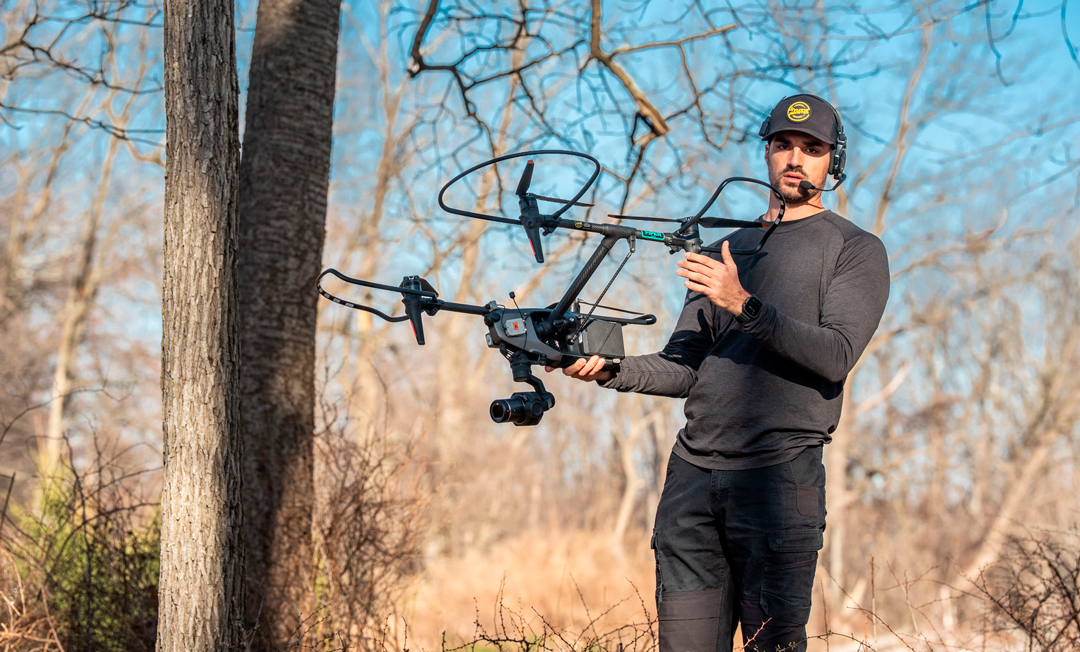
Photo by Niko Tavernise, courtesy of Universal Studios and Amblin Entertainment
CO: Buzz had mentioned that the opening shot of West Side Story was a drone shot, but it seems like Spielberg really got excited about drone operating on Disclosure Day in a way that he maybe hadn’t before. I imagine it was fun see him discover what this technology can do.
Kennedy: It really was. I was the pilot on the opening shot of West Side Story and Mitch Dubin was the camera operator, so most of my communication with Steven went through Mitch. That was a great drone shot, but it was a pretty standard drone shot. It looked great and solved the purpose of telling the story. On Disclosure Day, especially on that first day, we showed Steven something that unlocked a door for him in a sense, where he just wasn’t aware of what we could do with an Inspire 3. We ended up doing a few big oners in the conference room scenes at Wardex, a great example of shots that are well hidden in the film as they aren’t standard “drone shots”. We started inside of the elevator, doors closed with Colin Firth, then once the doors opened, we released the drone. We showed Steven a level of creativity and filmmaking that he didn’t know was possible, and it was such an honor—even right now, to be able to say that still doesn’t feel real. I think we unlocked a huge door for him.
There were some reservations in the DJI platform in terms of the optics coming out of the camera, but after some sessions with their colorists, that worry went away. Then it was full on; we can use this camera for anything. There were often times where it was a really big scene or a really big stunt, and the drone became the A camera on set in a sense. Instead of getting pushback or any negativity from Dave and Buzz, it was the exact opposite. Dave and Buzz embraced the process, offering thoughtful feedback and mentorship throughout. Their experience and trust gave me the confidence to keep pushing what the drone could do. To have that support from them and from Steven and Janusz, I think the results show on the screen.
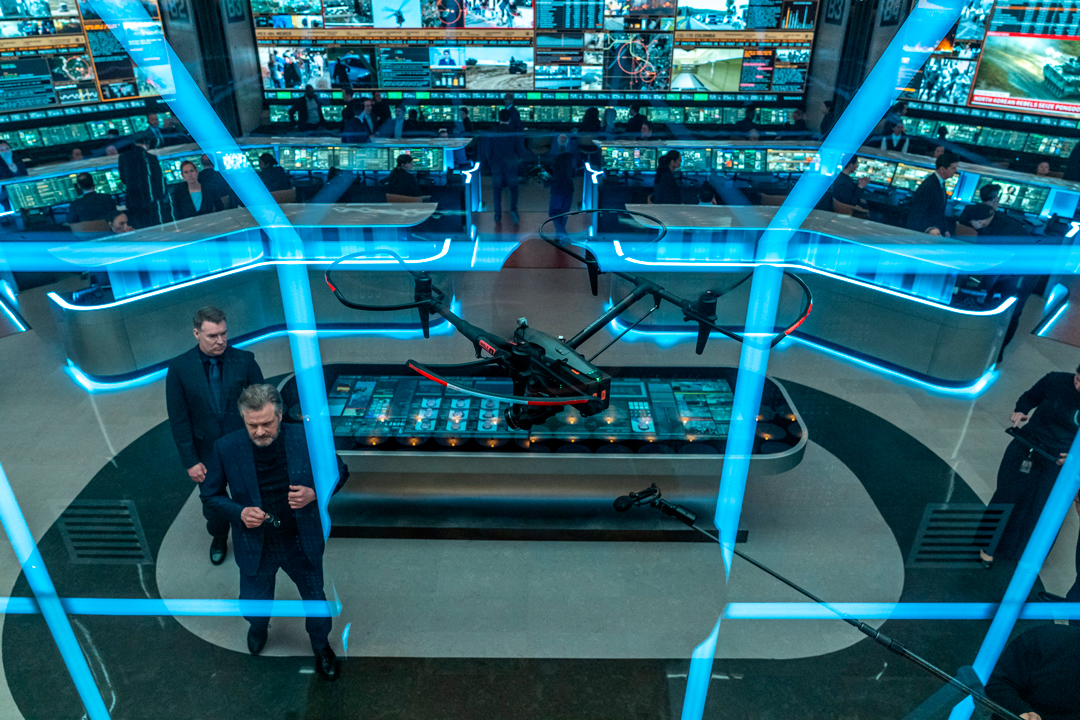
Photo by Niko Tavernise, courtesy of Universal Studios and Amblin Entertainment
CO: You had mentioned the big trailer shot of the car crashing out of the side of the farmhouse. I did want to get a little bit more into that sequence. I understand that the first part of that sequence—the oner that follows Daniel as he’s heading to rescue Jane—starts out as a drone shot, and then there’s an invisible stitch where it transitions over to Dave operating. Then after the car crashes out of the house and it goes into the big chase sequence, there’s a lot of drone stuff in that. Tell me about what it was like working on both halves of that sequence.
Kennedy: It was cool. We knew going into the day that we were going to do the fence shot. It wasn’t necessarily choreographed the way we ended up doing it on the day, but we knew the premise of the shot and that we wanted to see him through the fence. The crossover through the fence happened on the day. Once we were flying, we found out we could cross over the fence, and that got approved. But that shot was not easy. Flying that low and that close to talent is never easy, because it’s not just the drone that needs to be on its marks, the talent needs to be on their marks too.
On the flip side, the shot of the car breaching the wall wasn’t supposed to be a drone shot going into the day. They only had one wall, so it might have been a good thing we didn’t know we would be doing that shot going into the day, because it was definitely a high-stakes shot. My pilot Jon Graham and myself have been flying together for 11 years, so we stick to our experience and stick to the systems that we have in place, and the shot came out incredible. I think that’s what makes myself, Jon, and everyone we have at Flying Monster special: we can roll with the punches. We can have the drone in the air and if the shot changes, we can adjust without the need to land. The best thing about a drone is that it’s like a camera you can put in 3D space. You don’t have to move a crane base, you don’t have to move the dolly track, you want the drone up in that corner of the room? Okay, now it’s there. The fact that we’re able to always roll with the punches and throw in our experience on top of what the director and DP might want to do, I think you get a lot out of us if we’re used the right way.
CO: So, we’ve talked about the big farmhouse setpiece, we’ve talked about some of the stuff at the Wardex headquarters. Are there any other drone shots on the film that you’d like to highlight?
Kennedy: There’s the shot when Daniel is on the phone in the field and the camera’s circling around him, flying through the grass, and then the last time they cut to that, the drone booms up and the crop circle reveals itself. Flying through the grass looked really cool. Again, not something we knew we were going to do on that day. It was just supposed to be circling, but once we dropped the camera lower into the grass, Steven just loved it. The camera is the lowest part on the Inspire 3, so we were able to dip the camera down into the grass while the drone was still above the blades. It’s a really cool shot that you would think was probably done on a Steadicam, at least up until the boom up, but the whole thing was done on a drone.
I think I counted 30 drone shots in the film, but like you said, they’re very well placed. I think your average viewer would count maybe 10 to 15 drone shots, but the way that they’re seamlessly edited into the film doesn’t make them obviously stand out. We’ve always said that our favorite drone shots are the shots that don’t look like drone shots. We like to be low and close, not just providing wide shots that are interstitial transitions between scenes. We like to be in the action, then as a viewer, it doesn’t take you out of the story.
I have to say it was an honor being able to work with Steven and Janusz and their crew. Everyone you work with on a Steven Spielberg set is at the top of their game, and I think that shows when you see the film. The cinematography was top notch in Disclosure Day, and hats off to Janusz for doing a great job and trusting us at Flying Monster to uphold his standard for cinema.
BEHIND-THE-SCENES
Select Photo for Larger View
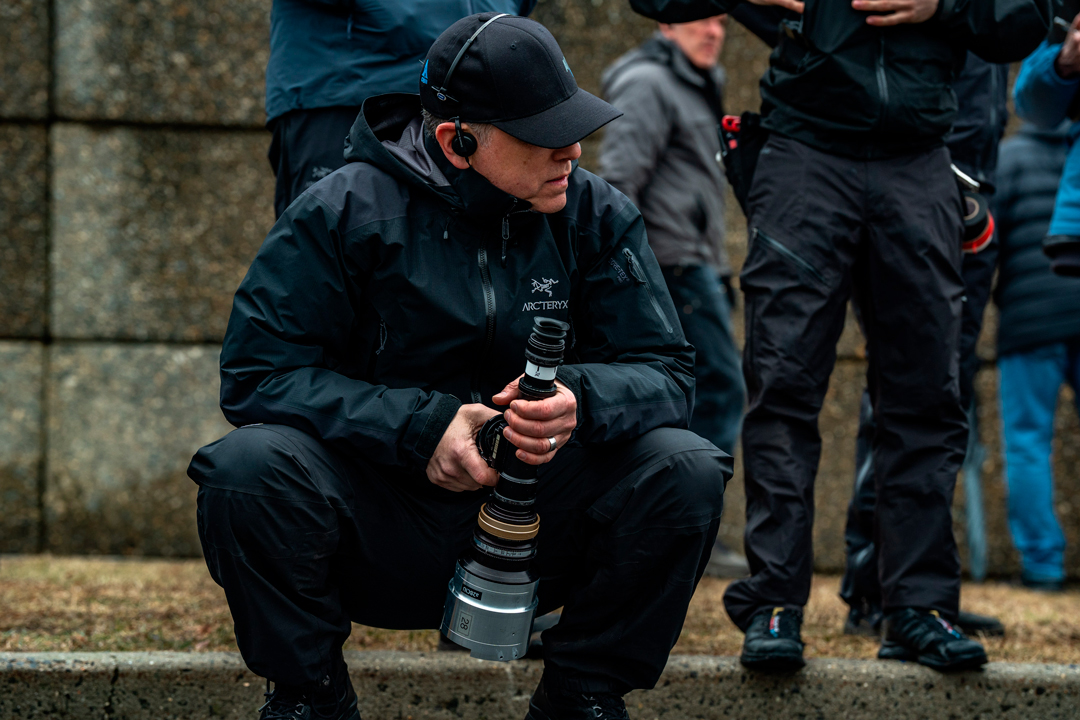
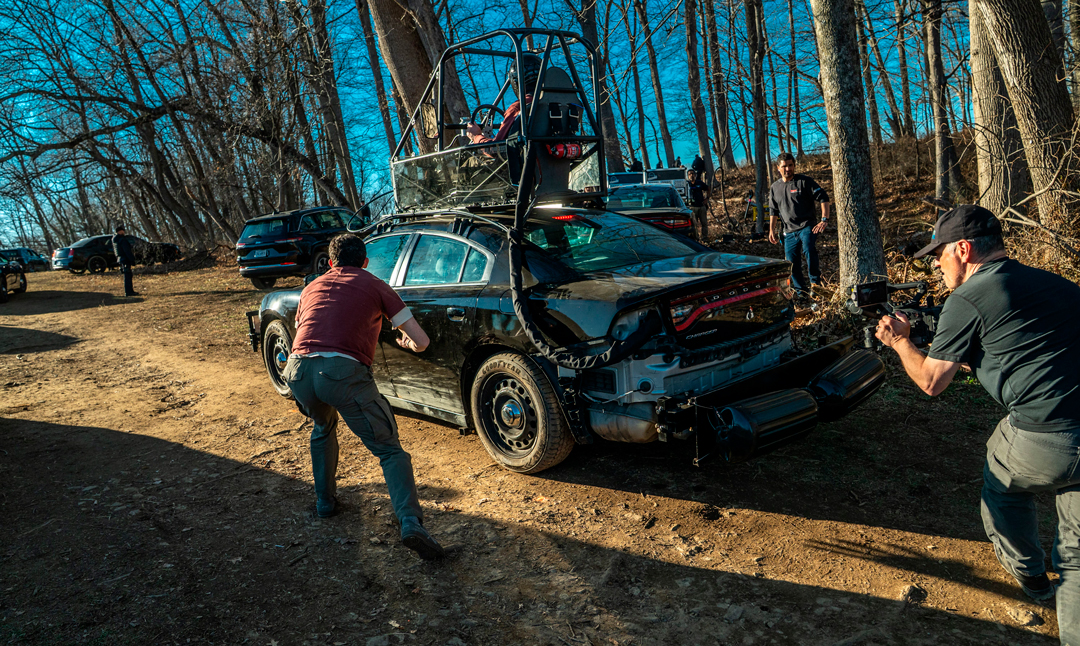

Camera Operator Summer 2026
Above Photo:
Courtesy of Universal Studios and Amblin Entertainment
Read the Summer Issue
TECH ON SET
- Panavision C Series, T Series, and Primo lenses
- Panavision Panaflex Millennium XL2
- ARRI ALEXA 35
- Sony VENICE 2
- DJI Inspire 3
- Phantom high-speed camera
- GoPro
RELATED CONTENT
Watch the trailer for Disclosure Day
David Emmerichs, SOC
Learn more about David Emmerichs’s career and projects at IMDb.com
Content Portal:
Camera Operating Lecture Series: Class #2 – The Work of the Operator: Shooting Basic Scenes
SOC presents “Operator to Operator” at ARRI Rental NY
Camera Operator Magazine:
“Taming 3D Steadicam for Avatar”, Spring/Summer 2010 Camera Operator
John ‘Buzz’ Moyer, SOC
Learn more about John “Buzz” Moyer’s career and projects at IMDb.com
Content Portal
Camera Operating Lecture Series: Class #3 – The Work of the Operator: Setting Up the Shot
Five Towns College Presents: Camera Operating
SOC presents “Operator to Operator” at ARRI Rental NY
Camera Operator Magazine:
“West Side Story: Musical on a Massive Scale,” Winter 2022 Camera Operator
BEHIND-THE-SCENES
Select Photo for Slideshow
SIGN UP FOR THE FREE DIGITAL EDITION OF CAMERA OPERATOR
Click Here
ENJOY PAST ISSUES OF CAMERA OPERATOR
Click Here
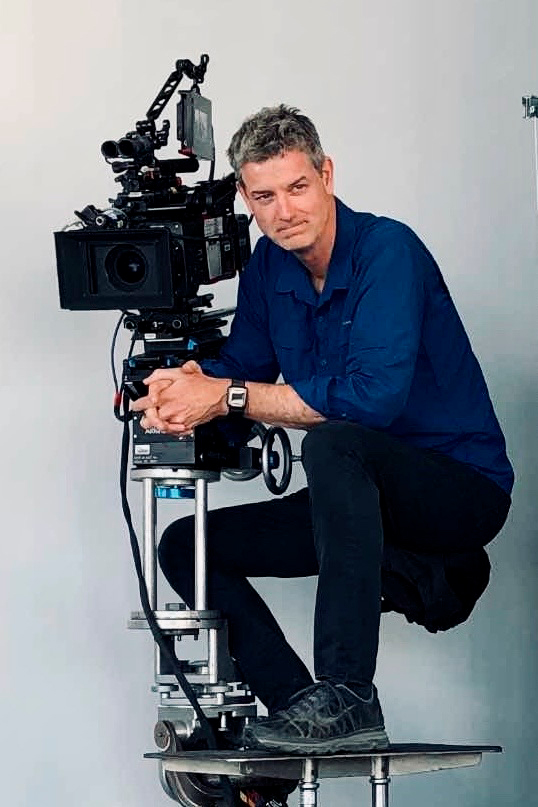
David Emmerichs, SOC
David started making animated films in his basement when he was 11. He went to NYU film school to attend their animation program, but got sucked into the world of live action when he tried on a Steadicam at a trade show. Obsessed, he had his first rig before graduation and began working his way up, through music videos and low-budget movies. He then moved to Hollywood and began breaking into the world of big feature films; especially movies where lots of big things blow up. He joined the SOC in 1995 and has been working as an A Camera and Steadicam operator ever since.
While Disclosure Day is one of his most recent, he has also had the good fortune to work on films such as Seven, Armageddon, Nixon, Tomb Raider, The Green Mile, Catch Me if You Can, Transformers, Avatar, Real Steel, The Accountant, and Nocturnal Animals. He lives right under the Hollywood sign with his fantastic wife, Liz Vassey.
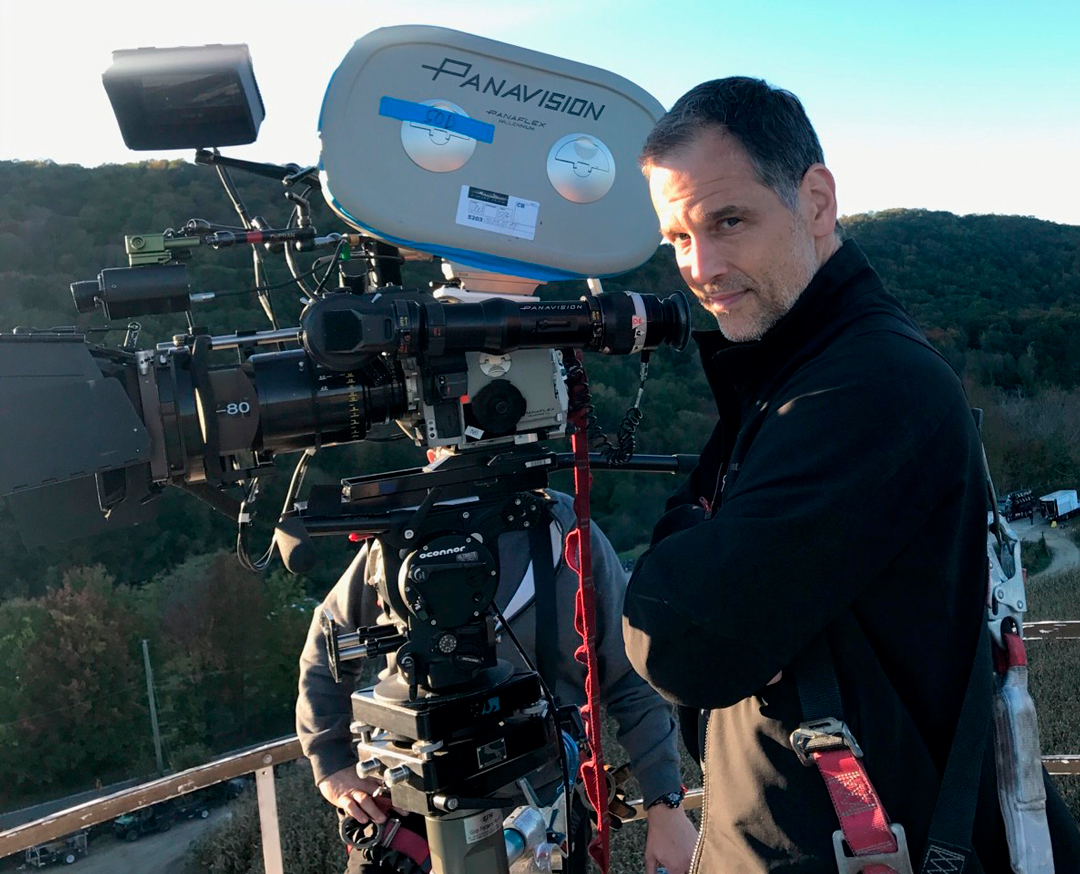
John “Buzz” Moyer, SOC
John “Buzz” Moyer, SOC, raised in Sewickley, Pa., graduated with a BS in Cinema/Photography from Ithaca College. He began his freelance career in Pittsburgh, starting in the corporate and commercial world.
Buzz has now been operating close to 40 years. His work includes, among many others, The Devil Wears Prada 2, White Lotus (1st season), The Secret Life of Walter Mitty, Jack Reacher, Steven Spielberg’s The Post, and West Side Story.
Buzz is proudly a member of IATSE 600 and the SOC, where he serves on the Board of Governors and education committee. Also active in the Steadicam Operators Association, Buzz instructs and mentors new invested operators.
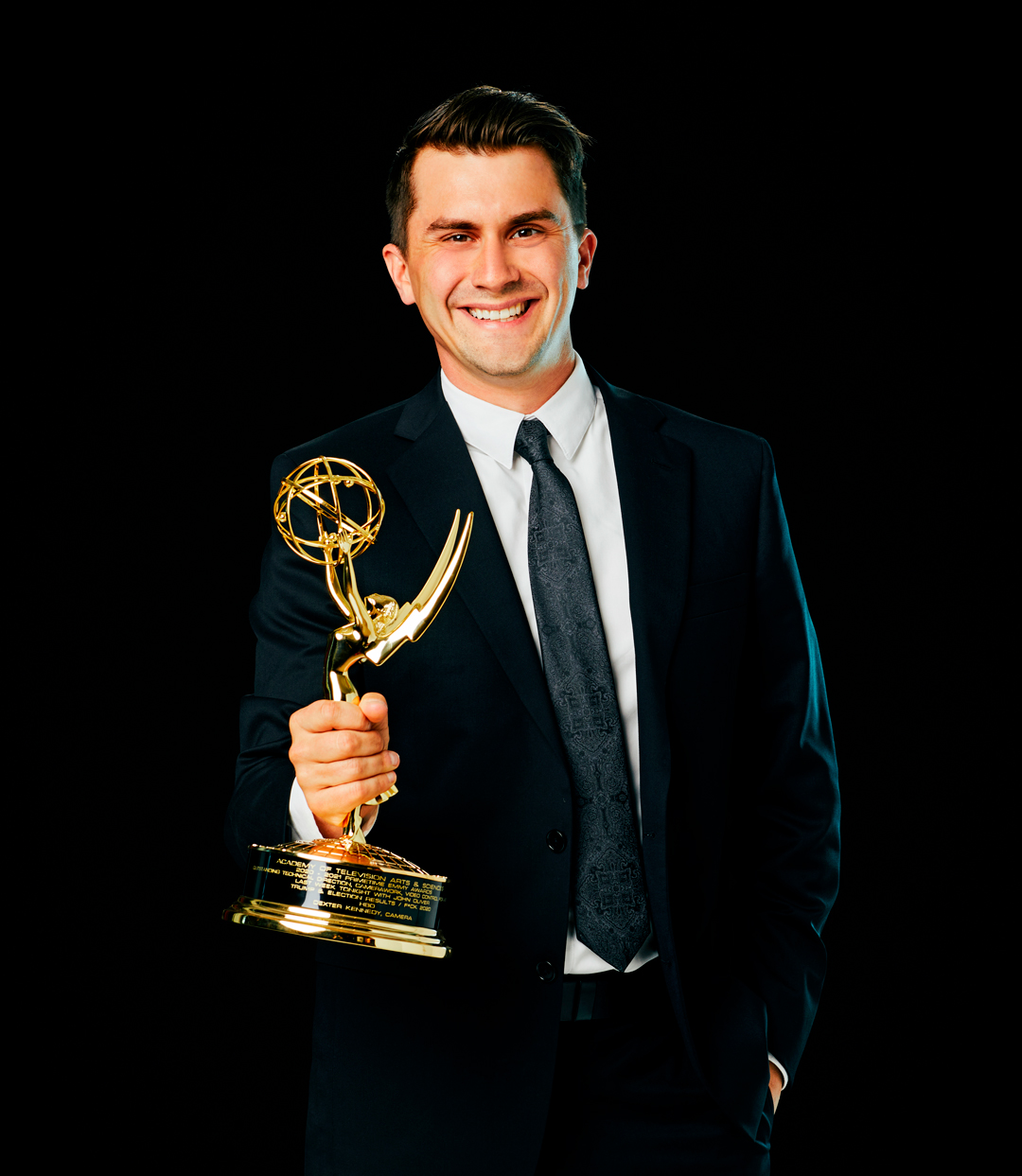
Dexter Kennedy, SOC
Dexter Kennedy, SOC is an Emmy Award-winning drone operator and aerial camera specialist working in film and television. He received a Primetime Emmy Award in 2021 for his work on Last Week Tonight with John Oliver. His credits include West Side Story, The Whale, Severance, and The Eras Tour. Kennedy specializes in cinematic aerial storytelling, collaborating with directors and cinematographers to capture innovative, story-driven imagery for feature films, television, and live productions.
David Daut
A writer and critic for more than a decade, David Daut specializes in analysis of genre cinema and immersive media. In addition to his work for Camera Operator and other publications, David is also the co-creator of Hollow Medium, a “recovered audio” ghost story podcast. David studied at the USC School of Cinematic Arts and works as a freelance writer based out of Long Beach, California.
SPECIAL THANKS TO OUR ADVERTISERS