

Gladiator II
Egoless Operating
A Conversation with Pete Cavaciuti ACO, GBCT, Assoc BSC
By David Daut
After taking home five Oscars and becoming one of the highest-grossing films of 2000, development quickly began on a sequel to Gladiator, but after years of false starts the project appeared to be dead. Director Ridley Scott, however, refused to let the idea die, and now, 24 years after the original film’s release, Gladiator II has arrived in theaters.
We had a chance to interview A Camera Operator Pete Cavaciuti ACO, GBCT, Assoc BSC about what it was like to come onto this project given both the weight of Gladiator’s legacy as well as the way filmmaking has evolved over the past two decades.
After Maxiumus dies in the arena during his duel with Commodus, his son, Lucius, is sent away from Rome to keep him safe. Years later, the province where Lucius lives is invaded by Roman soldiers who kill Lucius’s wife and sell him into slavery. Forced to fight in gladiatorial combat, Lucius catches the eye of Macrinus, who sees in Lucius a tool to overthrow Rome’s twin emperors, while Lucius sees in Macrinus a path to his revenge against the Roman general who led the attack on Numidia. Gladiator II is directed by Ridley Scott from a screenplay by David Scarpa. It stars Paul Mescal, Pedro Pascal, Connie Nielsen, and Denzel Washington.

Camera Operator: With Gladiator II, you have Ridley Scott and John Mathieson coming together for the first time since, I believe, 2010. Can you tell me a little bit about what it was like joining that team?
Pete Cavaciuti: I’d worked with John on at least five pictures, and I’d worked on Robin Hood with Ridley for six weeks in Wales as well as a couple of days on Prometheus. So, I was very used to working with John, but it was different with Ridley. Ridley uses multiple cameras now—anywhere between six and ten cameras at a time—so I had to get my head around that and the logistics of how we managed the department. But, when I got the call from John after he’d been given the job, I was really excited for the challenge. Obviously the original Gladiator was so well received, and it’s become something of a classic film in the years since it was made. So, to be a part of this was a really exciting prospect. I love the way Ridley works; it’s incredibly dynamic, and it’s a real challenge for an operator. I was thrilled to be in that group again with John, who is such a superb, inclusive, creative cinematographer. It was a chance not to be missed for me.
CO: I’m curious, could you tell me a little bit more about that multi-camera set up that Ridley Scott uses? That sounds very different from what you would do on a typical shoot.
Cavaciuti: Yeah. You know, on the original Gladiator, it was two or three cameras on set, from what I understood. And they would bring in a second unit now and again when they had the bigger scenes. But these days, Ridley likes to shoot with that many cameras because it helps with actors’ performances. There aren’t any continuity issues; you get coverage that will cut seamlessly because there are 12 cameras filming it in real time.You have to throw normal sensibilities out of the window as an operator, because very often you’d have other cameras in your shot. With the aid of CGI, a lot of stuff that’s not wanted in the shot can be removed. That said, we did try and keep each other out of shot as much as possible, but it wasn’t possible all the time.
As an operator, you had to compromise because sometimes another camera would cross your frame. It was done by methods of negotiation with the other operators to try and protect your frame. That was successful most of the time, but you had to approach it in an egoless way. The way we got through this film was to be as cooperative as possible with each other. If everybody had been vying to get the best shot, it would never have worked. We had to think about how to best serve the film with what we were doing. So, having an ego-free camera department was a huge success. We did it in a non-hierarchical way. We’d meet outside Ridley’s trailer in the morning, and Ridley would give us some key camera positions to shoot from. Sometimes he’d say if he wanted a Steadicam or a crane, but very often it was left up to us which camera platform to use. After the meeting with Ridley—which most of the operators would attend—John and I would go through a list of the operators and decide who was on which camera platform. It was done very democratically and in a very efficient manner.

CO: Speaking to the differences in filmmaking in the 24 years since the first Gladiator came out, there’s not just the way that Ridley Scott shoots now versus then, but also advances in computer generated imagery, shooting on digital versus film. How much were you looking to the first movie to inform the style of this one, versus how much was this finding its own visual identity?
Cavaciuti: I think we all refer to it as a dramatic piece, and we sort of always refer to it in our minds. I must have seen the original 10 or 15 times—probably more—so it’s sort of embedded in my brain. You would try and evoke the first film in frames, and it was certainly chilling when we were on the set in Malta, in the Colosseum, being in the same place that Russell Crowe and Connie [Neilsen] had been in before. You felt the weight of history. But, I don’t think we referred to it too much because the nature of how we did things was so far removed from the first film. In interiors, you’d very often have five or six cameras, and it was shot in a different way. Traditionally, you’d probably try and get the camera more on the eye line for interactive moments between actors, but we couldn’t repeat that a lot of the times, because we would have ended up shooting each other in impossible situations. If you have an over-the-shoulder on two actors, we couldn’t have painted each camera out, so the cameras had to be slightly off the eye line.
So, there was that stylistic difference, but in other situations, we could be on the actor’s eye line. I did some close-ups of Denzel when he was in the emperor’s box, and my camera was right on his eye line there. We had to make compromises on intimate eye lines, but that’s not a concern of Ridley’s. Ridley wants to shoot at a fast pace and get things done as efficiently as possible. We had a lot of freedom as operators, though, because once we got our shot, we really had to rely on our imaginations. We had to push our shot to the limit all the time, because we’d go away, set the shots up, and then Ridley would call us on the radio and say, “Pete, what have you got for me?” God help you if you didn’t get something interesting. He’s obviously very knowledgeable because he was a good camera operator in his time, so you get a great deal of praise if something was good, but if it was bad, you’d have the opposite. So, we kept on our toes.
CO: On that note of being given freedom to be creative and find things in the moment, can you remember any specific examples of something where you made a creative decision that you felt really added a little bit extra to that moment?
Cavaciuti: One of my favorite shots was just after Lucius has killed Macrinus in the river. We were incredibly fortunate with the light; it was a late afternoon shoot, the sun was just about to hit the hilltop, and it was a beautiful golden light. It was like a cliché, magical Gladiator moment. The sky was this bright orange color, and I saw this shot of Lucius leaving the river and walking over to the Roman soldiers. I said to myself, this is a great Steadicam shot. I’ll be wide—full length—so I can see all the opposing Roman soldiers on the far bank of the river. Then I’ll let Paul Mescal—Lucius—walk towards me, and I’ll swivel around on Ravi [Alexander Karim] and one of the Roman generals. I just saw the shot in my head, and I was lucky. It just worked beautifully.
You’d have the room for that creativity with Ridley. All the other cameras were basically pointing at me, so I knew that for a second I’d bone the other cameras, but it’s in the film and it is a beautiful shot. Then when I let Paul out of shot, I knew to get out of the way so the other cameras could do their stuff.

CO: I know this was a pretty huge project, shooting across multiple countries on these massive sets. Can you tell me about what it was like working on a film of this scale, and what some of the challenges that came with that were?
Cavaciuti: When we arrived in Morocco—where we shot first, just outside Ouarzazate—there was a huge set that was used by Ridley on Kingdom of Heaven. It’s the biggest fortified castle set I’ve seen in my life. It must have been 300-yards long. John Mathieson delighted in telling me you could see it in a satellite picture from Google Earth. And you can! Just zoom in outside Ouarzazate, and you see this huge set. They’d extended it by 30% for a scene that was ultimately cut from the script where there were going to be ships attacking the fortress and knocking down the gates. It was very humbling because the sets were just so big. Our communication had to be incredible there because you’d have 300 yards between the cameras. It was just humbling, really, to be on something of that scale.
CO: I think the thing that a lot of people will remember is the big spectacle of it—the invasion of Numidia, the battles in the Colosseum—but you also have the tense, close quarters, political machinations with the Roman Senate. Can you talk about what it was like scaling up and down in those different modes with the way that Ridley Scott shoots?
Cavaciuti: When we scaled down, that was more usual territory for us operators. We’re very used to working in smaller interiors, so when it got intimate it was still a challenge—it usually is—but that’s more familiar territory for us. The big scenes were more like capturing a live event. In front of the Numidian castle, there was a trench dug so the boats could be transported on shipyard carriers, these incredible flatbed devices that the wooden Roman ships were built on. We’d go from incredible heat—because it was 40 degrees Celsius out there, so people were getting fried every day outside—and then you’d have the respite of going inside to the smaller sets. But there still might be three or four cameras in the smaller sets.
CO: One particular sequence I wanted to talk about is the sequence in the Colosseum where it’s flooded with shark-infested water and you have the gladiators doing combat across boats. Can you tell me about what went into shooting that?
Cavaciuti: Clearly there was no water. All the water was CGI, so we didn’t have any obstacles with water. We just had to bear in mind the level of the water so you couldn’t have your camera below a certain point unless it was intended to be below water level. Anything that was filming in the arena had to be just above water level. We had a 75-foot crane on a motorized base and a 45-foot crane on a motorized base. Those were used a lot, and then the other cameras would be on dolly and track above water level.
We had other operators disguised on the boats.There are a lot of fantastic handheld shots of oarsmen rowing or soldiers firing arrows. That was done handheld, and there’d be people up in the arena as well.

CO: Were there any other parts of the movie that were particularly challenging, even something that maybe the audience wouldn’t expect?
Cavaciuti: It’s challenging in the respect that you very rarely get a rehearsal with Ridley, so you’ve got to be at the top of your game all the time. And then you’d be lucky to get any more than two takes. It was a real pressure on the operators because you couldn’t ask for another take because of the speed that Ridley wanted to shoot. One or two takes, and he’d move on. The advantage of having seven or eight cameras is that Ridley would set up the two or three cameras that he was relying on for the scene, and he would just check on playback if everything was all right on those cameras. If they worked, great. But if not, you had the other cameras as options. The real challenge was just being on top of your game because you knew you wouldn’t get any more than two or three takes, and then we’d be on to something else.
CO: As an operator, what do you do to stay “in the zone” or stay in that mode where you can work at peak efficiency, knowing that you’re only going to get one or two shots at something?
Cavaciuti: I think you just have to be incredibly flexible in your outlook on things because from scene to scene, you could end up anywhere. I was going on and off Steadicam, onto cranes, onto handheld. It’s like I was saying before about sacrificing your ego. You just had to devote yourself to Ridley’s vision, which was a pleasure to do but you had to be really flexible. Pulling out those creative stops all the time, looking for the best shot. And many operators were hidden in shot. They were dressed up in Hessian garb to look like part of the crowd, or they were hidden behind pots. It’s this egoless, non-hierarchical approach that you had to bear in mind all the time.
CO: With the original film there was a great ensemble cast, and this one is no different. You’ve got Paul Mescal, Pedro Pascal, Connie Nielsen, Denzel Washington is incredible in this. What was it like working with this cast?
Cavaciuti: It was pretty incredible. One of the actors you didn’t mention was Derek Jacobi, who was in I, Claudius. I’ve worked with Derek once before, but it was a joy to see him again. My youth was spent watching I, Claudius, so to be in the same room as Mr. Jacobi was just incredible.
When Denzel walked onto set, it was really charged. I think he gives a really unique performance. Perhaps not what you’d expect. You can tell that Macrinus is a really scheming person by looking at Denzel’s silent moments. You can tell that he’s thinking about where he’s going as a character. The looks he gives Connie when he’s in the box, when he realizes that Connie is Lucius’s mother, it’s just intriguing. They’re such great actors. It’s just incredible to be with those guys.

Camera Operator Winter 2025
Above Photo: Paul Mescal as Lucius & Pedro Pascal as Marcus Acacius in GLADIATOR II
Photos courtesy of Paramount Pictures
TECH ON SET
75’ Technocrane on a Motorized Base
45’ Scorpio Crane on a Panaviper Base
GFM GF8 Crane
GFM Multi-Jib
GFM Jib
Two Libra Heads
Mini Libra Head
Scorpio EZ Head
Three Peewee 3 Dollies
Three Hybrid 3 Dollies
Two Steadicam Systems
Ten Camera Bodies
Approx. 60 Lenses
Two Z-Cameras
PHOTO GALLERY
Select Photo for Slideshow


SIGN UP FOR THE FREE
DIGITAL EDITION OF
CAMERA OPERATOR
Click Here
PHOTO GALLERY
Select Photo for Slideshow
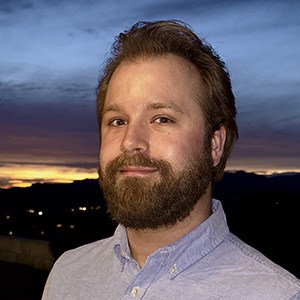
Peter Cavaciuti ACO, GBCT, Assoc BSC
Peter Cavaciuti was born in London to an Irish mother and a father of Italian heritage. He had a passion for drawing as a child, which led him to study at the Hornsey College of Art in 1977. Whilst there he made short super 8mm films including The Worker, which was selected for the New Contemporaries exhibition at London’s Institute of Contemporary Art (ICA) in 1981 and ran for six months at the London Film Makers Co-Op in London. He first became interested in Steadicam operating after watching Garrett Brown, SOC, associate ASC, DGA’s iconic work on The Shining (1980 d. Stanley Kubrick, p. John Alcott BSC). After graduating in 1981 he headed to Liverpool to join the crew of the Channel 4 soap opera Brookside as a television camera/trainee/assistant. After six months he was promoted to television camera operator and eagerly took the opportunity to operate the recently acquired Steadicam, bought by Mersey Television, the Brookside production company. He left Brookside in 1984 and worked as a 1st Assistant Director on the feature film A Letter to Brezhnev (1985 d. Chris Bernard, ph Bruce McGowan), however he realised his passion lay behind the camera, not in directing. He moved back to London in 1985 and worked as a freelance camera operator on commercials and music promos, where he met and worked with Sir Roger Deakins CBE ASC BSC on a video for Eric Clapton, Forever Man (1985 d. Godley & Crème).
Peter’s first film as a Steadicam operator was shooting additional material on Highlander (1986 d. Russell Mulcahy, ph. Gerry Fisher BSC), continuing with Aliens (1986 d. James Cameron, ph. Adrian Biddle BSC) and Hearts of Fire (1987 d. Richard Marquand, ph. Alan Hume BSC). He reunited with Deakins on The Secret Garden (1993 d. Agnieszka Holland), furthering a career-long collaboration. This was followed by working with one of his heroes, director Martin Scorsese on Kundun (1997), which was nominated for an Academy Award for Cinematography. In 1998, he was offered the opportunity to collaborate with another of his heroes, Stanley Kubrick, on Eyes Wide Shut (ph. Larry Smith). “The first Day was terrifying and my knees were knocking but, after day one, we got on like a house on fire. Stanley was very kind and generous with his time and information.”
After numerous collaborations with Deakins, Peter joined him on Blade Runner 2049 (2017 d. Denis Villeneuve) and again in 2019 with director Sam Mendes for the First World War epic 1917. Filmed to give the illusion of one continuous shot, it won an Academy Award for Deakins, a BAFTA Award, and an ASC Award and a BSC Award for Cinematography. Deakins also won an Academy Award and a BAFTA Award for Blade Runner 2049. Peter has collaborated with cinematographer John Mathieson BSC and most recently on Gladiator II (2024 d. Sir Ridley Scott). Peter is a founding member of the Association of Camera Operators and was invited to join the BSC in 2005.

SPECIAL THANKS TO OUR ADVERTISERS

