
Lessons in Chemistry
Chemistry on Set
A Conversation with Mikael Levin, SOC
By David Daut
Blending the worlds of chemistry and cooking, TV production and education, and women’s rights and civil rights, Lessons in Chemistry shows both the connections and the tensions between these things as protagonist Elizabeth Zott fights to make space for herself in a world that would prefer her to be just a pretty face.
In telling this story, four different sets of directors lent their creative voices to the project—each bringing their own ideas and aesthetics to bear. In our conversation with A camera and Steadicam operator Mikael Levin, SOC, we talked about what it was like adapting to those different styles while also combining them into a cohesive visual language for the series.
As a chemist fighting for recognition in a field dominated by men, Elizabeth Zott finally finds a partner in the acclaimed, but burnt-out chemist Calvin Evans, who recognizes her exceptional scientific skills. As Zott and Evans’ professional partnership develops, so too does an unorthodox romance, until both are cut short by tragedy. Without Evans to champion her work, Zott is promptly let go from the institution where she’s been working, while her work is stolen by other, less talented chemists. Struggling to find a new path forward, Zott ends up turning to an unconventional place—a televised cooking show—to teach fundamentals of chemistry while also inspiring her viewers to pursue their passions even as the world tells them they can’t. Based on the novel by Bonnie Garmus, Lessons in Chemistry is created by Lee Eisenberg and stars Brie Larson, Lewis Pullman, Aja Naomi King, Stephanie Koenig, and Patrick Walker.

Camera Operator: First of all, I wanted to ask, how did you get hired to work on Lessons in Chemistry?
Mikael Levin: I had a previous working relationship with Jason Oldak, who was one of the DPs on Lessons in Chemistry. We’ve done a lot of other shows together, so he put my name forward, and I interviewed over the phone with the other DP, Zach Galler. We talked for probably about an hour and a half; it ended up being less about work and more about general life stuff, and seeing if our vibe was right. We got along really well, and so Zach was gracious enough to take Jason’s recommendation, and that’s how I got the job.
CO: I know throughout the series, there were four different sets of directors, as well as the two different DPs working on it. Can you talk a little bit about what those working relationships were like throughout the show?
Levin: Since I already had a really strong working relationship with Jason, I’m able to anticipate what he wants, what he’s going to ask for, as well as understanding what his visual language is—sort of the do’s and don’ts of what he likes. He was the DP on Blocks 2 and 4 (Episodes 3/4 and 7/8). And while Zach and I had never worked together, I quickly discovered we have very similar taste. Both Jason and Zach are a pleasure to work for because they know exactly what they want and can communicate it clearly, but at the same time give their crew a lot of creative license and sovereignty. I really felt liberated to be able to inject myself into the project and, if I had an idea, to pitch it to them or to the directors. I never felt creatively stifled by either of them, so that was really wonderful to have that with both DPs.
As for the directors, you go into it completely blind. You have no idea what everyone’s background is, what everyone likes to focus on. Bert and Bertie, for example—who did the second block episodes, three and four—had a very specific visual style that they wanted to bring to the show. So, it’s about trying to incorporate their ideas into what has already been established as part of the language of the show. That is always a bit of a challenge, but it’s part of what makes the job fun. You have all these different voices that are trying to make and elevate the show, so how do you combine them in a seamless way where the audience doesn’t feel a big difference between episodes? I think a huge part of the job of the operator is to just be a good listener and to be able to read the room. Learn to be a chameleon and be adaptable to all those changes, while still protecting the DP and maintaining aesthetic consistency.

CO: Digging into that idea of being given leeway and freedom to inject your own personality into it, can you think of any specific examples where you had an idea for a shot or a way to improve a shot that you pitched? Something that was memorable or you’re particularly proud of?
Levin: In every shot, there’s always something. I constantly ask myself while lining up and executing a shot, “What’s one thing that would make this better?” What if I boomed down a little bit? What if I move that thing in the background or add some foreground? Or do we start this move a little later? Does the boom operator know what the frame lines are? And that exercise continues after every take. I consciously try not to be complacent. If the DP or the director says, “Give me a wide here,” I’m going to try to make it the best version of that wide possible. I try not to just be a yes-man on set; I want to offer something, even if the idea isn’t taken.
As for a specific thing, I remember in the opening shot, we were trying to figure out a transition for how to get from the crew and the stage manager pumping up the audience, back to Brie [Larson]. I remember working with Sarah [Adina Smith], our director, to have that stage manager turn and give a really over-pronounced countdown—“5-4-3-2-1”—and using the motion of his hand to pan over, and push into a close-up of Brie. That’s a tiny example of how sometimes it’s not even about a camera position thing, sometimes it’s just working with actors and the director on the blocking itself.
CO: Sticking with that opening shot, the series starts out with this almost two-minute-long oner following the action through the TV studio. You talked a little bit about the end piece of that, but can you go into a little more detail on what it took to get that shot? The setup, the rehearsal, the actual takes themselves?
Levin: It ended up being two shots stitched together, shot over the course of two days. It starts on a 50-foot Technocrane on 100 feet of track. The camera starts high and, as it booms down, we use the motion of a car to pan us over to Elizabeth Zott getting surrounded by her fans, which leads us into the interior of her studio. There’s a wipe there, and then it turns into a Steadicam shot where we follow Elizabeth through a flurry of crew members getting her show ready. Throughout the shot, you get a behind-the-scenes look at her crew members working in a frenzy. It ultimately lands on Elizabeth turning to camera and introducing us to her hit show, Supper At Six.
The shot is very dynamic because we constantly use the blocking and camera movement to hand off from one little vignette to another. There’s always some visual interest and smooth transitions to highlight the mayhem of production. You have to work really closely with the AD staff to perfectly place and time the background, and luckily the actors were extremely consistent with their performances. I also had a superb dolly grip, Joe Ruiz, who not only did a great job on the crane but also helped spot me throughout the Steadicam portion.

As far as the rehearsal process, we wrapped slightly early one day, and we had the crew—PAs and the AD staff—standing in as all the people that would be in the shot. We rehearsed it for a few hours at the end of the day. That was one of the most rewarding parts of the show, actually. It was this moment where everybody came together and realized that we were making something special. It became a moment of synergy where I think the crew saw what this would eventually become. The next day we showed the actors the rehearsal. I remember take one being near perfect, which underscores the value of a proper rehearsal process.
One moment in that shot that I’ll always appreciate is with Brie. We’re following behind her as she’s walking through the studio, then at a certain point we pan off of her to start following the producer. At that point, Brie had to sprint behind me and get into position for the end of the shot, so that by the time I pan over, she’s already there. So, Brie runs at a full sprint off-camera, and then acts super poised, not at all breathless on-camera.
CO: So, you have this big, eye-catching oner at the very start of the series, but then, throughout the show going forward, there are these smaller, almost invisible oners. They don’t call attention to themselves as dramatically, but once you start to notice it, there are a lot of takes that hold for longer than usual, as well as movement following characters between rooms of the house. What were the conversations around having that be so central to the show’s visual language, and how do you think that affects the way that the audience experiences this story?
Levin: There’s this great quote from Gordon Willis that I read in American Cinematographer talking about how during the blocking rehearsal, he would always ask himself, if the scene were to be a oner, where would I put the camera? I’ve always thought that was a really inspiring way to think about coverage. Even if the scene isn’t going to be a oner, it gets you thinking about how to break the scene down into its core essentials. Saying the most with the least. Minimalism is really difficult to pull off, because there’s no formula to it. From the very beginning, that was a huge part of the conversation between the DP, the directors, and myself: How do we incorporate all the blocking and story beats into the least amount of shots possible? We hardly ever did two sizes of things, instead opting for one “correct” size.
That came into play very early on. As for how it affects the story, for one, it gives the actors a showcase for the amazing work that they do. It also lets us play things a little bit wider and a little bit longer. We had these incredible sets that our production designer built, and if you’re constantly cutting, it doesn’t allow the audience to sit and take that space in. Obviously it’s a period piece, and you want to be able to spotlight the world that they’re living in, so I think being a little bit more conscious about the edit allows the space to be a much more integral part of the story. And then, obviously, there are specific scenes where we’re using it to highlight tension. In Episode 1, there’s a more subtle oner that snakes through the lab as she’s getting heckled by a bunch of her male colleagues, and the whole thing just plays on her face. I really like that shot because you don’t need to see the people heckling her; it’s not about her toxic colleagues, but rather how her toxic colleagues make her feel.
Although that shot was Steadicam, I largely lived on the ARRI SRH 360 stabilized head on a dolly—sometimes even underslung on a cobra dolly to maintain a small footprint in our small sets. Our production designer, Cat Smith, also built the sets with floor that we could easily roll on. The entire set was basically a dance floor, which, combined with the remote head, made moving the camera extremely liberating. There are lots of benefits to being on a remote head, but the caveat is that you can sometimes end up a bit removed from the set. So I have to thank the AD staff and especially Jan Ruona and Ilan Levin, who on top of finding beautiful B camera shots and being wonderful human beings, were extremely valuable as extra lines of communication between my wheels and the set.

CO: And going back to this idea of the different directors injecting their own style and picking up these different pieces of visual language throughout the series, what were some other examples of personal flourishes or stylistic touches that were brought in and how you went about integrating those into the larger series?
Levin: Episode 7, directed by Tara Miele, plays out in letters between Calvin and Reverend Wakely. The script had very little screen direction; it was almost entirely dialogue in voice over. So, the challenge that Jason and Tara faced was creating visual interest in a story that is all about reading letters. The script was a bit of a blank slate. I think that was a huge obstacle, and I’m really proud of what Tara, Jason, Ilan, and I did there.
The other thing I could say is that Six-Thirty—the dog—is a big character in the show too, and the way everybody approached that was very different. There’s one episode directed by Bert and Bertie that is almost entirely from his perspective, so the task was how to tell a story that we’ve already seen before from a different point of view.
Something I really enjoyed doing on Lessons in Chemistry was finding the connective tissue between the actors, starting the shot on one person and wrapping around to find someone else. There can be a certain elegance to that kind of camera movement. Len Levine, our phenomenal gaffer who I am not related to, was so helpful in lighting spaces rather than individual frames. It opened up so many compositional opportunities and allowed for the freedom of movement I mentioned earlier.
CO: I wanted to talk a little bit about the cast. Obviously the big name here is Brie Larson, but there’s a ton of great performances throughout the series. What was it like working with this cast?
Levin: In a word, fantastic. They’re all so joyful to work with, and they were prepared and committed to the roles. They were also so receptive to technical directions. Oftentimes when you’re working with actors, you can feel a little intimidated. You can be made to feel like it is forbidden to talk to them or give camera notes. That was not the case at all on this show. It was really rewarding to have that sense of synergy between cast and crew— all the actors were very attuned to what the camera was doing and frequently adjusted their performance to make the shot better. Easily one of my favorite parts of being a camera operator is being “fifth row, center” for those kinds of performances.

CO: Reflecting on the series as a whole, what would you say were some of the biggest challenges?
Levin: The first thing that comes to mind is all the rowing scenes on the water. To begin with, we shot those scenes during wintertime, while being dependent on daylight. The schedule included both scenes on and off the water that day so we had a lot of work to do. On top of the time limitations, there’s also the physical limitation of how many times can you ask Lewis Pullman to row across a lake? It was a very difficult shooting situation; you’re not on a stage, you’re shooting boat-to-boat with a Technocrane. You have no rehearsals, you cannot point the camera towards anything in the background that is not period appropriate, and you only get one or two chances at getting all the coverage you might need for the entire scene… and to top it off, a lot of it was improvised. You have the director and the DP in one headset telling you what they want to do in the moment, and at the same time, you’re working on another headset with the dolly grip and crane operator. You’re trying to incorporate and execute everybody’s ideas for shots, including your own. I should mention focus wizard extraordinaire, Ian Barbella, for keeping it all sharp throughout, an especially daunting task considering the back and forth movement inherent to rowing.
In cases like that, when everything is going so fast, I think it’s helpful to slow down. Tuning out the pressure and just focusing on the story beats—what the scene is really about—helps simplify the challenge. You can focus less on the time and physical limitations, and more on the scene itself. That then starts to paint the picture of what coverage you actually need.
The other challenge on the show was the dog, Six-Thirty. The dog had never been on camera before, and when he started the show, he was just a puppy—a very soft and cuddly one. He’s such an integral character to the story. Making sure he always landed on his mark and had the right eyelines was definitely a challenge.
All that to say, it’s rare to work on a show where you have such impactful performances, such a powerful story, and such a great crew to tell that story. What I’ll always remember from this show is what happens when you have all of those things together. It really is magical. I made great friends, and I got to work with existing friends, including my brother. An important part of being a camera operator for me is setting the tone in the room. I think you can do your best work when you’re comfortable, so it’s really nice to be able to create an environment where people have the creative agency to inject themselves in the project or at the very least be engaged in the process, and I really enjoyed that element of Lessons in Chemistry, no pun intended.

Camera Operator Fall 2024
Above Photo: Filming Brie Larson as Elizabeth Zott in LESSONS IN CHEMISTRY
Photos by Michael Becker
TECH ON SET
ALEXA Mini LF
Canon K35 Lenses
ARRI SRH-360 Remote Stabilized Head
Chapman/Leonard MiniScope
PHOTO GALLERY
Select Photo for Slideshow


SIGN UP FOR THE FREE
DIGITAL EDITION OF
CAMERA OPERATOR
Click Here
PHOTO GALLERY
Select Photo for Slideshow
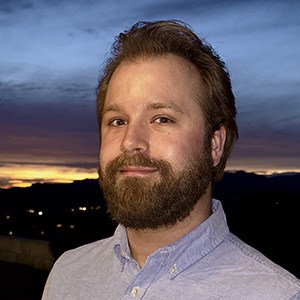
Mikael Levin, SOC
Mikael Levin, SOC, was born in Southern California to Mexican parents. Under the encouragement of his father, he grew up with a still camera in his hands. He graduated from USC film school and has since had the pleasure of working on numerous movie and television projects for Martin Scorsese; Joss Whedon; Jon Favreau; Garry Marshall; Janusz Kaminski, ASC; Kramer Morgenthau, ASC; and Yves Belanger, CSC; among others.

SPECIAL THANKS TO OUR ADVERTISERS