Unity and Desolation
Pluribus
An interview with Matt Credle, SOC
By David Daut
More than a decade before he created one of the most heralded television series of all time in Breaking Bad, Vince Gilligan cut his teeth as a writer, director, and executive producer on The X-Files. With Pluribus—now nominated for 18 Emmy Awards—Gilligan is returning to his roots in weird science fiction and paranormal thrillers in a show that asks, “What if one of the last real people on Earth was a bit of a train wreck?”
Camera Operator had the chance to sit down with series A camera operator Matt Credle, SOC; now a veteran of Vince Gilligan’s Albuquerque-based productions, to talk about the visual language of this show that emphasizes its characters’ isolation, as well as location shooting and working with background talent that are all effectively portraying a single character.
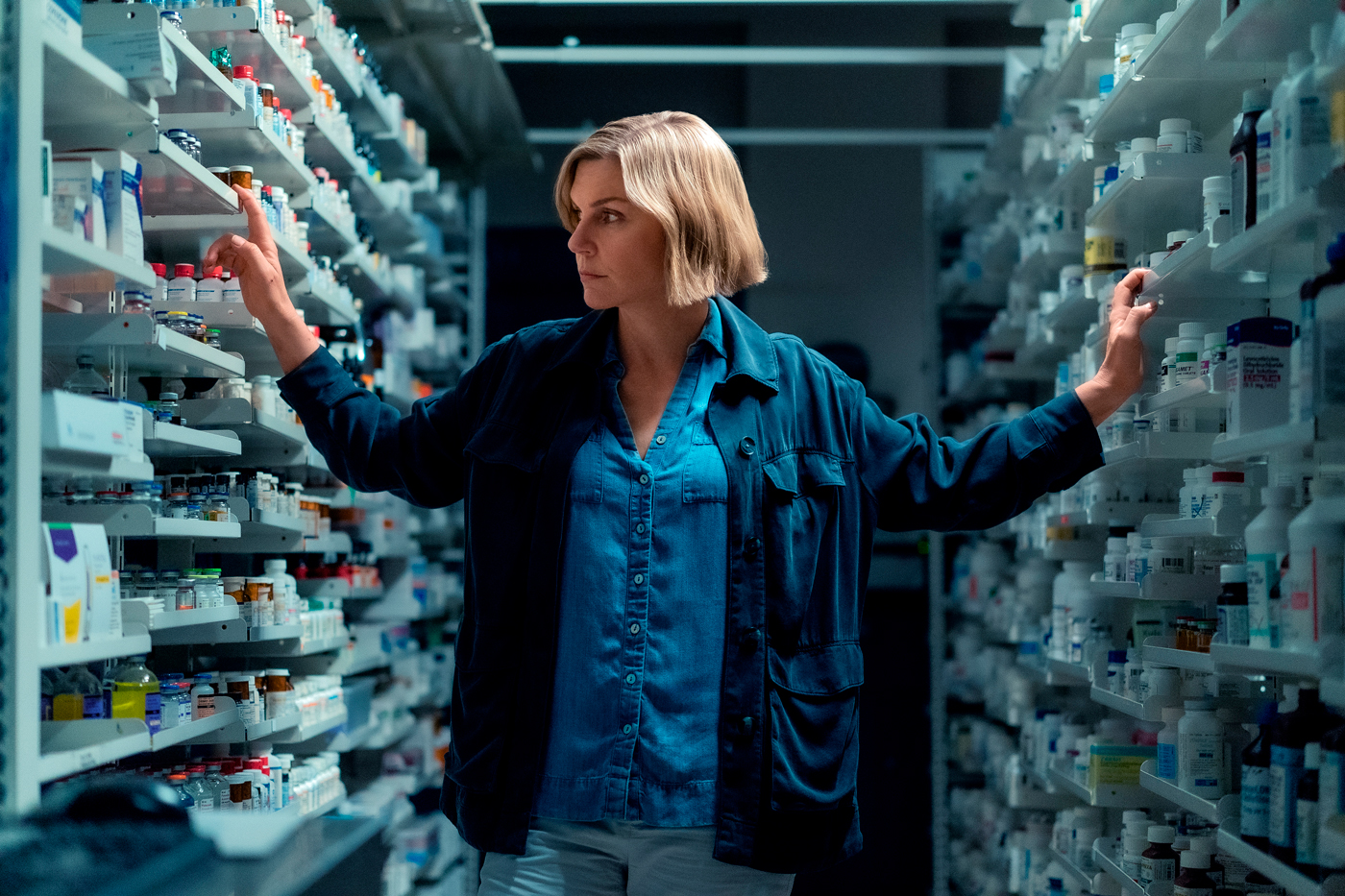
Carol Sturka is the author of a hit series of fantasy romance novels that she despises. Her ambitions of being a “real” writer and penning a great work of literature have given way to churning out lowbrow slop, while she drowns her feelings of self-loathing in liquor. Fittingly, it is at a bar where Carol notices planes flying overhead, spraying a chemical containing a mysterious RNA sequence broadcast to Earth from a far distant planet. As the fellow patrons of the bar start to seize before reawakening as part of a new global hive mind, Carol is faced with the fact that she may be the last hope to save humanity. Pluribus is created by Vince Gilligan, and stars Rhea Seehorn, Karolina Wydra, and Carlos-Manuel Vesga.
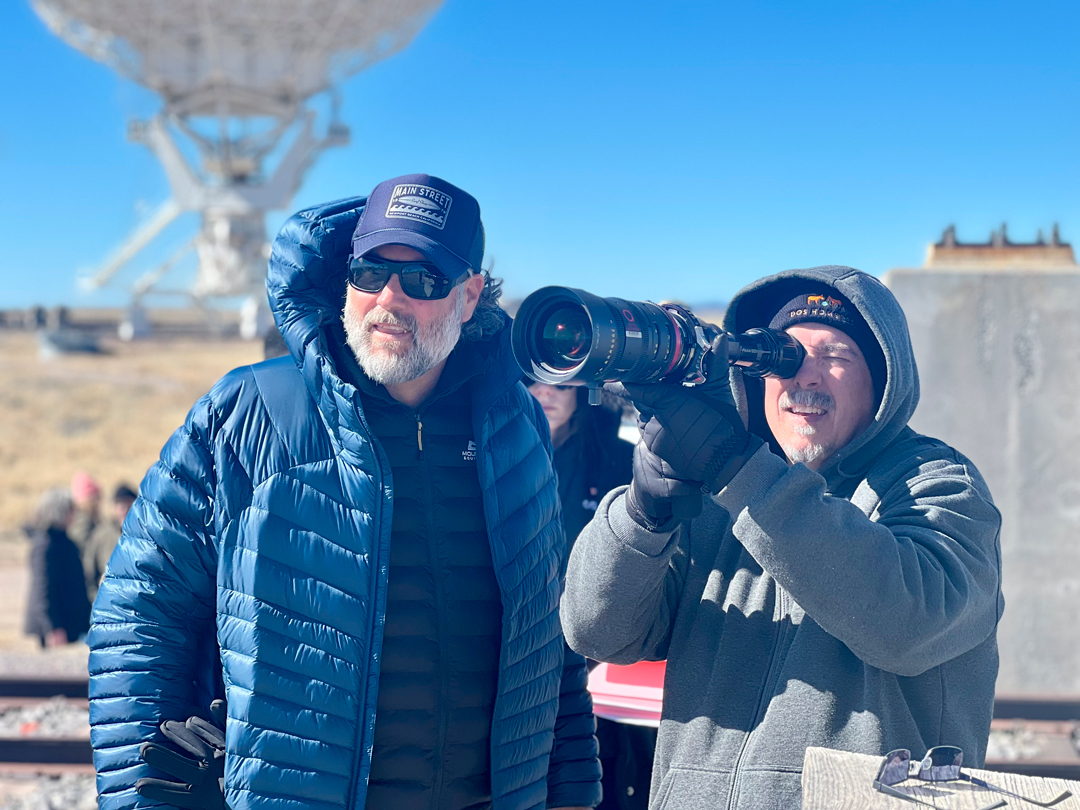
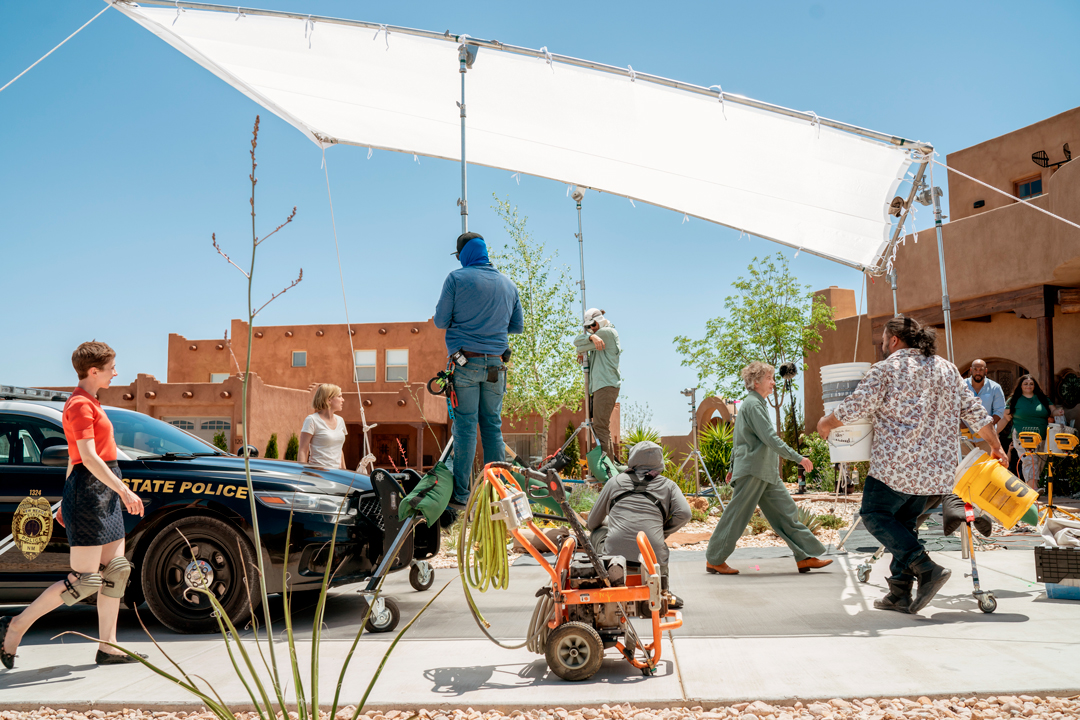
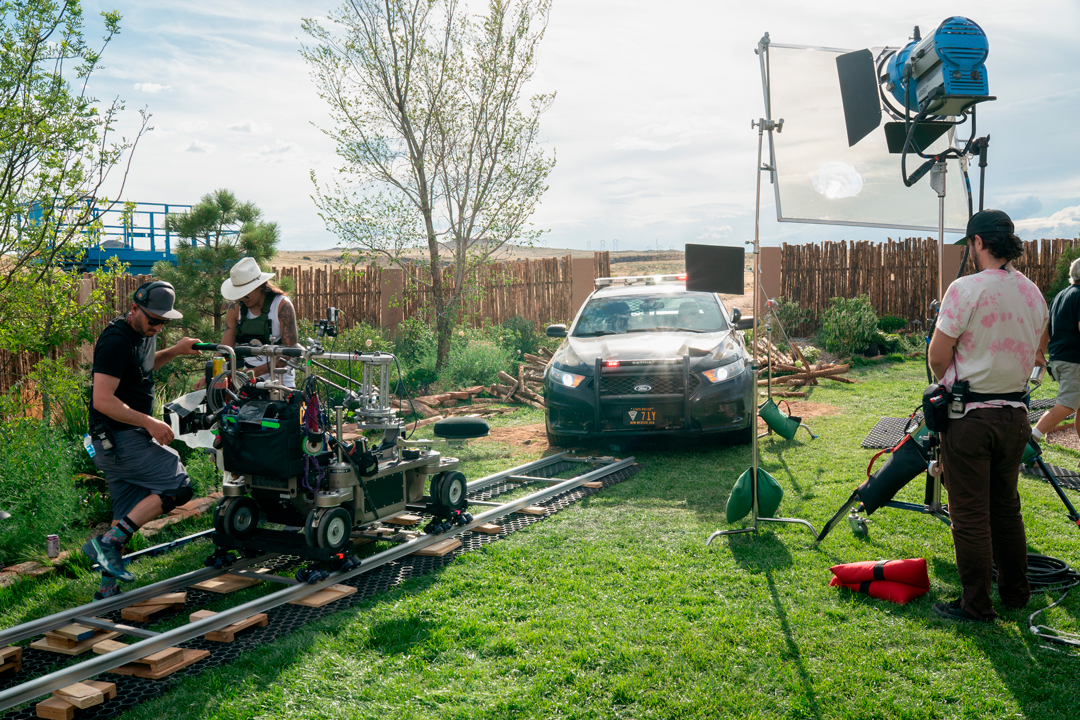
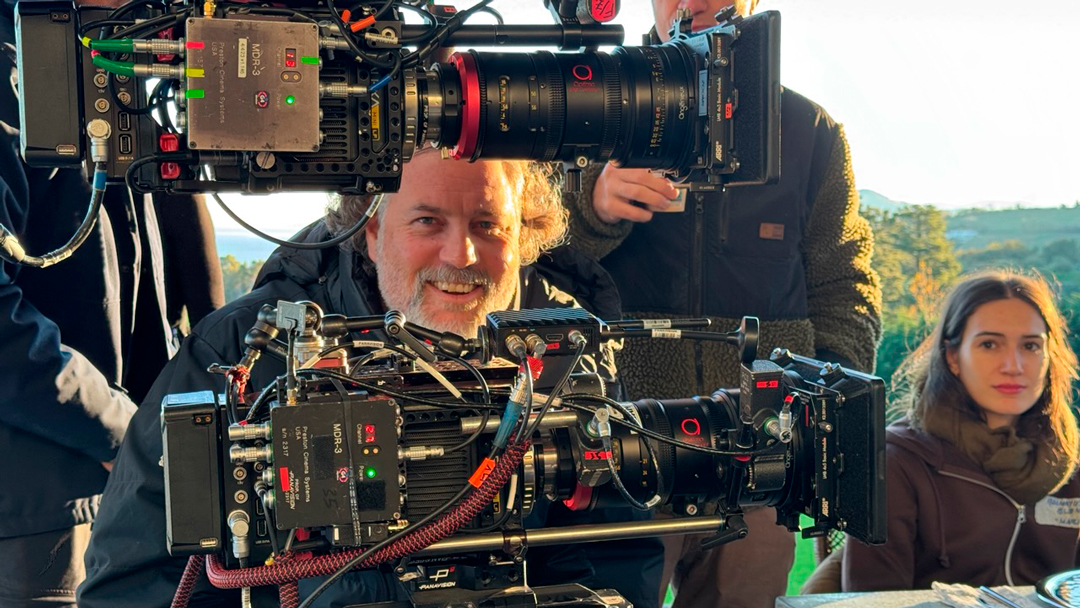
On the set of PLURIBUS. Courtesy Matt Credle, SOC.
Camera Operator: I know you’ve previously worked with Vince Gilligan on both Better Call Saul and El Camino. How has your experience on Pluribus been unique from those earlier projects with Vince?
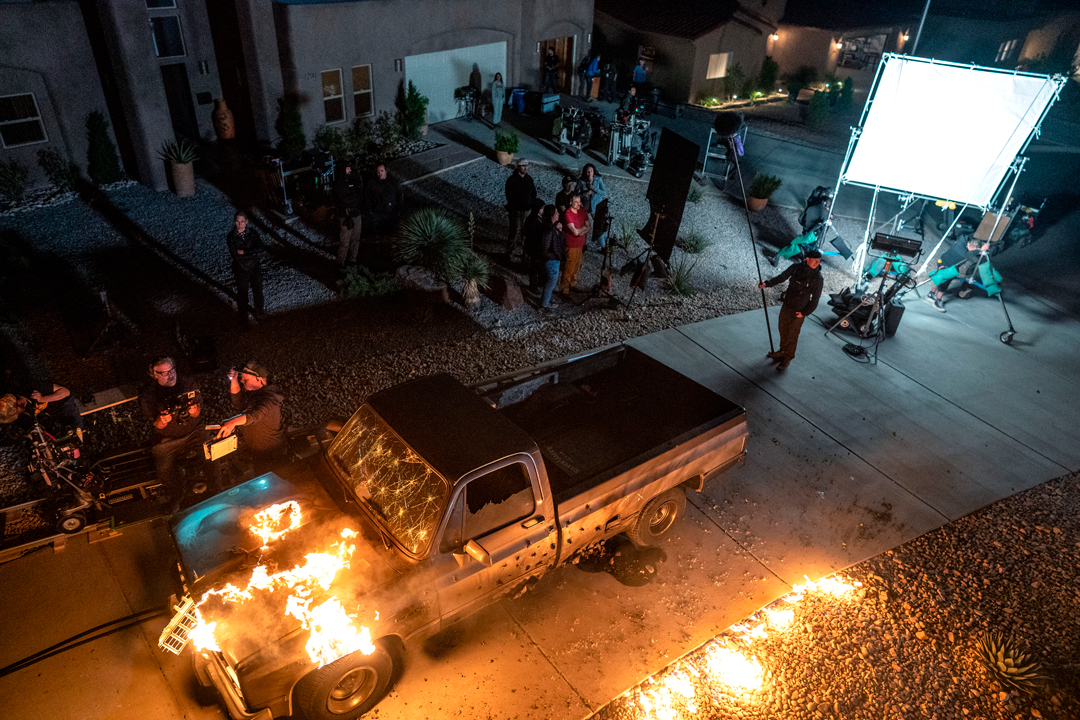
Matt Credle: The size and the scope of Pluribus is much grander than Saul or El Camino. Our locations and our set designs are much more expansive than on my previous projects with Vince. They built seven homes around a cul-de-sac for Carol’s neighborhood location out on the west side of Albuquerque, on the edge of town near the desert. That was essentially our back lot, if you will, and we were there a lot. I think the size, the scope, the planning, and the execution that goes into accomplishing all that we do is just much bigger than it was on those other shows.
CO: I had read that initially Vince Gilligan had considered finding a different location for this series, but he just kept coming back to Albuquerque because he had such a good experience shooting there on Breaking Bad and Better Call Saul. From your experience having worked on Better Call Saul and El Camino, and then returning to Albuquerque for this, what has it been like filming in Albuquerque over these past however many years?
Credle: I’ve been part of Vince’s team for more than 10 years and have come to love Albuquerque. I had never been there before I started working on Saul, and I’ve met amazing people, made great friends, and the community of filmmakers there is really amazing. The loyalty that starts with Vince and his crew is really something to take note of, especially in Hollywood these days. I can’t say enough about Vince Gilligan. He is a wonderful human being.
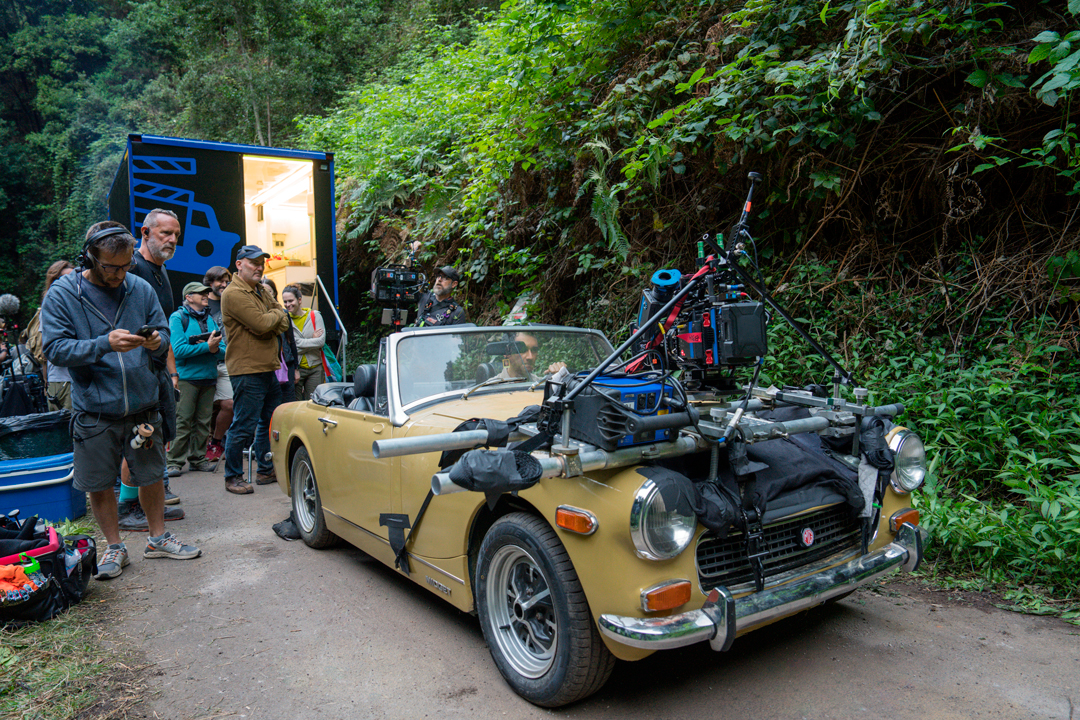
Photo courtesy of Apple
CO: Getting into some of the specifics of the of the show, in the very first episode there’s the sequence where the virus breaks out in earnest while Carol and Helen [Miriam Shor] are at the bar. Can you walk me through what went into shooting that sequence?
Credle: We shot that sequence over several nights. We started interior in that bar, and then when they go outside, they start to notice the airplanes overhead, and the infection starts to happen. We shot all of that pretty conventionally. Then, once the unicorn pickup truck crashes into another parked car, Carol runs over and we switch to our DJI 4D camera, which we affectionately call “The Chicken.” If you look at that camera and its Z axis camera stabilization, it really does act like a chicken head. If you’ve ever seen a chicken being held and its body moved around while its head stays in the same place, that’s essentially what this looks like, and we used that for our handheld look for some of the show. So, once Carol runs over to the truck, we switch to that camera and stay on it as we go back into the pub and do a oner with her discovering the state of everybody in there.
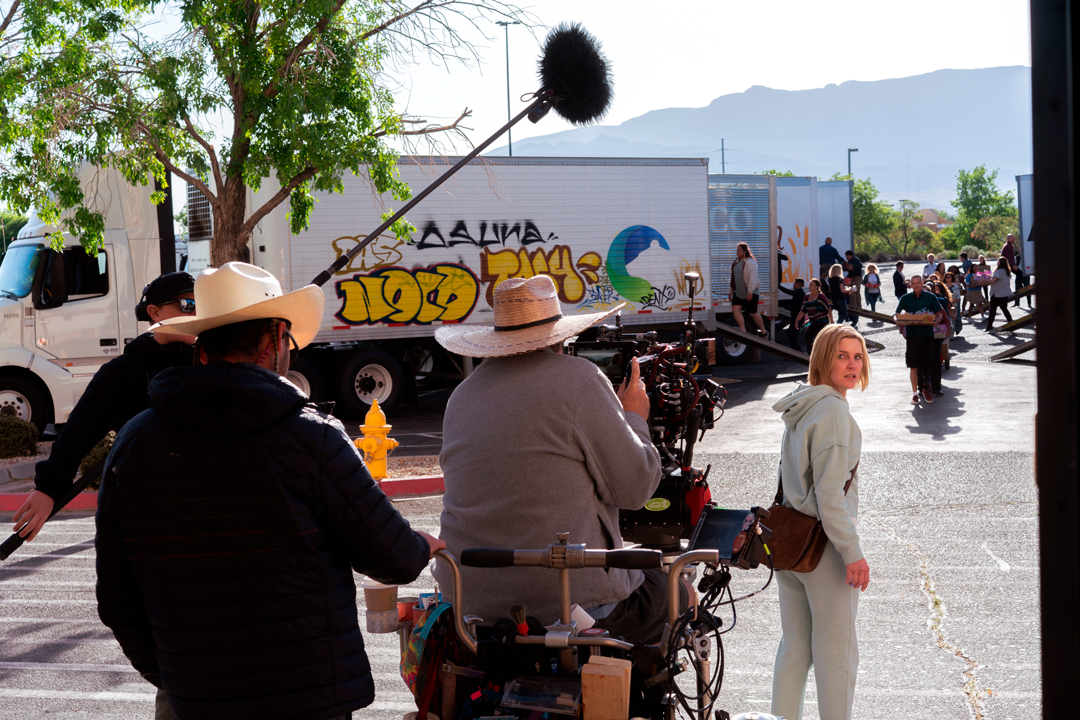
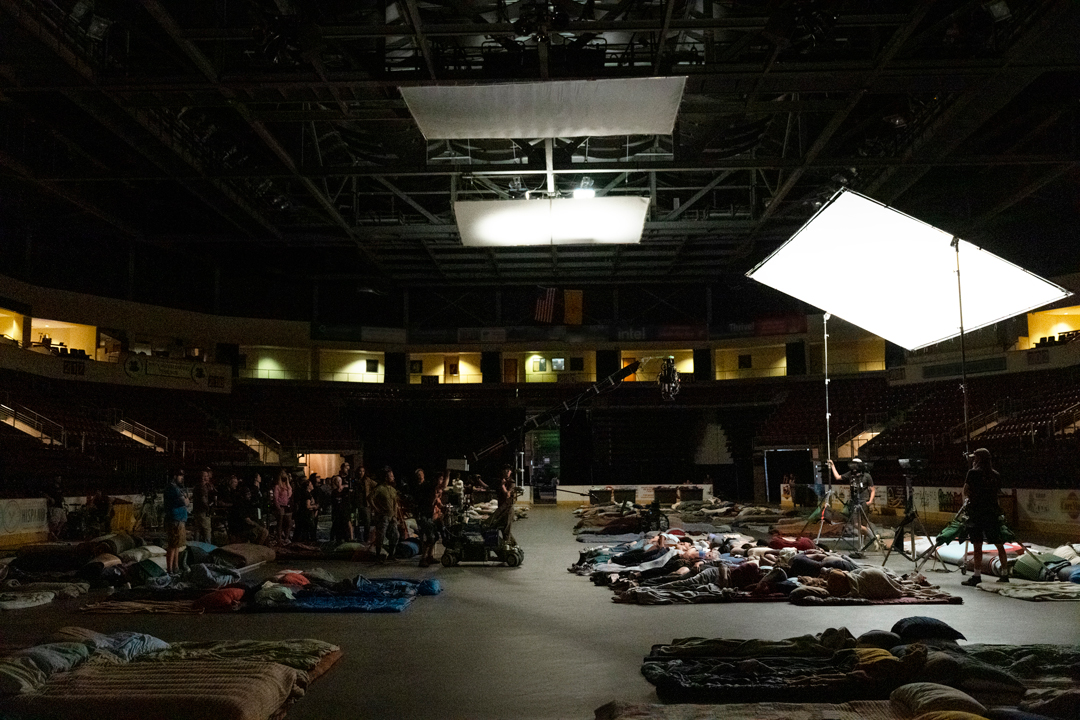
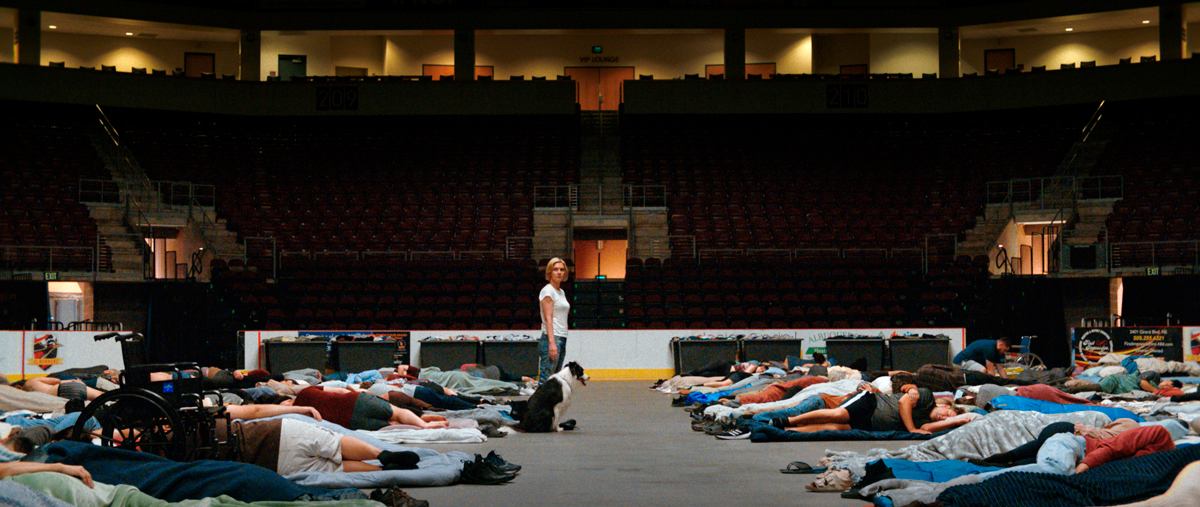
What was really interesting about shooting that sequence was working with the background talent. Throughout the show, the background talent really became a major character in the show. We had a choreographer named Nito [Larioza], who worked alongside the ADs with the large groups of background to get them to perform in the way that Vince envisioned. It involved a lot of working out my camera move with Nito and with the background. This goes not only for that one scene, but throughout the whole show to capture the essence of the ‘others’, as we called them. That was essentially the character name for the collective background personnel. So, working with a choreographer to get those shots was an added element that I hadn’t really done in my career before.
CO: That’s one of the really interesting, unique things about this series, right? Other than Carol and the dozen other people who are not infected, you have all these other background performers functioning as a single entity. I imagine that’s an interesting challenge in terms of figuring out how to shoot them, and working with a choreographer. It has to be different than normally shooting a bunch of extras, because they all have to look and function and feel like they’re a singular entity.
Credle: Definitely, and that is a challenge to create a world of people into one character that has to be shown and explained. Essentially what it comes down to is that they are all one hive mind, but to actually accomplish that takes a bit of work, which again goes back to the scope and the size of this show. There’s really a lot of thought and effort that goes into making this all happen.
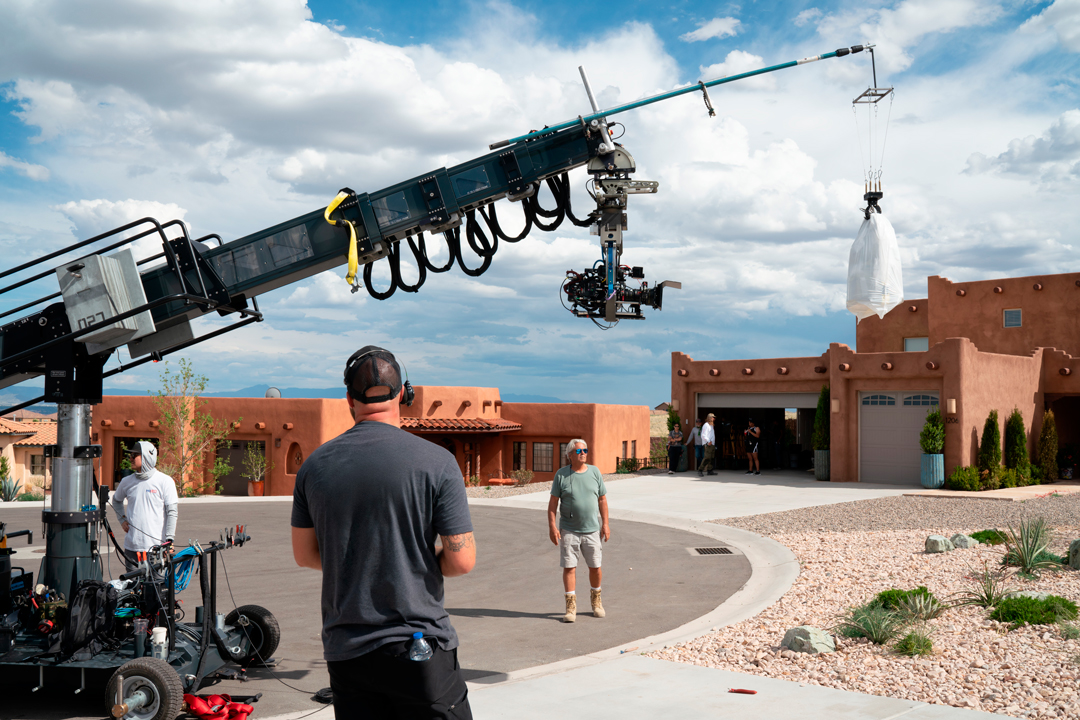
Photo courtesy of Apple
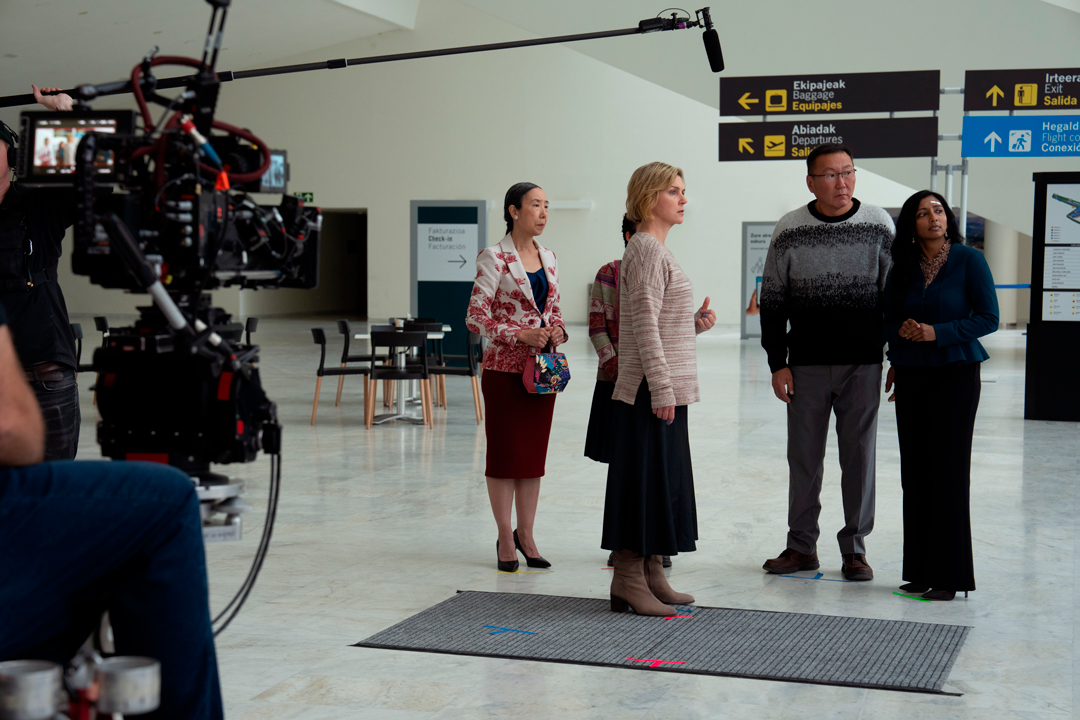
CO: Speaking of that scope and size, obviously there’s a lot of this series that takes place in Albuquerque, around that cul-de-sac, but you also get a little bit of globe trotting as well. From meeting the other non-infected in Spain in the second episode, to Manousos’s journey through South and Central America in episode seven. How much of that were you involved with shooting?
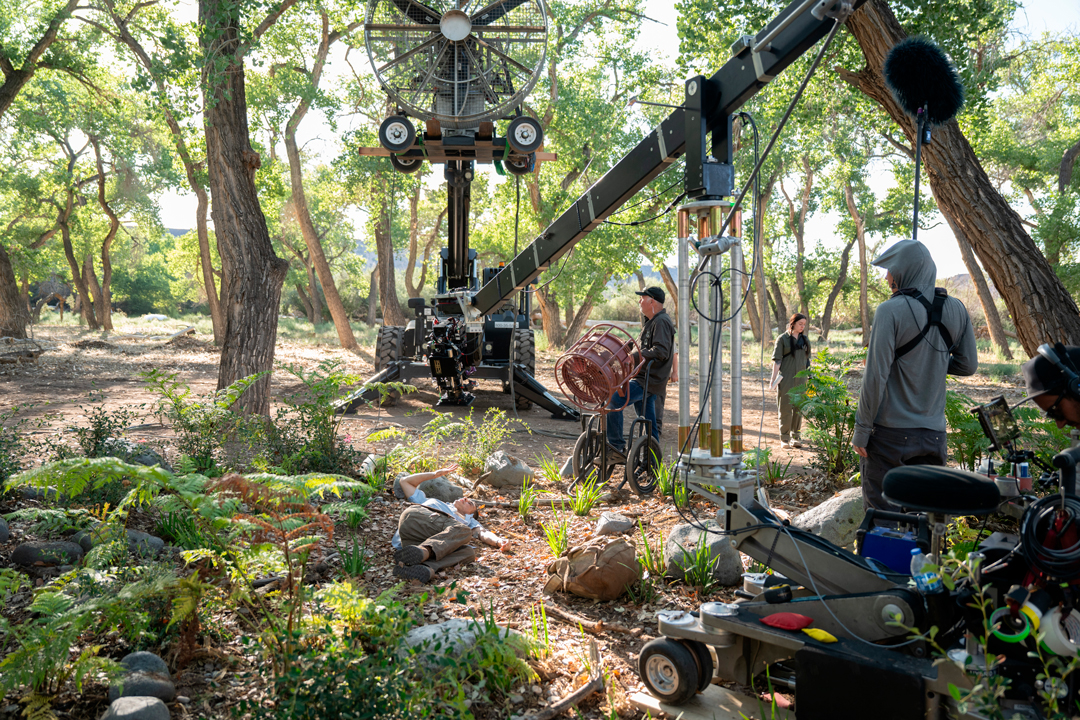
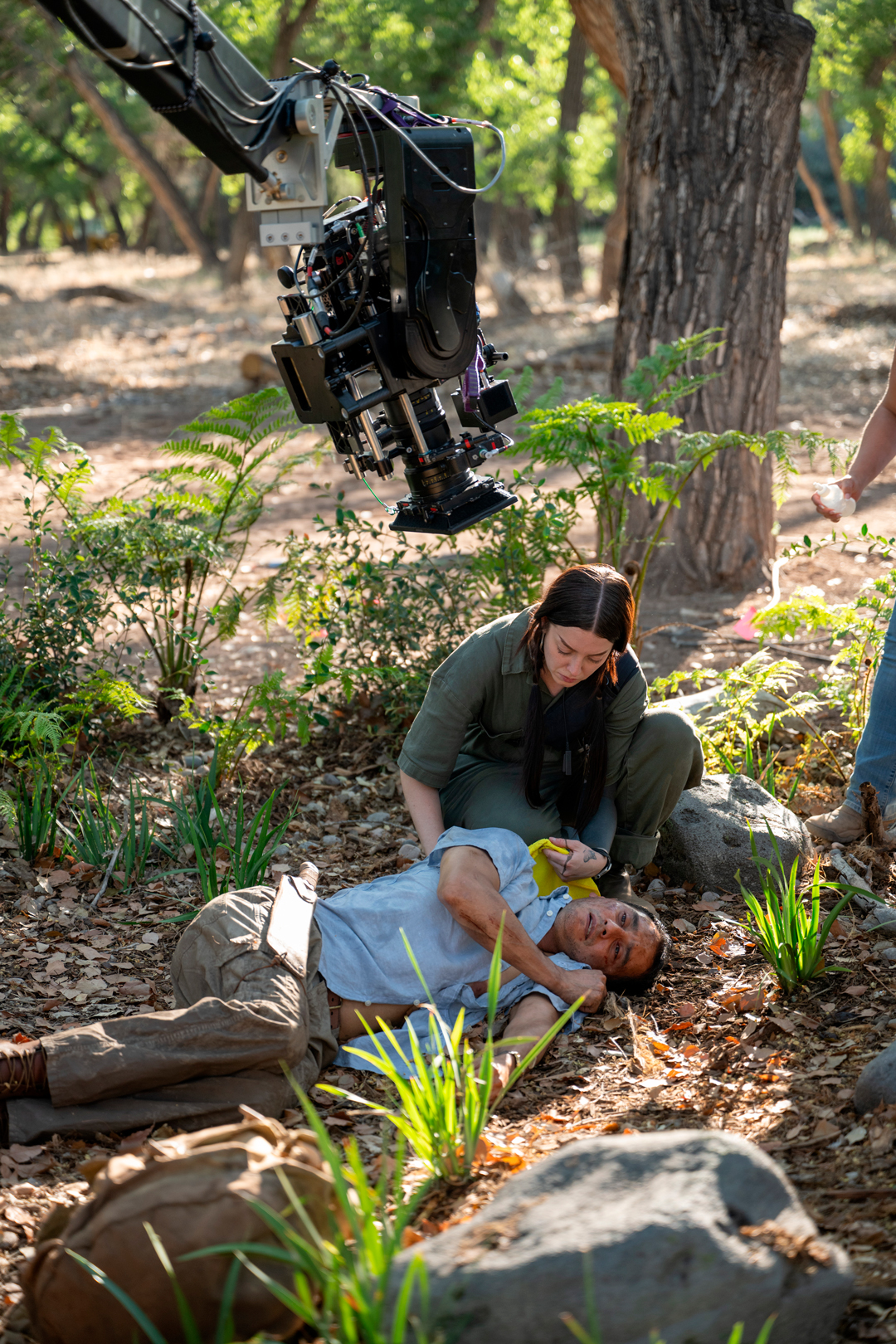
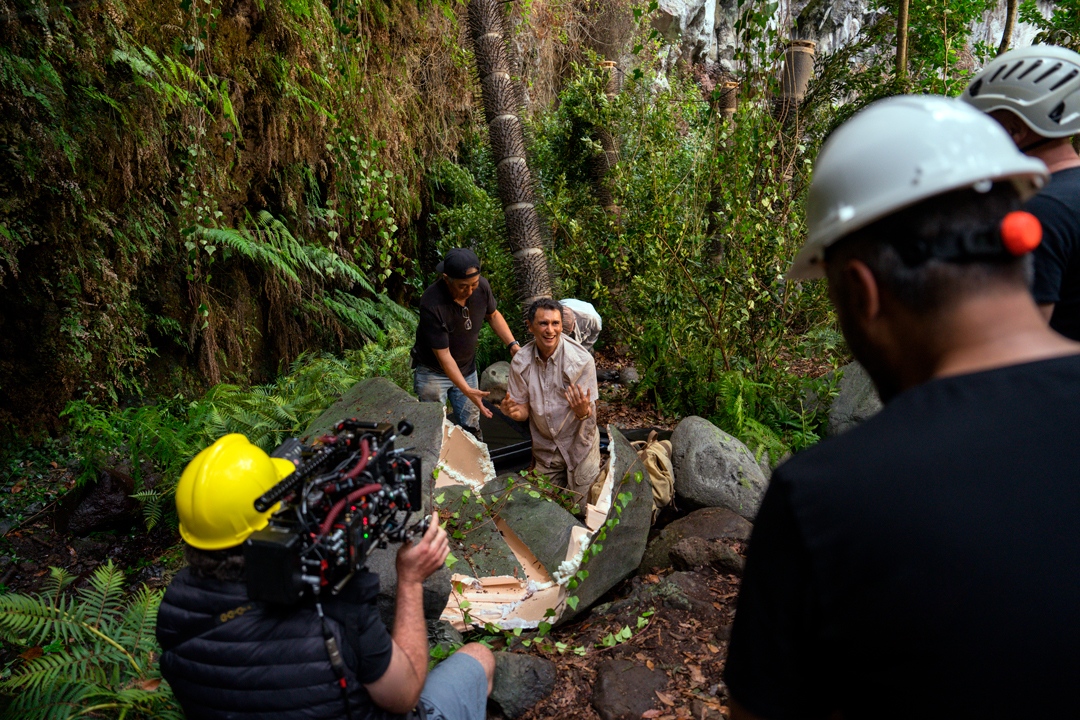
Credle: What a unique episode that was. It was directed by Adam Bernstein—who also was part of the Breaking Bad and Better Call Saul family—and it was written by Jenn Carroll. She’s amazing. What made that episode stand out was we essentially followed two characters separately, and they were both completely alone. There wasn’t much dialog in that entire episode; it was a lot of visual storytelling. We start with Carol after she has been abandoned in Albuquerque, and we follow her around, just trying to entertain herself, alone. Then we follow Manousos on his trek from South America up to New Mexico to find Carol. That whole entire journey was shot over months. Literally, there are shots in that sequence where there were months of time that passed in between when we actually shot them. We shot that journey in New Mexico, out in the Jemez Pueblo, and then up in the Pecos, north of Santa Fe. Then we picked it up months later on the island of La Palma, and then on the island of Gran Canaria. So yeah, we went around the world with that one sequence, and again, big kudos to everybody involved with that. From hair, makeup, wardrobe, all the way down the line, matching something from months earlier to when we finished the sequence months later.
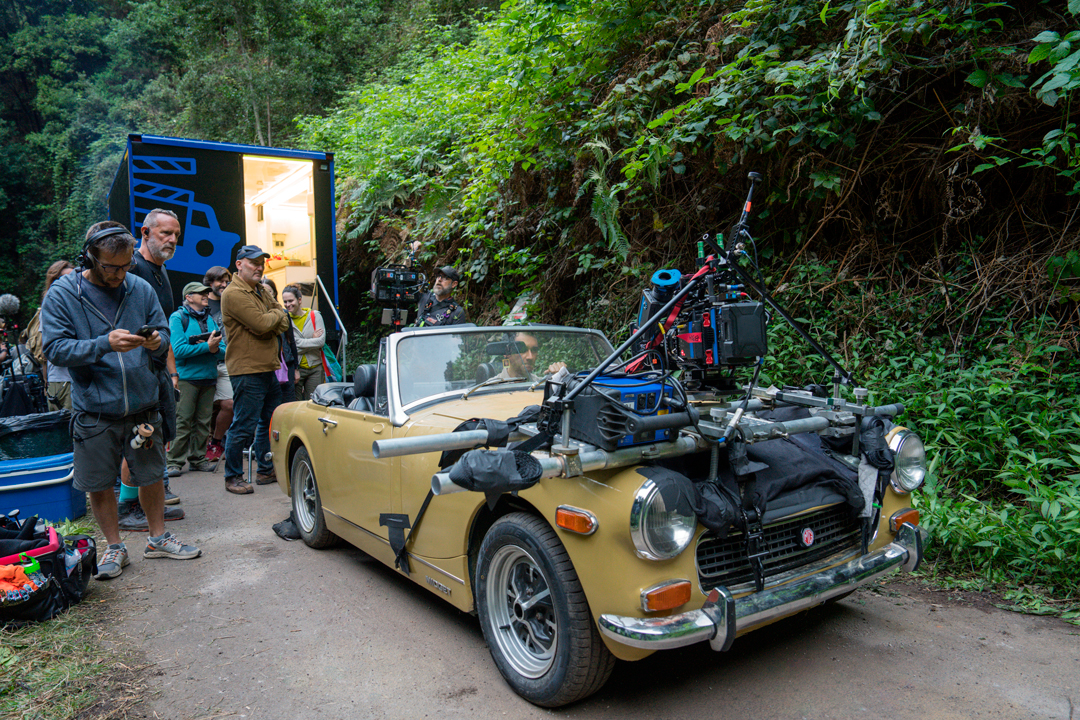
The last shot of that sequence, when he is about to die and the helicopter comes in to save him, that was the first shot we actually did. We did that up north of Santa Fe, and then months later we were in the jungles of La Palma on his trek through the waterfalls and the jungle, which was really spectacular. We didn’t do a lot of second unit on Pluribus, which is fantastic, and the only reason for that is because Sony and Apple gave us the time to do it with first unit. We had a lot of time to shoot the show and get it right. The support that they gave Vince was unwavering. Even when we did do a few second unit sequences—some of the driving stuff on Manousos’s journey—I was lucky enough to be able to go and shoot the second unit and leave our B camera operator, Roxanne Stephens, to run the set in her capable hands.
CO: You were mentioning how this episode highlights the sense of loneliness and isolation with these two different characters, and I think that is an interesting part of the overall aesthetic of the show. I know Vince Gilligan had the earliest ideas for what the show would be prior to the COVID-19 pandemic, but the way the series ultimately turned out does feel, at least in part, like a reaction to that whole event. You have the outbreak of a virus that leaves these people feeling sort of disconnected and isolated. What went into finding that visual language and that aesthetic for the series?
Credle: I’m sure the pandemic helped shape some of Vince’s vision for the show. We were all at one point during lockdown alone in one sense or another, segregated from society, so I’d imagine that played into it. As far as the visual language of the show, I think the landscapes of New Mexico helped reinforce that feeling of loneliness. The vistas and mountains and the sky; it really lent itself to these expansive, vast areas, and showing our character alone there with nobody else around. It showed the singularity of these characters.
Then as the story develops, when these characters do encounter the others, we wouldn’t rely on typical over the shoulders and coverage. We’d isolate each character in the frame, occasionally showing an over just to reestablish the geography of the scene, but we were really with each character, trying to put the audience in their head space and have you right along with them for that ride. That was definitely something we were trying to do: have the audience thinking what they would be doing if they were in that situation.
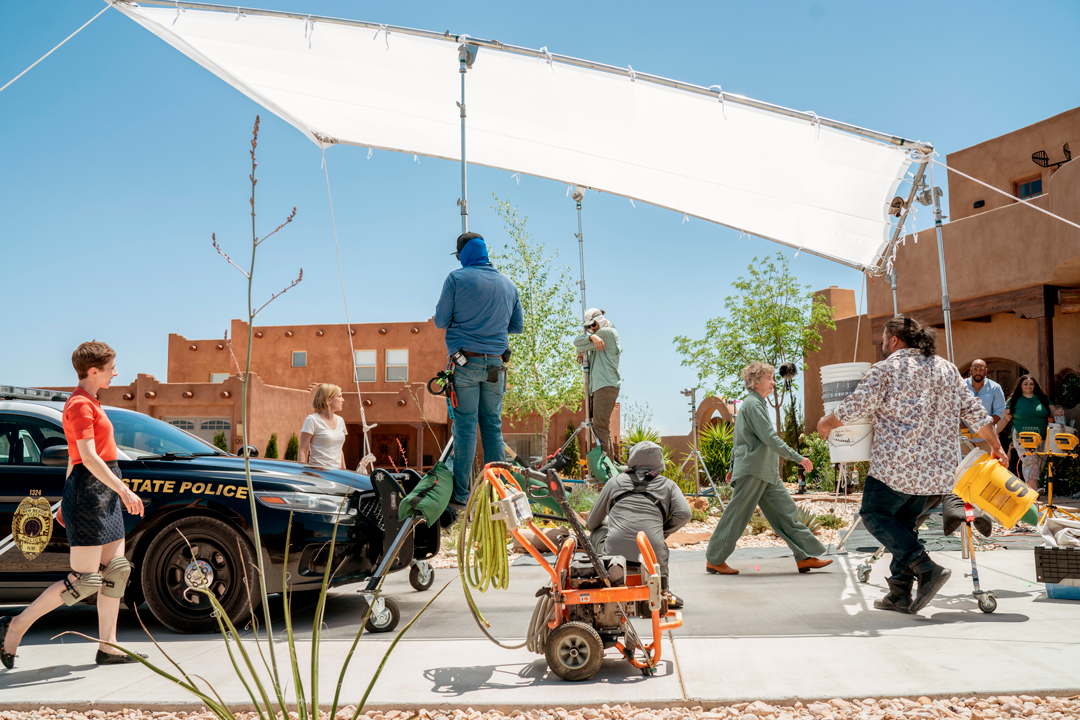
Photo courtesy of Apple
CO: We’ve talked a little bit about the initial outbreak in episode one as well as Manousos’s journey and Carol’s isolation in episode seven. What other moments from the series stand out to you as being either challenging things to shoot or particularly memorable moments?
Credle: Honestly, we had a lot of challenging work, but when given the proper time and equipment and personnel, we could make things happen and achieve a high level of success with what we were trying to accomplish. As far as some memorable moments, I’m going to go back to our location work. Day one of the show, we shot at the V.L.A.—the Very Large Array—which is in New Mexico, about 50 miles west of Socorro, out in the desert. That’s where those enormous satellite antennas are, and that was our first few days of shooting. It set the tone for what we were doing. Just being out there looking at it, it’s stunning.
There’s 27 of those antennas that can be arranged in a wide array, spanning something like 22 miles, or they could all be brought into a very tight configuration, which is what they did for us so we could have them all in a lot of frames. It was absolutely spectacular being out there—a moment that I will never forget in my career.
We have an exceptional crew. My focus puller, Chris Norris, did an incredible job on the whole season, as did our DPs, Marshall Adams and Paul Donachie, and my dolly grip, Eli Schneider. We’re so fortunate to have a full crew that truly operates as a family. We’ve been together a while, we know each other’s strengths, and there aren’t many weaknesses, and it’s a spectacular collection of filmmakers. A lot of this crew has been together a long time, coming from Saul and El Camino, but Pluribus definitely felt like a new show. Going from the V.L.A. to shooting in the cockpit of a C-130 to then being in Elvis’s suite at the Westgate, Las Vegas, and then traveling to Spain and the Canary Islands; those are all the memories I’ll be taking away from Season 1, and hopefully we’re just going to be building on those with an amazing amount of new memories for Season 2.
BEHIND-THE-SCENES
Select Photo for Larger View
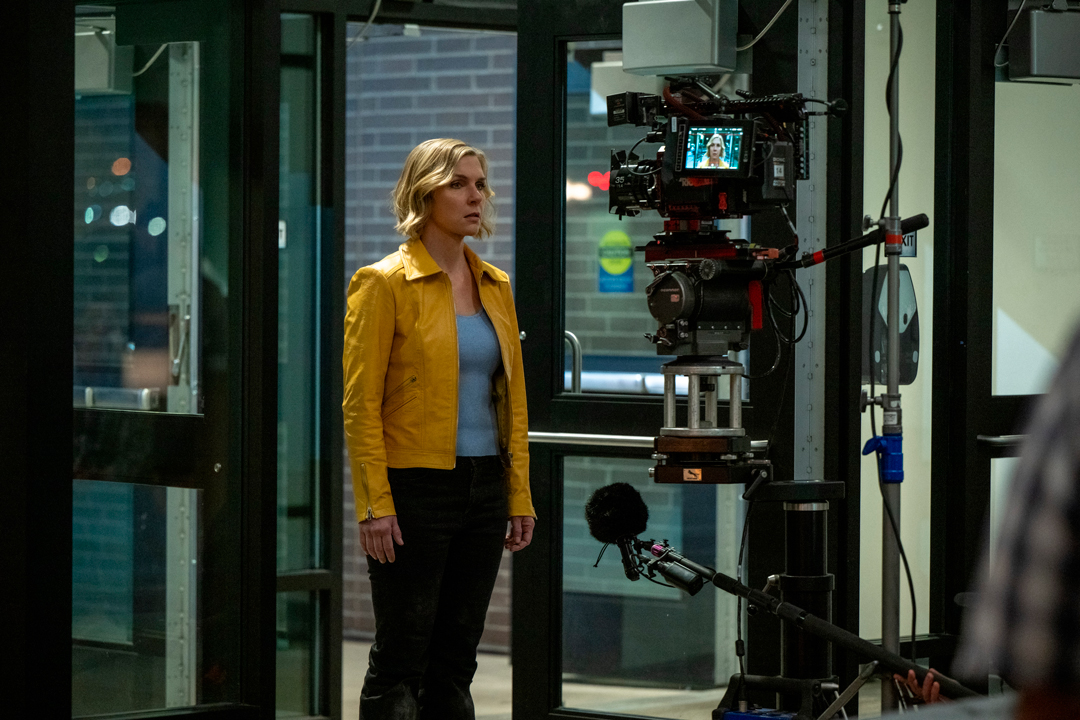
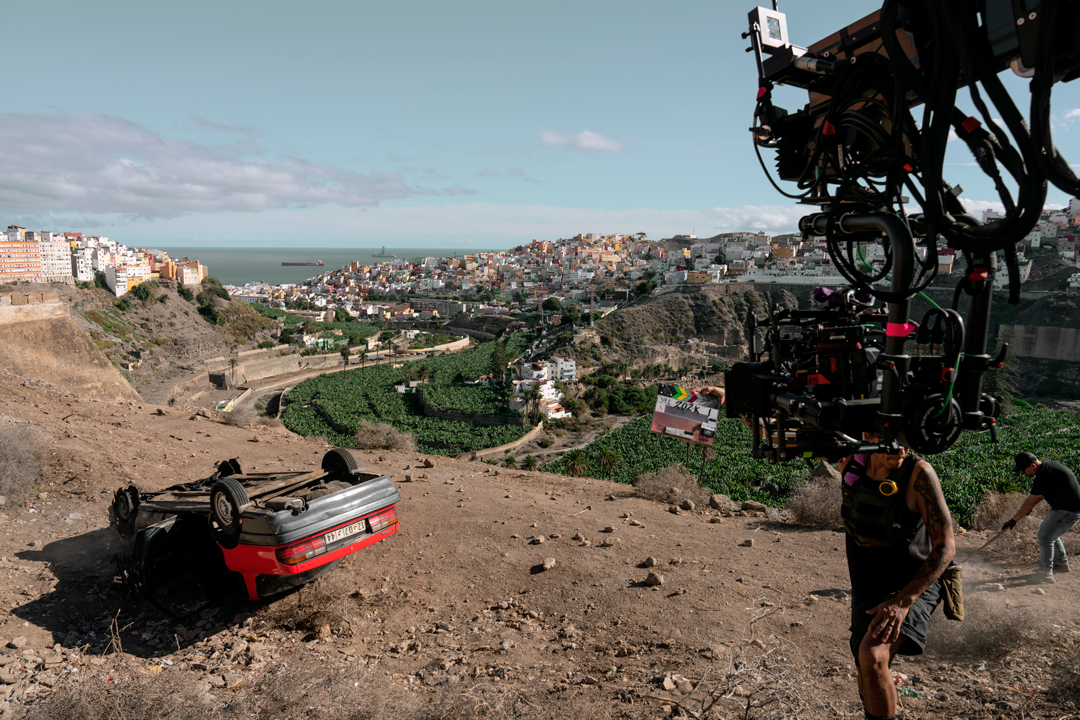

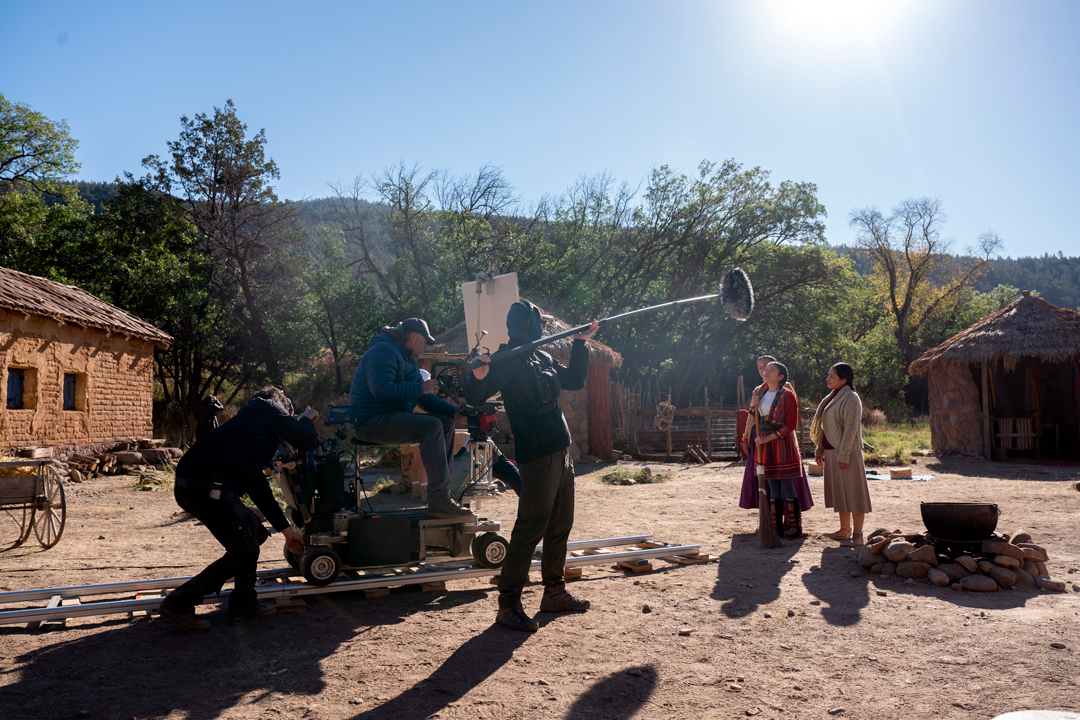
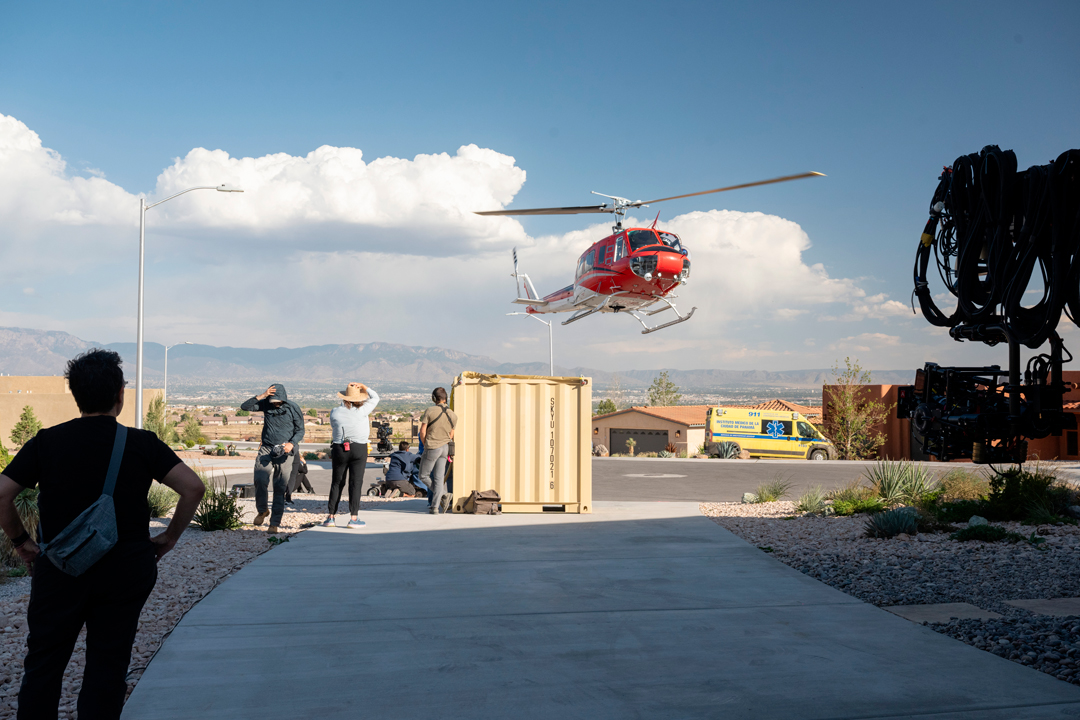
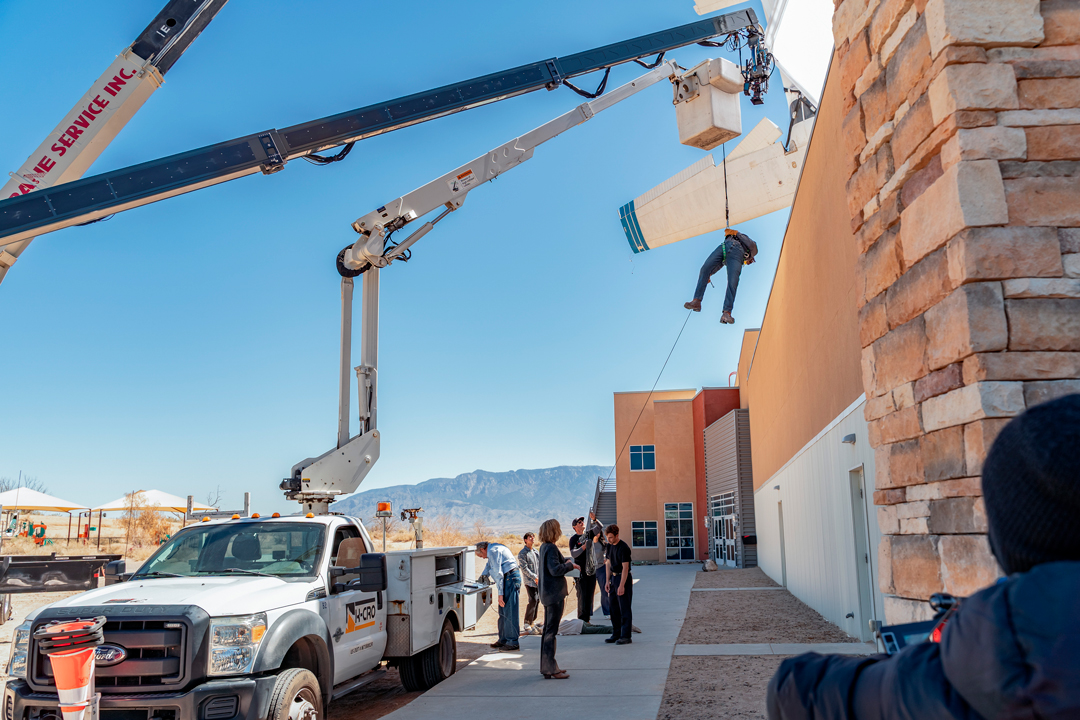
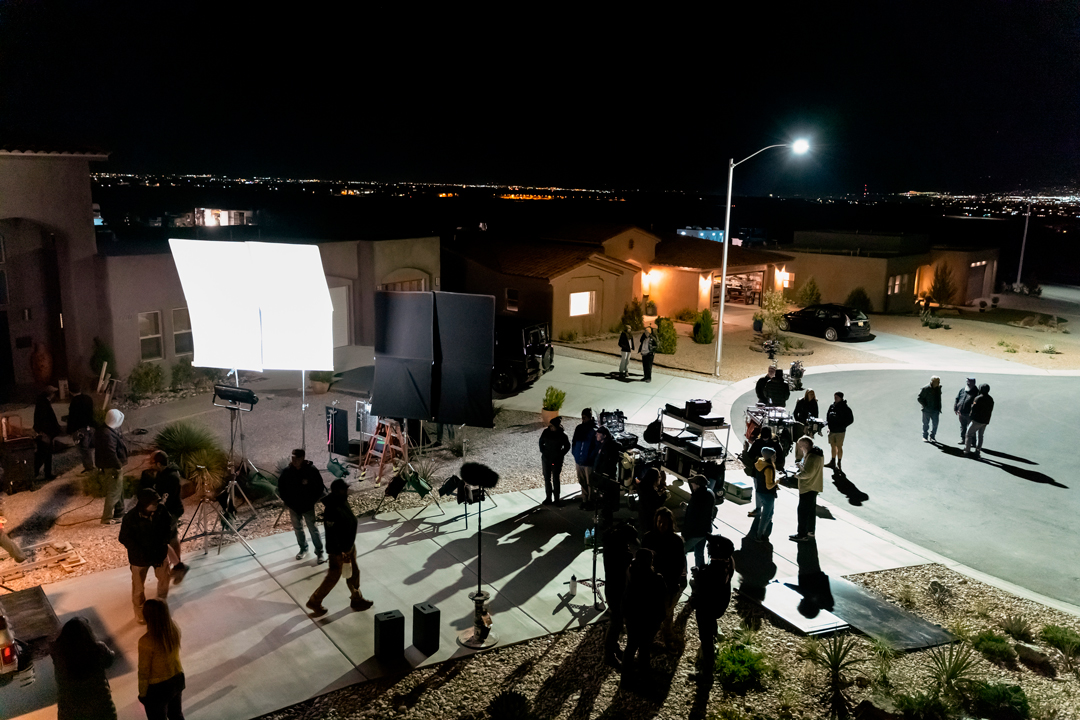
Camera Operator Summer 2026
Above Photo:
On the set of Pluribus.
Photo courtesy of Apple
Read the Summer Issue
TECH ON SET
- ARRI ALEXA Mini LF
- DJI Ronin 4D
- Panaspeed lenses
- Panavision T Series anamorphic lenses
- LAOWA Macro lenses
RELATED CONTENT
Watch the trailer for Pluribus
Matt Credle, SOC
Learn more about Matt Credle’s career and projects at IMDb.com
BEHIND-THE-SCENES
Select Photo for Slideshow
SIGN UP FOR THE FREE DIGITAL EDITION OF CAMERA OPERATOR
Click Here
ENJOY PAST ISSUES OF CAMERA OPERATOR
Click Here
Matt Credle, SOC
Born and raised in Los Angeles, California, Matt Credle is a camera operator and 32 year member of IATSE Local 600. His credits include Sully, El Camino, Better Call Saul, and Pluribus.
David Daut
A writer and critic for more than a decade, David Daut specializes in analysis of genre cinema and immersive media. In addition to his work for Camera Operator and other publications, David is also the co-creator of Hollow Medium, a “recovered audio” ghost story podcast. David studied at the USC School of Cinematic Arts and works as a freelance writer based out of Long Beach, California.
SPECIAL THANKS TO OUR ADVERTISERS