Queens of the Dead
Operating to Convey Confidence and Terror
An interview with Tori Wills, SOC
By David Daut
For almost as long as there have been horror movies, there have been horror-comedies. The peanut butter and chocolate of cinematic genres. From Abbott and Costello Meet Frankenstein to Shaun of the Dead, filmmakers have long been playing with tension and release to deliver screams of laughter alongside screams of terror, but there’s always room for innovation. Enter Queens of the Dead, a horror-comedy steeped in the vibrant, camp aesthetic of drag performance.
Camera Operator had the opportunity to speak with Queens of the Dead’s A camera and Steadicam operator Tori Wills, SOC to learn more about what went into combining these different visual languages as well as the challenges and necessary ingenuity of shooting a movie like this with a limited budget on a short timeline.
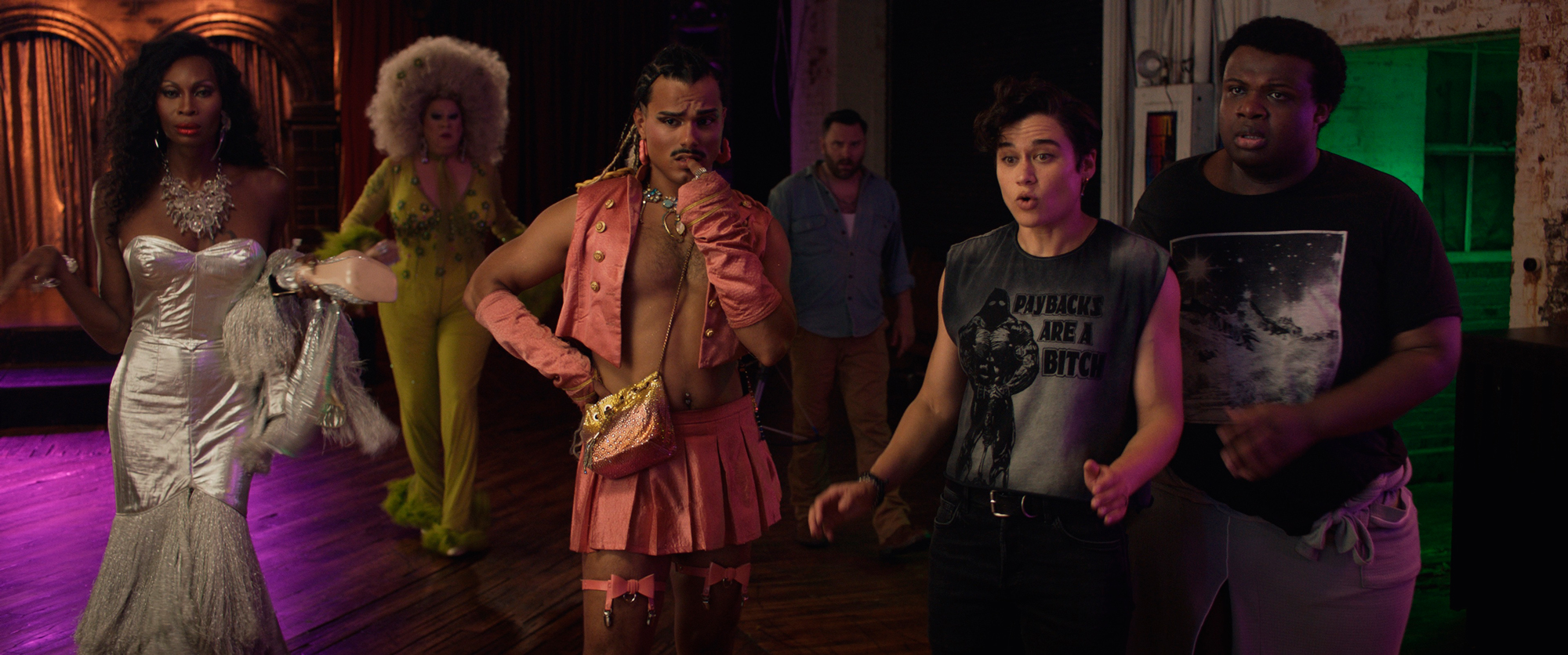
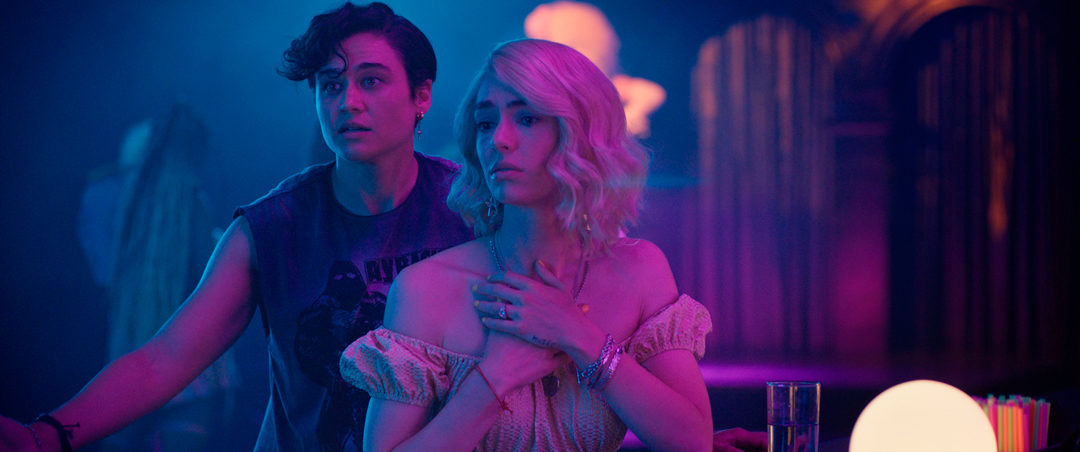
While Dre, Kelsey, Nico, and Ginsey are finalizing preparations for a huge party and drag show, tensions are running high. Their headlining act has flaked at the last minute, their backup choice, Samoncé, is too nervous to perform, there’s a plumbing disaster at the venue, and on top of all of it, the city is in the early stages of a zombie outbreak. As they navigate this ensuing apocalypse, they must all band together to survive the night and maybe—just maybe—put on a show to die for. Queens of the Dead is directed by Tina Romero from a screenplay by Romero and Erin Judge. It stars Katy O’Brian, Jaquel Spivey, Riki Lindhome, Jack Haven, and Cheyenne Jackson.
Camera Operator: There’s a long tradition of blurring the lines between horror and comedy, but Queens of the Dead takes that a step further by filtering it all through the lens of drag performance and queer cinema. As a camera operator, what was it like for you blending these different aesthetics for this film?
Tori Wills: I was a little intimidated going in. When you have Romero as your director’s name, that’s a sign that this is going to be a real zombie film, and it’s not a genre I’ve worked that much in. I come much more from the comedy world, with seven years on Saturday Night Live. I was really reassured when I started working with Tina, because she started referencing Shaun of the Dead. I was like, okay, perfect! Edgar Wright, Shaun of the Dead—comedy plus zombies and finding the moments where you build real tension and have real stakes. Blending horror and comedy can be a very fine line. You’re trying to make something that feels grounded enough that when people are in trouble, they feel like they’re actually in trouble, but then also heightened in those moments that have to be heightened to make the comedy work.
On top of all that, there’s the element of queer cinema and drag culture. I was really glad that the film focused on allowing queer characters, trans characters, and characters who are in drag to exist in a way that feels real, and let them exist as human beings in the film and let them tell their stories. It spends a lot of time focusing on the interpersonal dynamics of queer culture and of queer relationships, and letting that be one of the drivers of tension in the film.
The film starts with this big drag performance that is intercut with a dance sequence that’s happening in a hospital. That, for me, was a wonderful exploration. Drag is about lip syncing, drag is about glam, drag is about appearing like it’s a Kylie Minogue video or a Kesha video—that high femme, haute couture style. So, we shot this like a pop music video. We did all these big, sweeping Steadicam moves, and I was constantly moving the camera because that feels like that world of drag and music video reality.
CO: You mentioned that coming into a horror film was sort of a new experience for you. How did you first hear about this project, and how did you come to be involved with it? I know this is Tina Romero’s first feature, but you had done some work with Shannon Madden before, right?
Wills: Yeah, I heard about the project from Shannon Madden. Shannon Madden was the cinematographer, and she is someone who I’ve known and worked with since I was just starting out as a grip. We hadn’t worked together for a few years as both of us got deeper into our careers, but this was a great opportunity to get back together, and we really worked well together. Shannon did an incredible job crafting this neon-hued beautiful world, and assembled a fantastic camera department, including first AC Nic Iovino and second AC Jordan Cooke-Leonard. And she was excited to have me and my operating on this film.
This film was also at the beginning of my journey with my own gender, and I know Shannon and Tina both really created a safe place for me to be, and it felt like a place where I could explore a bit of who I was in advance of where I ended up a few years later.
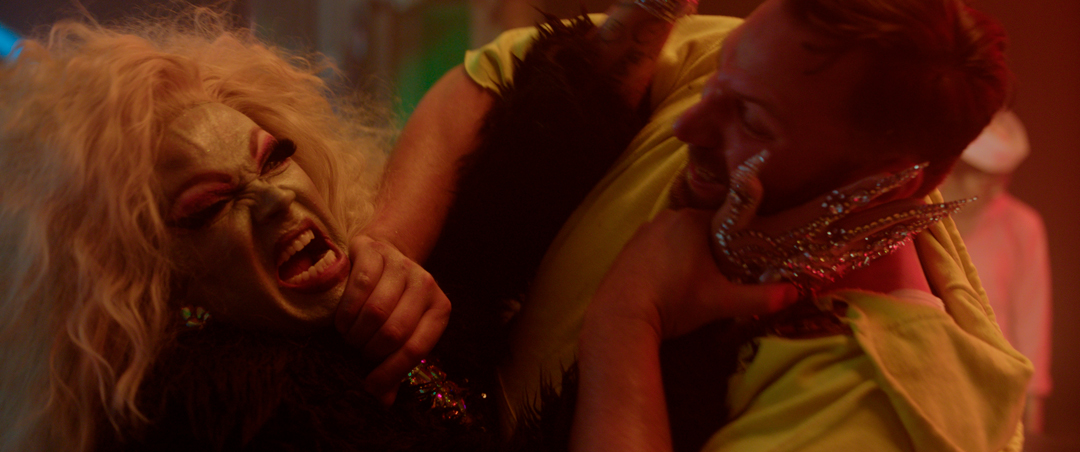
CO: You touched on this a little bit in terms of finding the right aesthetic for the music video-inspired drag stuff, versus the comedy, versus the horror. Digging into that a little bit more specifically, early in the film you have the drag performance right at the top. There’s a lot of the smooth Steadicam work with that. But then once the zombie outbreak starts in earnest, you start getting some more unsteady, handheld work in there. How did you adjust your approach to operating throughout the film to fit the needs of the story?
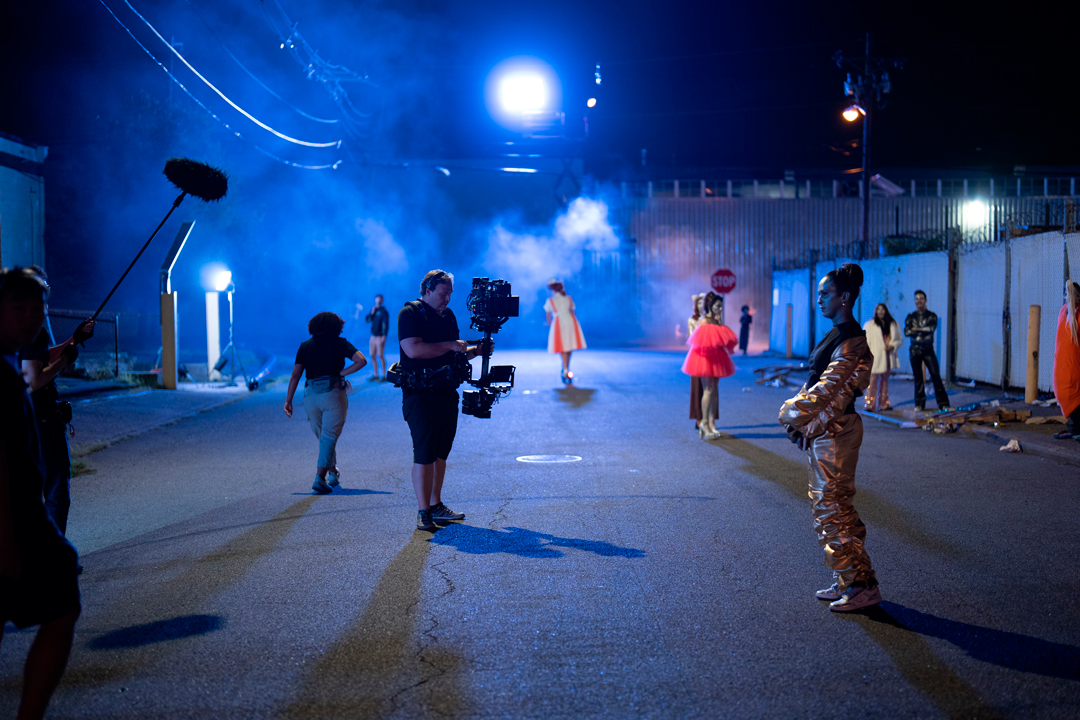
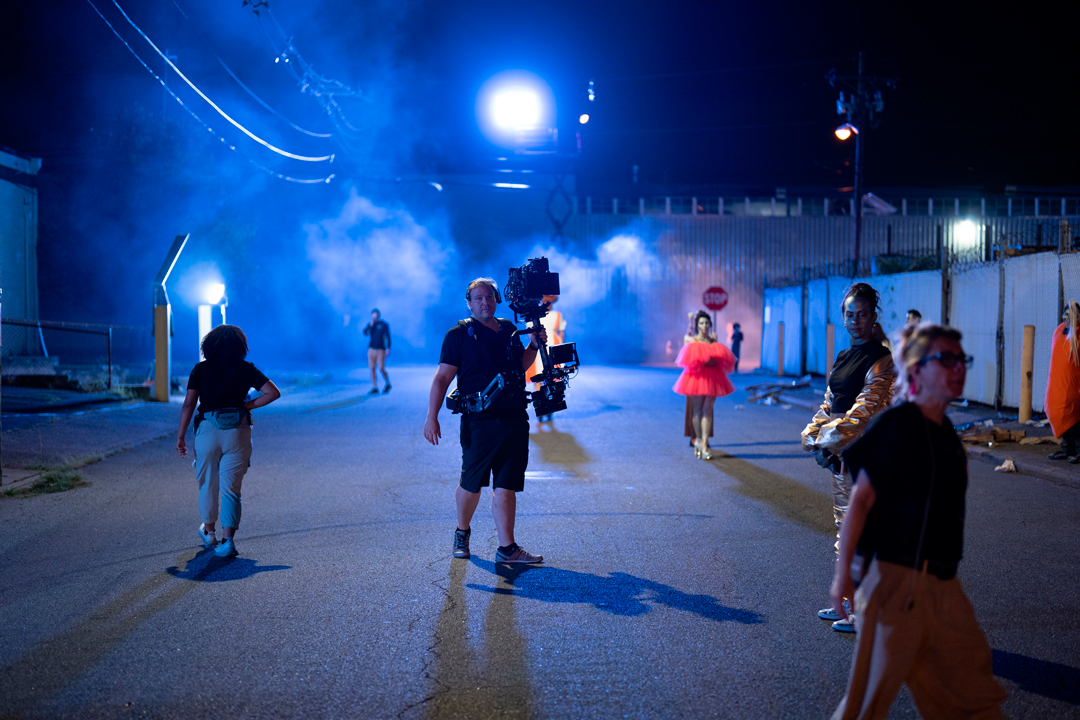
Wills: Well, I think there were some practical considerations that illuminated a lot of those choices. Number one, was that in affording me and my Steadicam, we didn’t also get a dolly, so our main camera support defaulted to Steadicam. There was also a huge time crunch. We shot the entire film in 21 days, and given the amount of practical effects and stunt work they were trying to do, that was really a tight schedule—especially because we were entirely on location, working around heat waves and really difficult conditions. Because we had to move quickly, that was another reason to do our coverage on Steadicam.
I really love using that tool to its fullest, but a big part of my operating style is that I want the operating to disappear most of the time. I want my operating to be very subtle and elegant, and dolly-like. I want you to be so engaged in what is happening in front of the lens, you never consider what’s going on behind the lens, or feel the human holding the camera. So, apart from the moments where we tried to amplify things like music video aesthetics and dance sequences, I tried to ground my operating in what the characters were doing. Steadicam allowed me to match speeds and do kind of a moving coverage, treating it like a dolly with unlimited dance floor and track.
Beyond Steadicam, we had handheld, which I sometimes did with the Walter Klassen Slingshot, and then there were three tripod shots in the entire film. I very much dislike using handheld just for the sake of making things shaky so they feel intense—a shaky camera ultimately distracts you from seeing what’s on the screen—but there were moments where the film did want the aesthetic of a handheld camera. Something that could whip pan, that had faster acceleration than Steadicam would have, and that also just felt tense, and had a kind of muscular tension, like the adrenaline was pumping in the audience as well as in the people on camera.
Choosing handheld or Steadicam was a discussion as we got to each part of the film. But early on, I pitched the idea to Shannon and Tina that when the people in the scene feel like they’re going to survive, we shoot it with Steadicam, but when the people in the scene genuinely fear for their lives, and when their adrenaline level heightens, we go handheld. By doing so, it creates this natural shift where suddenly things feel a little less settled, and when it feels a little less settled in terms of the operating that then helps us illuminate what the characters are feeling. Then as soon as everything dies down and the zombies are gone, it goes back to Steadicam. There’s a stillness in that that I really appreciate. It also allowed me—especially with handheld—to be able to modulate the feel of the scene.
There’s a scene towards the end of the film where Samoncé is going up an elevator, and I was on a 100 millimeter lens from really far away. As Sam is breaking down, I’m very tight on the handles to try to elevate the tension and anxiety, and then as he lets out this big sob, I relaxed my hands to take the shake out, but leave a bit of breath, almost as if it’s that final sob after you’ve really broken down. I was trying to do as many little touches as I could, and trying to do something that accentuated, but never drew attention from.
I also wanted to make sure my operating was showing what was in front of the camera. We did a lot of practical effects. The zombies were real. Plus, zombies are slow in Romero films, so that’s an important part too. If the zombies are slow and methodical and plodding, then that can be shot in a way that is elegant. So, as the characters waft their way through the zombies on scooters, that should be smooth, because they’re smooth; they feel like they’ve got it at that point. It’s only when everything falls apart and these characters genuinely fear for their lives does the anxiety ramp up and they lose the veneer of stability.
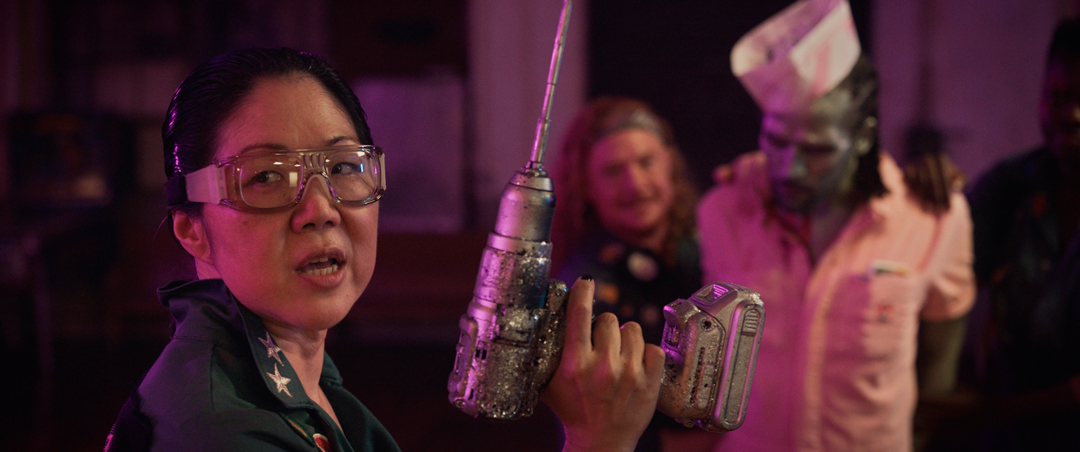
CO: That’s not something I had consciously picked up on, but rooting the camera movement in the emotional state of the characters is a really interesting creative choice. It’s not just transitioning from calm to action, you are feeling the same emotional state with those characters.
Wills: Absolutely, and if you look at the final climax of the film—this big scene that starts in a dance sequence and then becomes this huge choreographed fight—that’s mostly Steadicam. There are very few moments in that scene that are handheld, and it’s usually when we really wanted to do something that felt a little unorthodox, felt a little untraditional. But the rest of it is Steadicam, because in that moment, they got it. And if they don’t have it, they’re believing that they do, because it’s the only way they’re going to get out of this alive.
CO: I did want to dig into that final sequence, because it is very impressive. The juggling act of playing Samoncé’s performance against the zombies all coming into the club, against them all trying to escape. There’s a lot of moving pieces in this sequence. What was involved in shooting all that?
Wills: I think again, the practical considerations of doing a low budget zombie movie came to a head there. We had a very small number of zombie background, so we had to be very conscious of where we put the camera. It lead to a pretty tightly choreographed process.
Candace Taylor—our choreographer—built the dance sequence that then leads into a battle, which Drew Leary—our stunt coordinator—put together. The scene was built by working with the two of them to determine where can we put the camera, what will look good here, and how do we connect it all? We did it as a lot of little vignettes, but they all connected well in the end, and led to a really fantastic battle.
It was crazy. It was a couple of days of absolute mayhem, but I do feel like we pulled it off. It was fun, because we were doing it towards the end of the film. We had established this world, the way that things moved, the way that the characters would interact with each other. We had this catharsis of being so close to the end, and now we get to smash some bottles, and knock over some stunt people. That was a lot of fun. And there was the camera choice to use Steadicam for that scene because it was not about trying to hide the fact that they’re not really throwing punches by doing it all handheld and shaking the camera. We wanted it to be a little smoother. A little bit more like a blend of the music video drag world and the zombie fighting chaos world. And you do feel like, okay, they’re going to do this. They’re going to win.
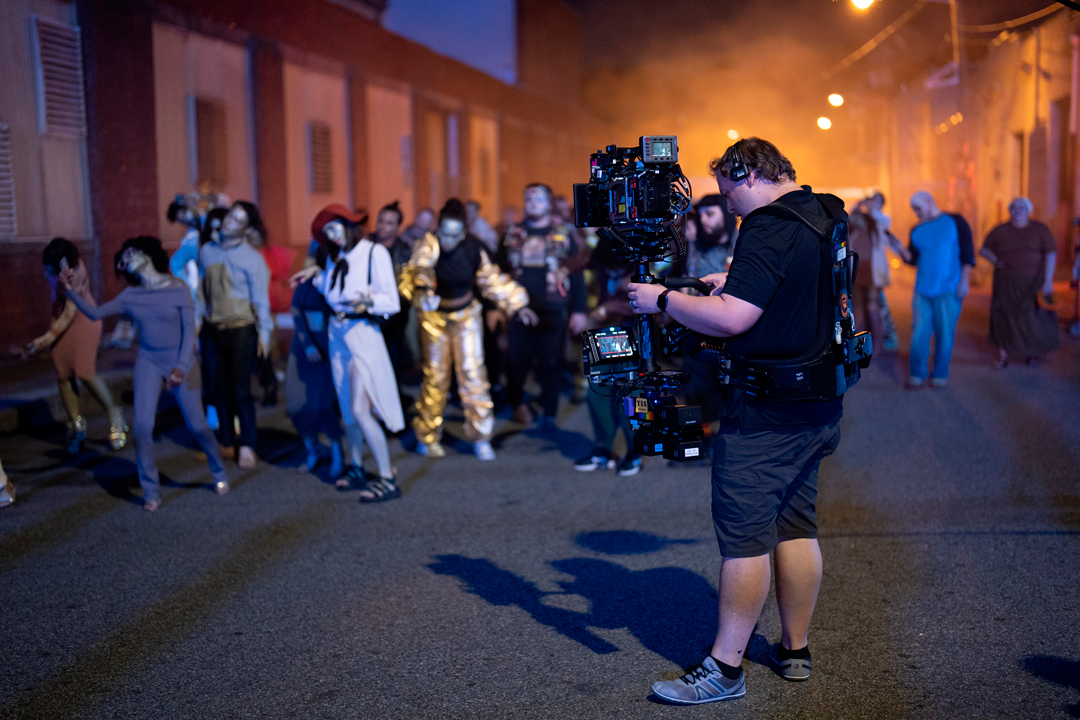
CO: Yeah, I think it ends up being really effective. It’s a really fun way to cap off the movie.
Wills: Yeah. Any zombie-killing fight sequence that begins with a makeover montage is pretty great.
CO: Beyond that final set piece, what were some of the other memorable moments that came in shooting this film?
Wills: There’s one scene that just still boggles my mind a little that we were able to pull it off. It is the scene in which Pops and her group arrive. It looks simple on camera, but the challenge we were facing was 11 people standing in four different directions, all of whom move, and every single person in that scene has a line. And there’s a zombie kill! How do you shoot that in an efficient way? In traditional coverage methodology, we’d have a three shot and a three shot and a two shot and a bunch of singles, and then this single has to turn. It would have taken longer than we had. So we ended up with this combination of moving coverage that is all of those pieces in just a few actual shots. A single that turns into a three-shot that someone walks out of, that then crosses to another screen direction. It was a lot! We have the whole scene, but we were building in all of the edits in camera.
Kim Blacknall, our script supervisor, keeping the eye lines straight as we were working on this scene was incredible. There are only a few moments in the finished film where the eye lines don’t work, and I will say with pride from Kim and Shannon and I, in every one of those situations, the correct eye line existed in camera and was chosen not to be used in the editing room. But keeping eye lines straight when you’ve got 11 people in a circle talking to each other is no easy feat.
CO: Thinking about the process of that, when you are taking a scene like this and figuring out how to do it in sort of the most efficient way possible, what does the process look like for figuring that out? Are you working with the director and the DP ahead of time, or are you figuring it out on the fly on set?
Wills: The process for building the coverage really depended on the complexity of the scene. For some of these more complex scenes, we would stay a little late after work the night before, and at least try to work out the blocking.
I don’t know if this was a conscious decision, but it was very rare that we would break a scene down into small pieces, unless we had to for something like stunts or special effects. We would let whole scenes play so that everyone is performing all the time. So, once we rehearsed we’d all huddle up and decide on coverage, using Artemis on Shannon’s and my phones to plan out sizes and lenses, and then pick camera support methodology.
We were very, very lucky in that while we shot in a practical location, it was a practical location where Shannon Madden and the lighting team (lead by gaffer Andre Bonk and key grip AJ Brou) had gone in in advance and pre-hung a lighting grid of fixtures that she augmented from the ground to suit individual shots. That helped us be agile as well, and let the camera move with a lot more freedom than I’m usually afforded as an operator!
In a lot of ways, I feel like the film can be viewed as the story of a whole bunch of queer people desperately trying to survive an impossible emergency, and that is kind of what it felt like to be shooting the film as well. Much in the same way that they end up on the boat at the end of the film, and—spoiler—most people survive, I feel like that was a similar feeling to what we had making this film. I think we just might make it through the zombie apocalypse.
BEHIND-THE-SCENES
Select Photo for Larger View
Photos by Spencer Pazer
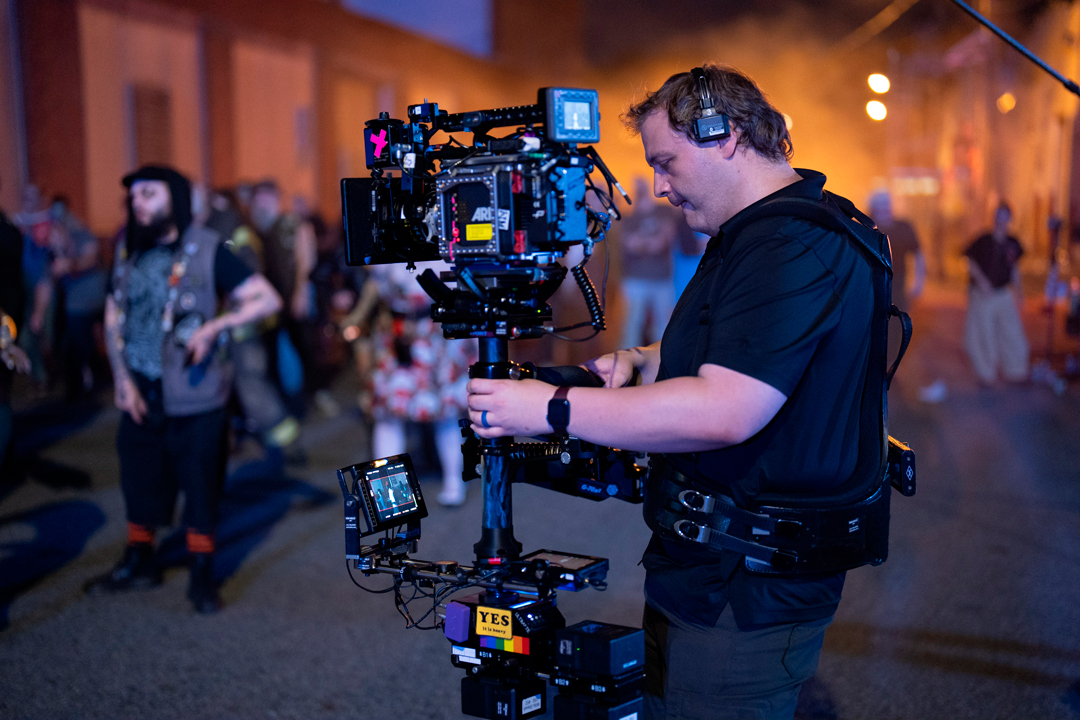
Camera Operator Spring 2026
Above Photo:
On the set of QUEENS OF THE DEAD.
Photos by Shannon Madden, courtesy of QOTD Inc
TECH ON SET
Camera: Alexa Mini
Lenses: Panavision Ultra Speeds
Steadicam: XCS Ultimate 2HD, Steadicam G70x2 arm, Walter Klassen Harness
Walter Klassen Slingshot
Rickshaw
RELATED CONTENT
Watch the trailer for Queens of the Dead
Tori Wills, SOC
Learn more about Tori Wills’ career and projects at IMDb.com
BEHIND-THE-SCENES
Select Photo for Slideshow
Photos by Spencer Pazer
SIGN UP FOR THE FREE DIGITAL EDITION OF CAMERA OPERATOR
Click Here
ENJOY PAST ISSUES OF CAMERA OPERATOR
Click Here
Tori Wills, SOC (she/they)
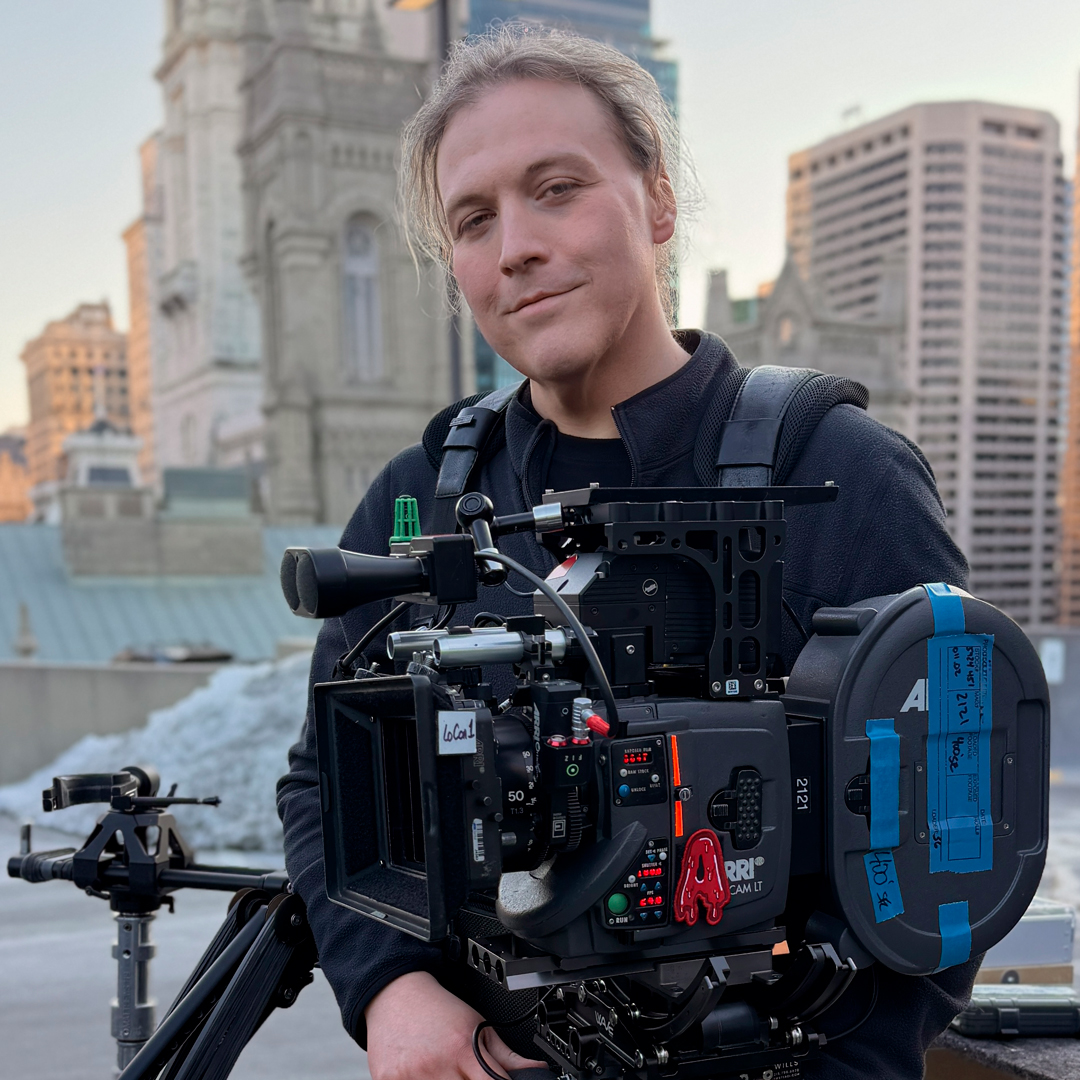
A Camera and Steadicam operator, they are based in Philadelphia and work throughout New York and the East Coast USA. Their credits span many genres of television, film, and commercial production including Saturday Night Live, Law and Order, Oh Hello on Broadway, Dispatches from Elsewhere, and Not Suitable For Work. They also have a background in engineering and have worked extensively with their mentor and friend Larry McConkey, SOC to develop new technologies and techniques to expand the art and science of camera movement.
Photo courtesy of Tori Wills
David Daut
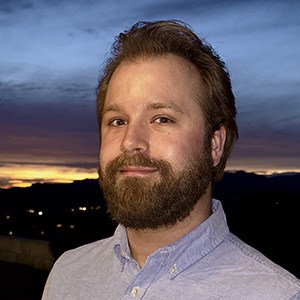
A writer and critic for more than a decade, David Daut specializes in analysis of genre cinema and immersive media. In addition to his work for Camera Operator and other publications, David is also the co-creator of Hollow Medium, a “recovered audio” ghost story podcast. David studied at the USC School of Cinematic Arts and works as a freelance writer based out of Long Beach, California.
SPECIAL THANKS TO OUR ADVERTISERS