

The Six Triple Eight
A Tale of Two Steadicams
A Conversation with Matthew A. Petrosky, SOC & Anthony Oliver
By David Daut
Tyler Perry—who is something of an industry unto himself—has written, directed, and produced dozens of films over the past two decades. But even given his prolific output, Perry’s latest film—The Six Triple Eight—represents new territory for the filmmaker: a large-scale war picture telling the story of the only all-Black, all-women American battalion to serve overseas in World War II.
In this interview, A camera and Steadicam operator Matthew A. Petrosky, SOC, and B camera and Steadicam operator Anthony Oliver talk about what it was like working on a film of this scale with elaborate sets and hundreds of extras, as well as the unique dynamic of shooting a project with two Steadicam operators.
During the final years of World War II, military resources are stretched thin and supply chains are straining under the war effort. As a result, personal correspondence to and from soldiers fighting overseas has ceased being delivered. Morale among the troops is low and loved ones back home wait in agony for letters that never arrive. Enter the 6888th Central Postal Directory Battalion of the Women’s Army Corps, who are sent to Europe and tasked with clearing the backlog of some 17 million letters and packages. The Six Triple Eight is written and directed by Tyler Perry and stars Kerry Washington, Ebony Obsidian, Dean Norris, Sam Waterston, and Oprah Winfrey.

Camera Operator: Jumping right in, this is a very unique film. It’s a war movie—and there are a lot of war movies—but this is one told from a different perspective than we typically see. Can you talk a little bit about what it was like tackling that specific story?
Matthew Petrosky: When I talked with Michael Watson—the DP—before starting on this project, he was very clear. He said, “Tyler’s told me he’s not making a Madea movie, but he also moves fast, and he doesn’t like waiting around on stuff. He likes being efficient.” I personally took that as a challenge to rise to and embraced it. The way I described it to Michael is it’s going to be filmmaking chess; we are going to have to stay three, four, five, moves ahead and have things ready. So, that was very engaging. I guess the part that surprised me was this was also true for all of the other departments, too. The depth and detail from the props department and production design, the art direction and the locations, it was really like immersing yourself in some sort of quasi-documentary. You could almost film 360 degrees in some places, so you could really come in and adapt when you saw something that maybe told the story better, or found a more flattering angle for something. It was just exciting to be on this journey of discovery as it’s happening.
What’s interesting is that it sort of mirrors the perspective of being in the theater of war and the situation that these women were in. It was a very immersive environment that was intense and intimidating in some ways, but also a challenge to rise to.
Anthony Oliver: It was such a realistic setting. When we were filming in those barracks, those were real barracks. And the school, the massive school, was in bad shape. And when we were on the streets north of London, in Bradford—of course they enhanced that with set decoration—but it was so realistic. I mean, it was unbelievable. How many blocks was that? It just kept going!
Petrosky: Ten city blocks or something, and you could turn any direction. There was bomb damage and sandbags and barricades and shattered glass. It was pretty incredible and detailed.
Oliver: With the location, the acting, the direction, and the style we shot in, there wasn’t much time to overthink things. You were just in it. It is almost like you’re in the middle of the battle with them.
Petrosky: It’s very much a flow state—there’s something really energizing and exciting being a part of that. And the cast is fantastic. Kerry Washington and Ebony Obsidian and everyone are just so good. You put them in these incredible costumes on these incredible sets with these detailed props, and it just comes to life in a way that you feel it, and that guides your decisions. I think it was also in the choice to be anamorphic and to be on wide lenses, closer, where you’re intimate and connected with the characters, but also feeling the environment around them. It doesn’t feel isolated. It all feels very connected.

CO: Talking more about this idea of being three or four moves ahead like chess with the way that Tyler Perry shoots so that you’re prepared and on top of things, but then also having this freedom to find things in the moment. How do you find the balance in that?
Petrosky: It’s interesting. If I’m involved with an operator workshop or talking to someone that wants to get into operating, one of the things that I share is to trust your instincts. By that, I mean you get used to the grammar that you’ve created for the story you’re telling, so when you’re setting up a shot, you might think, “This needs to be a little lower. This should be a wider lens.” Nine times out of ten, if I don’t trust that instinct, the director or the DP will walk over and say, “Hey, what do you think about being a little lower or one lens wider?” It’s learning to trust in that. And it doesn’t mean it’s always right. I had a conversation with Tyler about that early on. I said, I don’t imagine that you’re going to love or agree with every choice I make, but I want to give you something that I feel makes sense and fits within the world we’re creating. Then if you hate it, we’ll throw it out, or if you like it, but want to modify it, of course we will. I really like that process, and I think it fits really well with how he wanted to make this movie.
So, it’s being prepared. Not in the specifics of “three hours from now, we’re going to be on 100 feet of dolly track, and it’s going to be this lens, and we’re here to here.” You may know that, and there may be something very specific, but more than that it means three hours from now, we’re going to be shooting the scene in the mud and thinking about where the light is. Where is our background? Having a conversation with the DP about what we want to see and don’t want to see, and then getting ahead and maybe having a conversation with the ADs about where they’re planning on putting background, and getting ahead and talking to the crane guys. It’s being prepared to discover things, and because it was so detailed in such a rich environment, you really could. And the cast was so good. Anything could be a close up, anything would be spectacular in a wide shot, so the choices were more governed by where you needed to be to tell the story.
Oliver: And Matt definitely had the harder job on that, being on the wide shots and crane. Matt was great at organizing and moving the pieces around. For me, it was much easier. I was often on Steadicam and handheld, giving more freedom to move if things didn’t line up quite right. There’s sort of a dance that we do between the wides and the tights. Matt made my job very easy. I enjoyed watching how he worked setting his shots up, and then just kind of playing off of that.
Petrosky: You make it look easy, Anthony. You’re such a trooper. Never a complaint or a sad feeling about anything. This was the first project that Anthony and I did together, and I actually met him on day two. On day one, I was the only Steadicam on the production. Tyler typically likes to have at least two; he likes to go in for coverage with dueling Steadicams, so that you can move and adapt with the actors. For some things, I would maybe rub up against that, but for this story, in this environment, with these characters, it had the right feel to it. It wasn’t as crazy as handheld, but it didn’t feel as rigid or fixed as a dolly or something would. The nature of that style of shooting, I think, enhanced the characters’ state in their world, because we were able to move with them. There is a little bit of life to it. Energy and uncertainty.
Oliver: Spontaneity.
Petrosky: Yeah, exactly. Day two was interesting. It was during Covid, and when I came to the stage, half of our department was down with Covid—including our DP, who was there but had to isolate and was doing everything wirelessly through headsets and monitors. So, I get there, and I see another guy setting up a Steadicam, and I get on the phone with our DP, “Michael, am I being replaced?” He explains, no, Tyler just wants to have a second Steadicam, and Greg, one of our other operators, had tested positive for Covid, so it sort of was a natural point to make that transition. So, I just walked over to Anthony and started talking with him and found out that he is a veteran of the Tyler Perry movie world, and was just super supportive and insightful. It ended up becoming a really great collaboration and friendship. I certainly feel like my ability to interact in the environment was enhanced with Anthony’s support and knowledge. What a joy it is to collaborate with another operator where you really feel like the work meshes with the work that you’re doing. I very quickly saw what Anthony was doing, and it was great. I didn’t have to worry if I was on the crane, and he wants to run in with a Steadicam that it’s going to suffer in any way. It’s top-helf operating. I really get his instincts and choices, so it just becomes a big team effort to make the shots great and the story good.
Oliver: I appreciate that. That’s probably the best compliment I could ever receive. It really is just about the team operating as a unit and having good communication. And the ACs I had were just phenomenal; so great to work with Kane Pearson and Walker Markey!
Petrosky: They really had an uphill battle with there being not a lot of rehearsals and not a lot of takes. It’s anamorphic, large format, and the gear in those environments was just getting thrashed. It’s all dust and fog and rain. And having solid second ACs, utilities, etc.—it’s just so important.
Oliver: Do you remember when we were under the rain machine, just getting just pelted?
Petrosky: That scene outside the White House with Susan Sarandon. We’re both standing there, just getting dumped on with two Steadicams. It was kind of amazing. But again, that’s incredible. I don’t usually get to do stuff with another Steadicam operator on set, so that part of it was a lot of fun for me too.
Oliver: I think it works in the environment that [Tyler Perry] has created. It really makes sense, and I really enjoy being a part of his process.

CO: Digging into that a little more, it is fairly atypical to have two Steadicam operators on a production like this. What were some of the challenges of working with two Steadicam operators, but also the advantages and the unique opportunities of working in that way?
Oliver: [Laughs] I would say the advantage is you get a break. Do you remember when we were shooting the dance scene?
Petrosky: Yeah, in that tent over in the U.K.
Oliver: I was glad to have you on that day. Really glad.
Petrosky: I felt the same way. I’d be doing some intricate crane move, and all of a sudden they’re saying, “Oh, and we need a Steadicam over here.” To not have to drop the headset, run, go get the rig, was really nice. Anthony’s already there and able to do it.
Normally, like, you’re a bit of an island as a Steadicam operator. You’re kind of on your own. Obviously you have a lot of support from ACs and the grip side of things—what we do wouldn’t be possible otherwise—but to have another Steadicam operator that you can talk with and sort out problems with and chat gear with was really nice. I enjoyed that aspect of it a lot.
CO: Anthony, you mentioned that you’ve worked a lot with Tyler Perry in the past, but Matt, this was your first time working on a Tyler Perry project. Meanwhile, you had worked previously, I believe, with Michael Watson. What was it like bringing these two groups together, coming together as a team and collaborating and learning each other’s way of working?
Petrosky: Tyler Perry has this big, extended family that he makes his movies with, so Michael and I were kind of outsiders coming into it, but I feel like after everyone gets their bearings and gets to know each other that we were really welcomed warmly and felt really supported. In particular, Kevin Ham, Tyler’s key grip, and Mango [Donyelle Mangino], his gaffer, they very much have a system in the way they work. Sometimes I would kind of politely and politically as I could, say, “Well, what if I did this on a crane instead of doing this? Or what if we put some track down here instead of using a slider?” It would maybe get a look, and I’d say, “I promise I can do it faster and I can make it a bigger move, and I think it will just look a little nicer.” And to his credit, when Kevin saw that was true and that Tyler was excited about it, he really backed me and supported it. So, I feel like I was able to bring some of that in, but also coming into something where everyone is such a big family and to become part of that was really cool. It was another part of what made this such a unique experience.
Oliver: I think you were embraced very quickly and won everyone’s respect very early on. Not just by your skill, but also the things you did ask for; the crew saw that you made the right choices and got great shots.
Petrosky: Thanks for that. It’s funny, there was sort of an infamous day two story.
Oliver: We get our day going, we have our call time on set, and then Mr. P comes in a little bit later. So, here’s the first scene, and Matt sets up the shot. It’s a beautiful shot. And then, as he does, Mr. P comes in. The seas part and this giant man comes in, and what does he say, Matt?
Petrosky: It was just a very natural progression. We were kind of standing around, and I felt like we should at least have something to show him. Like, what if we put a riser and an offset on the dolly? And it just kept evolving, talking to Irie Bailey, my dolly grip, who was a great collaborator. He said, “Why don’t you give me a one and a two, so we have some parameters.” And then [first assistant director Derrick Doose] starts bringing in background and placing people in the shot, and by that point it’s sort of evolved into a rehearsal. At the end of all that, all of a sudden we hear Tyler’s booming voice just yell, “Cut! Who set up this shot?” It is absolutely quiet on set; you could hear a pin drop. I’m sitting on a dolly, on a riser, way up, in the middle of everything, and I’m convinced I’m about to be fired or at least chewed out. I look around at everyone and then Tyler, and I do the only thing I can do—I just say, “I did,” and I braced for the worst. Tyler says, “How dare you set up such a beautiful, cinematic shot without the director present to take credit for it?” I smiled and said, “Of course you can take credit for it! Your name’s on the slate.” He looks at the AD and says, “Doose, I love this shot. Let’s shoot it and move on.” So we shot it and moved on.
We talked about trusting your instincts and going for it, and this was one of those moments. It felt like, okay, I have a sense now of why they brought me in here.
Oliver: Instant credibility when you get that sort of a reaction from Mr. Perry. The whole crew knew, all right, this guy’s okay.
Petrosky: Again, that element of it was a lot of fun. When Michael Watson and I were talking about the job beforehand, I said we’re not always going to agree with it, and it won’t always work in our favor, but I’m excited about having the director not only also be the writer, but the head of the studio. We will always have answers and decisions. I can work with that. That’s powerful, and it’s efficient.
Oliver: Immediate.
Petrosky: Yeah, immediate. It’s kind of old school. You’d be right there in the thick of it, and if something needed to happen, it happened; if Tyler said this is the way it’s going to be, that’s the way it is. That’s exciting. I feel like we have so many tools now, and it’s so easy to see stuff in playback that you can kind of get lost in the weeds. It’s different having that almost old school sensibility of “this is what we’re going to do.” You set it up, you do one thing, you maybe find some cool thing within it, and then you confidently move on to the next thing. It has a great cadence, and it’s good for morale. It’s exciting to be in the middle of that.
Oliver: Yeah, I agree.

CO: Thinking about the film, the core tension of it is the enormity of the task that these women had to accomplish versus the flippant disregard with which they were given it. As camera operators, how did you approach showing the scale of what they had to do? Both the gravity of it emotionally as well as the sheer enormity of it—hangers full of undelivered mail. How did you get across conveying that to the audience through the camera?
Oliver: It was Matt’s crane work. All of our sets were so massive. The hangers and then the big school. So, these wonderful crane shots really tell the story and show the depth of the space that we were in.
Petrosky: I think, too, a lot of credit has to go to the art department and props. We shot in a school in Rome, Georgia, that we used for the mail sorting interior space—it’s this really beautiful hundred-something-year-old building—and you could go up to any of the letters and put it in close up, There are thousands and thousands of letters, and each one is handwritten and aged and water damaged and stamped and torn. And that’s just the envelope. There are letters inside where it’s the same. So, there’s just so much depth there that we were sort of challenged with how to bring that out and show that detail to the audience. It really lent itself to starting in almost macro close on something, and then pulling back to see that this is just one of a million. Again, it’s in the choice to use wider lenses while being close to things, and seeing a lot of the world and environment around it.
The camera movement is important, too, to feel like it’s endless and constantly moving. We tried to keep the camera moving a lot as a way to immerse the audience in that world in a three-dimensional way.
Oliver: There’s the scene where General Halt has decided to fire Major Adams. They’re in the office, and it’s just a scene with two guys. Then you dolly in as they get up and go look out the window, and then you’re on a crane, and we go into this huge scene of all the soldiers getting their mail. Then we crane back into the window, and dolly back with them as they go back to show their reactions. Just a lot of really great work. I haven’t seen a shot quite like that. That was just one thing I remember being stunned by. I mean, just gorgeous work!
Petrosky: Again, it’s trying to connect and show that world. A lot of times, that was the challenge, quite frankly. The enormity of it, and having to fit it in a frame sometimes was overwhelming. Sometimes you’re just really wide and low, or really wide and high, but I think what ended up becoming the grammar for the film was this camera that moves through this space; that starts wide and ends up really close on something or someone, or starts in close and goes wide. That really gives a lot of connection and context to everything.
It’s also our locations. When Major Adams and Captain Campbell first arrive in Europe, there’s this “reception” thrown for them with all the white generals. You see the two of them coming up these stairs and walking in this hall, and they’re sort of pushing the camera that leads them. It was a small Scorpio, and it pulls back into the room with them where it cranes up and wide. Originally this was supposed to be two pieces. We were there waiting on something with our U.K. key grip, Jack Hopkins, who is amazing and an absolute joy to work with, and just insanely talented. Tyler says, “What if we start in the hall and come here?” and Jack said, “Yeah, let me just throw it on a bit of track,” and what was two or three shots evolved into this one, much more graceful way of showing that movement. But only possible because we had a shootable space that had this huge stairway, hall, and corridor leading into a giant room that had been art directed, with a ton of background in period costumes. Again, we were afforded the luxury of being able to convey the scale of things that way. Because that was the scale of what we were shooting.
Oliver: If I remember correctly, you were boomed out of a room, looking down, bringing them up the stairs, coming back into the room, and then going back wide again. Incredibly technical making that all happen.
Petrosky: Yeah, it’s one of those things where we were really fortunate to have a great crew over in the U.K.—super capable and efficient and just a pleasure to collaborate with. Jack and his team and our camera folks—[Abigayle Blacow], our A camera second, and everyone else that we got—they’re just so good and so nice. And in that environment, where you have that depth of support, you can push stuff and do things like that. I certainly can’t do any of that on my own.
Oliver: That’s one of my key takeaways. Doing a lot of Steadicam works well for me as I don’t have to direct much movement. I can usually fix things by my movement. The biggest thing that I learned from Matt is that it takes the right group of people to be able to accomplish truly great shots. So, that was a great lesson to learn.

Petrosky: Again, it’s really a testament to the depth of the environment and the quality of the crew. We were able to be wide, and then also move within it and really immerse the camera in it. That was the thing, to be close and connected. It is a very close, personal human story, so we want to be close and connected to these women, but we also need to really feel this insurmountable challenge and environment that they’re in to understand what they’re up against and what they accomplished.
Our camera team—Warren Brace, Kane Pearson, Daniel Fiorito, A camera second Grace Chambers, and our C camera operator April Crowley in the U.S, and then our folks over in the U.K.—everyone did great work.
Oliver: That’s another interesting point. When we went to London, we had a hybrid Atlanta/London camera team. We had to meld with this London crew, and it was unbelievable how well everyone just fit in together and worked well together.
Petrosky: What I think is going to boggle people’s minds is that our original schedule was 22 shooting days, and we ended up doing something like 17. Now this is over four months—I think Anthony and I prepped and wrapped and traveled probably more days than we actually were shooting—but when I talk about it being like chess and having to be prepared, I mean not only are you making sure that your gear is dialed in, but also that you’re really set up in a way that once you go into it, you are ready for whatever is needed and asked of you.
As a credit to the production team and the schedule, we were given the time to do that prep. I even got to scout some of the locations in the U.K. and sometimes could run ahead when we were at the studio in Atlanta and see a set beforehand. That’s so invaluable to be able to prepare. A day of prep is worth two days of shooting!
Oliver: Especially at the pace we move when we do shoot.
Petrosky: Yeah, for sure. And our dolly grips—Irie Bailey and Zavier Bolton in the U.S., and then Jack Hopkins and others in the U.K.—were terrific. It really is a team sport. This is true all the time, but especially on something like this, in this sort of environment. There’d be no way to do it if you didn’t have great people all around you. It makes it not only possible, but really fun. As hard as it was with all the mud and rain and dust and cold, I also remember it being a fun experience.
And the cast was amazing too. Just a pleasure to watch them. And Tyler too. He’s got such an eye. He really is a well-rounded filmmaker. He understands the process from every angle, and even so, still wants to understand it and do it better every time.
Oliver: Didn’t we have a representative from the Six Triple Eight ladies? One of the relatives?
Petrosky: Yeah.
Oliver: They were with us on set almost every day. I imagine that had to have been a big deal for the cast.
Petrosky: Oh yeah, for sure! I’d worked with Kerry Washington before, back in my L.A. days. Steve Fracol was the main operator on Scandal, but I would go in and do double-ups. I remember back then, Kerry was terrific. She’s super talented and just a lovely person and a consummate professional. And yeah, I think everyone understood the magic and importance of this story and the gravity of it. It’s a true story, so you have this guidebook, and to have a representative there telling stories about it, and to be able to see archival footage from it was kind of incredible. You’d be like, “Oh, there’s no way there were that many women marching through the streets of Europe,” and then you’d see this black and white archival footage that’s exactly that. It was pretty spectacular.
Oliver: That was another day, when we were marching through the streets. Just a massive group of women marching down these streets, with all the extras and the set decoration. It was unbelievable. The scale was something I’ve not seen before.
Petrosky: We had three cameras, at least, all the time. It was a buffet of dollies and cranes and remote heads and drones. There were a lot of tools. They just had to be ready, and you had to make a decision and plan for it if you wanted to use it. We certainly weren’t going to wait to bring something in from base camp. But, if stuff was there and ready to go, it was typically an easy sell in that regard. I mean, just the environment—rarely were we in any place that you could roll a cart around. It was all broken floors and uneven thresholds. It was a lot of hand carrying of a lot of things.
Oliver: On the battle scene day, it felt like we were a mile away from a road.
Petrosky: We probably were! I also really want to give a shout out to Michael Watson. Our focus pullers had a real challenge. Trying to move at that pace and be ahead with your lighting and grip and everything is a Sisyphean task. Michael handled it really well and was also very supportive of us. To have a DP’s trust in the operators means so much. Obviously he and Tyler had prep and meetings that we weren’t a part of, but on the day, he let us just work it out with Tyler while he’s lighting it and getting it ready. It was a dance.
It’s hard to move at that pace, and things would change unexpectedly. Suddenly two Steadicams are rolling on something that ten minutes ago was a dark corner. To be in the middle of that is really inspiring and invigorating. It was just special. I’m thankful that I got to be a part of it, and I got to experience that and help in some small way to bring this story into a medium where it has the power to connect with a lot of people.
Oliver: Yeah, I definitely agree. The DP position has so many challenges and curve balls to deal with. It takes a special person with patience and quick decision making, and Michael Watson handled that job brilliantly.
Petrosky: It was just a unique project. All the people we got to meet and work with in the U.K., and meeting and working with Anthony, and just being part of the Tyler Perry filmmaking family. It’s really been a highlight for me.

Camera Operator Winter 2025
Above Photo: Anthony Oliver shooting on location in Bradford, U.K., for THE SIX TRIPLE EIGHT. Photo by Laura Radford / Perry Well Films 2 / Courtesy of Netflix
Photos courtesy of Netflix
TECH ON SET
We used Sony Venice 1 cameras and Cooke Anamorphic FF Plus prime lenses. We had a variety of Chapman dollies, including Hustler, Hybrid, Pee-wee, and Cobra, and we had a full complement of sliders. In the US we had Cinemoves cranes (Scorpios), and Matrix Heads. We used an arm car for several sequences and drones from Ascend Aerials. In the UK, we also had Chapman dollies, a Libra head, and a specialty rig for the overhead hallway shots that our key grip, Jac Hopkins, constructed with a mini-Libra.
For Steadicam, I used an XCS UH3, 1.75-inch post with the Tiffen M2 Volt gimbal, a Pro Vest (I’ve loved it for twenty years) and a Klassen vest, both with a PRO and a NB Stabilizer arm. Anthony Oliver, our B camera operator, used a XCS UH2 with a 2-inch post, XCS gimbal, Wave1, a Klassen vest, and a PRO arm.
—Matthew A. Petrosky, SOC
RELATED CONTENT
Watch the Trailer for The Six Triple Eight
Matthew A. Petrosky, SOC
Learn more about Matthew‘s career and projects at IMDB.com
Anthony Oliver
PHOTO GALLERY
Select Photo for Slideshow


SIGN UP FOR THE FREE
DIGITAL EDITION OF
CAMERA OPERATOR
Click Here
PHOTO GALLERY
Select Photo for Slideshow
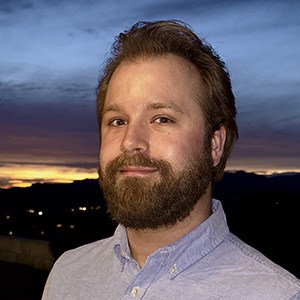
Matthew A. Petrosky, SOC
Matthew Petrosky, SOC, became enamored with cameras from an early age in his hometown of Pittsburgh, PA. He eagerly pursued this passion, graduating with a BFA in cinematography from the North Carolina School of Arts, where he also joined the SOC as a student member after meeting the late great Bill Hines. After graduation Matthew moved to Los Angeles, CA, and while working on indie films saved up his days to join Local 600. After building his career for 18 years in LA, Matthew relocated to Atlanta, GA. Matthew’s passion for filmmaking has, so far, resulted in nearly 80 operator credits that include Mud; Pineapple Express; Midnight Special; Our Brand is Crisis; The Tomorrow War; Fast and Furious Presents: Hobbs & Shaw; Werewolf by Night; and Thunderbolts.
Matthew lives with his very supportive wife, their two young daughters, and a scruffy dog. When he’s not playing with cameras, or trying to keep up with his daughters, he is pursuing his passion for aviation as a pilot and looking for any excuse to get outdoors.

Anthony Oliver
Anthony Oliver is a Steadicam owner and operator based out of Atlanta, Georgia. He has been in the film industry since 2008 after studying film at Trident Technical College in Charleston, South Carolina. He very quickly made the move to Atlanta and has been working there ever since. He has had a wide range of work in the Atlanta market, working in several departments before settling in the camera department. His early experience ranged from shorts and indie features to music videos and reality TV before getting his start in network television and feature films. Since 2018 he has found a home at Tyler Perry Studios and has worked on numerous television and features with Tyler Perry.

SPECIAL THANKS TO OUR ADVERTISERS

