

Wicked: For Good
Feeling the Moment
A Conversation with Karsten Jacobsen, DFF & Simon Finney, GBCT, ACO
By David Daut
Since its debut in 2003, Wicked has been one of the most enduringly popular stage musicals of the 21st century, and, for almost that long, the question of its adaptation to film was not so much “if,” but “when.” Finally, in the fall of 2024 Wicked: Part I arrived in cinemas where it defied not just gravity, but the conventional wisdom that musicals are something of a cursed genre in feature films. A year later, the conclusion to this story is here in Wicked: For Good, bringing a close to the adventures of Elphaba and Glinda and the not-so-wonderful Wizard of Oz.
To learn more about the massive combined production for the pair of films, Camera Operator spoke with A camera and Steadicam operator Karsten Jacobsen, DFF, and B camera operator Simon Finney, GBCT, ACO. They told not only of the huge scale of the shoot, but also the more intimate moments of spontaneity, reacting to the performances of stars Cynthia Erivo and Ariana Grande.
A year has passed since Elphaba was branded as a traitor and flew off into the western sky, and as the Wizard and Madame Morrible’s influence expands across Oz, its citizens live in fear of the so-called Wicked Witch of the West. Meanwhile Glinda and Fiyero are left to wrestle with the dissonance of knowing the truth about Elphaba while simultaneously having a duty to maintain as public figures. As Elphaba continues to oppose the Wizard’s fraudulent rule, conflicts come to a head when a twister drops a farmhouse from Kansas right in the middle of Munchkinland. Wicked: For Good is directed by Jon Chu from a screenplay by Winnie Holzman and Dana Fox. It stars Cynthia Erivo, Ariana Grande, Jonathan Bailey, Ethan Slater, Bowen Yang, Marissa Bode, Michelle Yeoh, and Jeff Goldblum.

Camera Operator: With this discussion, we’re mostly going to be focusing on Part Two— Wicked: For Good—but because both films were shot simultaneously, I did want to touch on what the process was like. I know the combined shoot for this lasted the better part of a year. What was it like working on a production this big for that long?
Simon Finney: It was interrupted by the actors’ strike, which prolonged it a bit. I’ve worked on projects that long before, but I’ve never done two films side-by-side like that. I’ve worked with Jon [Chu] before, and fairly quickly he creates a sense of purpose and reinforces the feeling that we’re all in it together. Jon’s very open and appreciative of input, and everybody seemed to be really invested in the project. So, despite the length of the shoot, the time didn’t lag at all. It went by very quickly. With all the various sets and technical challenges for certain shots it was always very involving and engaging. It was very technically tricky for a lot of people, so the thing sort of flew by.
Karsten Jacobsen: I actually never saw it as two films. There was never a point where we stopped and said, “Now we’re doing filming two.” We were doing it all continuously; we shot it as one film. That was nice, because we could follow the rhythm and how it evolves over both films. We weren’t jumping back and forth wondering where we are now, how’s that going to be. It was just one thing.
I started 10 weeks before, in prep, because there’s so much dancing and choreography. I was in the dance rehearsals, seeing that, talking to them, figuring out what would work best for the camera. That was a really good experience being on the film so early because you knew what was going on and what they wanted to achieve. Normally when you come in, you have a couple of weeks to catch up and figure everything out. This was one big collaboration with all of us.
And with the giant sets, it was really nice to be shooting at real things. People might look at the train and say, “That looks like that’s CGI,” but it’s not. It moves, it’s there. The boat sailing into Shiz University is a real boat on real water that was dug out on a field in London. Everything is there. Of course, everything over a certain height is digital, but almost everything on the ground is real. Sometimes when you do other films where everything’s on a blue screen, you have to imagine what it’s going to be, which is a challenge. Here we had the real things. We had the dancers, everything was there. You could feel that while we were shooting. Their enjoyment, how they feel about it, all of that energy came back to Simon and I.
Finney: As B camera operator, I was there two weeks before shooting, and that was great to be involved that early. As Karsten was saying, being involved in something early on really helps your sense of belonging and contribution. And he’s right about the energy coming back from the dancers. It was fantastic. That really helped us as well during the course of the shoot.
And it’s just great to film real stuff. It’s tangible, there’s a tactility to it, and that really helps. Then the visual effects can enhance that by making buildings higher. And you also get drawn into even the fantastical elements, like the wedding with all the butterflies. You know it’s visual effects, but I just forgot, even though I’d worked on the film.

CO: It’s interesting because it feels like over the last couple decades, musicals—at least musicals of this scale—have kind of fallen out of fashion. We had Spielberg’s West Side Story and Jon Chu’s In the Heights, but both underperformed. So, to work on something like this with all the dancers and the singing and the big sets and to have it be a hit, that’s got to be a really unique treat for you guys.
Jacobsen: It was amazing. We had a room called the “war room” where all the sets were built in miniature and all the concept drawings were hung up. A lot of times we went back to that war room with our small iPhones and planned out shots. Is it possible to put a door there? Can we open this? Can we move a wall here? Everybody on the set design team was on board with what we wanted to achieve. Then you eventually walk onto the set after it’s built, and it’s huge, but it was nice to see that everything we thought of working with the miniature was there. Everything was so precise transitioning from those miniatures to full scale. That was really special for us as operators.
Finney: For the dorm room, we had floating walls and ceilings were taken off to facilitate different shots from the sequence. There was obviously a lot of thought and work that had gone into that, and that was an amazing set to be on. It was a smaller set, but it was just brilliant the way everything had been carefully planned and collaboratively thought through.
There were times when we had two cranes at a time in the Emerald City and other sets outside. That was quite fun—swinging about, trying to avoid buggering up Karsten’s shot too much. Munchkinland was fun, although never go to Munchkinland in April. It was freezing there, but it was a great set.
CO: We’ve talked about the practical elements of the film, but I did want to touch on the visual effects a little bit. There’s a lot of flying in this movie—the lead character flies around on a broom for a good chunk of the film. How were the flight scenes accomplished, and what was it like as camera operators filming around the various rigs required to pull off those effects?
Jacobsen: There are two ways that we did it. There’s, of course, just flying on a blue screen—Simon can talk more about that, because that was shot after the actors’ strike while I was on another film in Australia—but there was also a lot of flying in the actual sets. That’s where it gets tricky because we’re working around the physical sets. How do we come around? How does the crane come in where there are wires while she’s flying? There’s a lot of talk with stunt people, and everything has to be precisely timed because it’s also happening during a song.
I look at camera operating like music. There is a rhythm in it. A dialog is also like a song—it has a rhythm, it has a feeling. How to move, how to push, and you don’t always know when that is. We know there is a push, but when is it? A good example is from film one when we did the dance standoff in Ozdust. The day before, we were talking about shooting it on crane and dollies, but then that morning Jon and Alice [Brooks, director of photography] came to me and said, let’s do it on a Steadicam. So, now I’m feeling out the scene with those two amazing actors—it’s something like 25 takes at nine minutes long, just feeling it. The take that’s in the film where Elphaba suddenly starts crying, that wasn’t planned. I just looked at my focus puller, Lewis Hume, he just nods, and we just pushed for it.
It’s so magical when you see those two amazing actors, and it just happens. Every time I sit and look in the viewfinder, it’s like I’m in the first row in the cinema, but I can also open the other eye and they’re right there. That’s what makes our job so incredible. We are there, we are feeling it, we are pushing when we feel it and, of course, the actors are trusting us. They’re really good at working with us in every aspect of what we wanted to achieve.
As a camera operator, if you don’t have an amazing crew around you, we can’t actually do that much. If you don’t have a focus puller that can feel what is going to happen or a key grip that knows to push the crane when we talk to them, we can’t do anything. We’re standing on top of all of that technical talent. We can sit here and have an interview, but there wouldn’t be anything without them. It’s such a team effort to make it work, there are so many layers to make that happen.

Finney: Absolutely. When you’re complimented for a crane shot as an operator, you think to yourself, well, there are four people back there who were doing twice as much work. We wouldn’t be here without all the people behind us.
But speaking to spontaneity, there was an interview with Jon I heard about that scene where Elphaba and Glinda could look at each other through the door—Elphaba outside and Glinda in the cupboard. They sort of ripped the set apart to make that happen, and he said it was because of something that had happened in rehearsals where they’d just carried on with the scene. He suddenly thought, we’ve got to keep that in. How do we do this? There was a bit of a shock at ripping the set apart, but it just worked. It’s that spontaneity and the grasping of the moment that you can do in film. It’s not a live performance like the theatre, but you do get those intimate moments that come when you’re listening to the needs of the moment.
I have to say, it was a privilege to listen to those two sing. You suddenly realize, wow, these two are singing in front of me live. I’m being paid to listen to this and watch it and react to it. It really was a special film.
CO: There are a couple things I want to touch on there. There’s the idea of balancing that spontaneity you’re talking about with the fact that you have all of these moving pieces in place. You have the dancers, you have the sets, you have the other people on the camera team that are all working with you and having to react to these things live in the moment as well. And then there’s the fact that Cynthia Erivo and Ariana Grande were singing to be recorded live on set. What is it like for you as camera operators reacting to all of this stuff in the moment and having those moments of spontaneity where you do have to react to things versus sticking to what was rehearsed?
Jacobsen: Many years ago, I did a lot of TV shows like The X Factor where you have people that suddenly do something different, so I’m quite used to reacting to something changing. I will go with it and try to figure out what it is. What I normally do with the focus puller, the grip, everybody around me, I tell them this is what I think will happen, and then I tell them what we’re going to do. I’m trying to offload what my reaction could be in this situation so they know if I’m moving to that side, now this is going to happen because we talked about it. It’s, of course, a little bit of a guessing game, but the more you do it, the more you practice and the more luck you get.
That’s also why it’s important when you do rehearsals that the operators are there just watching them, seeing the little things that happen. For example, in the movie, there are several times where Cynthia and Ariana hold hands when they’re meeting with the Wizard. That wasn’t planned at all. It’s just something they do, and I saw it in a rehearsal, so I just went for it when they take each other’s hand and walk up the stairs.
As operators, we are out in front with that camera, and we see stuff. Of course, it’s in cooperation with the director and the DP. Sometimes you go for it and it doesn’t work, but then they can go to the actors and ask them to hold a moment for a bit longer so we can get it in the next take. That only happens because we went for it and were allowed to make those calls by Jon and Alice.
Finney: Exactly. A lot of it comes from trust that you build up. I think we built that trust fairly quickly with Jon and Alice, and that gives you the freedom as an operator to follow that instinct. Even if it’s not quite perfect, they’ll pick up on it and possibly change things to accommodate it. But without that freedom, you feel a bit restricted. And even Karsten afforded me that freedom as B camera operator. There were times when he had a frame that he couldn’t change, but if I had a good shot, he always insisted that I got a go at it. There were some times when he changed his frame slightly to accommodate me. You work together and you learn to trust each other, and it gives you that freedom to be spontaneous, knowing everyone has your back.
Karsten: As a camera operator, when things happen that are not planned, you can either choose to go for it or not, but if you hesitate for a split second wondering What does that DP think? What does the director think? Then we’re too late. Maybe it goes into the film, maybe it doesn’t, but you have to trust in yourself and just go for it, and then you can get told off if it was really a bad idea. But that doesn’t really matter, because it’s right there, it’s right now, and you can’t ask them to stop the movie and wait for you. That doesn’t happen, but Jon and Alice built that in. As operators we are allowed to just go for it, and I think a lot of things that went for are actually in the film.

CO: I wanted to dig into the visual style of the film. The camera work is very classical throughout the film—I’m sure, by design—throwing back to The Wizard of Oz and the big musicals of the ’30s and ’40s, but you do bring some more modern techniques into it. Karsten, you mentioned using Steadicam during the Ozdust ball in the first movie, and in the second film, you have the sort of fight scene between Elphaba and Glinda where you switched to handheld. How do you make those decisions in terms of bringing in these different techniques and when to have the more classical style with cranes and dollies, versus bringing in Steadicam and handheld?
Jacobsen: Because it’s a musical, the Steadicam, for example, has much more movement than in a normal film. In a typical film, there’ll be a push down an alleyway, they go into the door, cut. Here, it’s like you are exploring the world. It’s much more movement with the Steadicam, but it also gives that feeling that you as an audience are with these characters. You’re there dancing with them. You feel how it is to be there. As for the “fight scene” in Munchkinland, that was a decision made on the day. This is the first time they have a real, physical fight, so let’s just go for it. Again, it came from seeing how those actors performed it. A lot of it is like that. Even though there can be plans for months and weeks going in to shoot it like this, it all comes down to that day when you see the actors and you realize what the moment needs.
Of course there are things you can’t change because something is really locked in, but a lot of times you have an idea and you tailor it to whatever they give us on the day.
Finney: That scene was actually longer; we shot more handheld stuff on the day. It’s a point where they’ve both emotionally let go in a way that perhaps they haven’t done before. As Karsten was saying, on the day, it seemed to call for a different approach. Handheld was the right one, I think, for that particular scene, and it does make it stand out. It stands out from the rest of the film, which is important in a sense, because it is a particular moment in their emotional journey.
CO: Digging some more into specific sequences, one I wanted to touch on was “The Girl in the Bubble.” It plays out as a single, continuous shot with the camera moving in and out of mirrors, reframing and reversing the staging. Can you walk me through how that sequence was accomplished?
Jacobsen: That’s one of my babies on this film. It started way in prep that Alice came to me and said they wanted to do a sequence where Glinda is looking at her reflection and starting to figure out who she is. When there’s a shot in a movie where the camera comes out of a mirror, you always wonder how that is done. And for this, we’re not just doing one mirror, we are doing a lot of mirrors. It started out just with Alice and I in the office playing around with mirrors. We know that a mirror flips the image, but what happens in a mirror in a mirror? And what happens in a mirror in a mirror in a mirror?
Perhaps this spoils the magic, but there weren’t any actual mirrors. They were all blue screens so we could comp in footage shot from the other side. But in order to do that—having Glinda, for example, going to the first mirror—we built the whole set so that it can open, so I can be twice the distance back up the set shooting her, and then as I push forward, we close the set behind me. Then you move around so that shot mirrors itself. And when she looks into the ceiling, we cut through the whole set for the crane so we could come that double distance down to her, and then up the stairs. When she sees herself in the mirror at the far end of the hallway, that’s actually another person, but we cut that out and filmed from the opposite side with Glinda.
We built the set so it was an exact 180-degree mirror of itself, so when she walks down the stairs and it looks like it’s flipped in a mirror, we were just shooting on the other staircase. Everything had to be built carefully so that all the sizes matched, but it is all shot in camera and then stitched together, of course.

CO: It’s a really impressive sequence. It takes a minute to figure out what’s happening, but around the second time you’re coming in and out of mirrors, you realize, okay, this is the whole sequence.
Jacobsen: I’m glad you said that, because that’s exactly what we want. We want you to sit with it, and then after mirror two or three, you go, “Hold on, what’s going on here?” A lot of times when you see mirrors in films, it’s a big, crazy moment. For this, it was very important that it was subtle. It’s not us trying to show off.
Normally in films the camera shouldn’t show off, because it’s like you’re moving with the character, but for a musical sometimes the camera actually can show off. That was also fun to do. During “Wonderful” where they’re dancing with the Wizard in the big room with all the colors, I grabbed the actor’s hand, and suddenly we’re dancing around each other with a Steadicam. That was not planned, Arianna and I just caught hands, and then Jon said let’s do it with all three of them. So again, these things happen because they let us play, and sometimes something comes out of it.
Finney: Yeah, that’s important about that particular “Girl in the Bubble” shot. Like Karsten was saying, it’s a shot that matches the emotion of the scene. The reflections and the introspection. It’s not a shot just for the sake of being clever. There are some films you see and there’s a Steadicam shot, and you get to the point where they’re just trying to show off now. Here there was a slight sense of the camera showing off, but it wasn’t to the detriment of your involvement as an audience. It didn’t detach you. You were drawn into it. I thought it was very clever. Obviously a lot of work went into it. I had a couple of quiet days.

CO: Speaking to that, what was the relationship like between you two as A and B camera operators? How did you divide up the work, how did you determine who was going to take which shots? What was that working relationship like between the two of you on this film?
Finney: I really enjoyed it. As A camera operator, Karsten would be the one with Jon and Alice deciding how to cover a scene. Then as B camera operator, you sit there and sometimes—like with “The Girl in the Bubble”—Alice would say, “We’ll see if we can do something.” And I said, “Well, there’s not much point, because you don’t want to cut the shot.” Part of it is knowing when not to offer stuff. We’d never worked together before, but I felt that pretty quickly we gelled together well.
As you’re watching the rehearsals and you see how they’re going to cover it, you can see angles that you might be able to get that might help, or sometimes Karsten would suggest something. As I say, the main bulk of it goes through one person, but the nice thing about that job for me was that I felt very much involved. It wasn’t one of those B camera jobs when you’re sitting around doing not very much—I was really busy a lot of the time—and I felt we got on very well. We shared the work in a nice, intelligent, creative fashion.
Jacobsen: The way I think of it is that B camera is the glue. I can get the big pieces, but if Simon is not there filling in that story, it’s hard to follow what’s happening. B camera really has to understand the storyline. I’ll have a big shot with 100 dancers, but Boq is over there in the background. Simon gets that shot, so now we understand that he’s watching. It’s important for Simon to always be around. Even if he’s not shooting, he was in the tent with Alice to see what I did, and then he and I have a talk about what else is needed.
As A and B camera operators, he’s the guy on the side that notices things. He’ll sometimes come up to me and ask why we’re doing something, and because you’re so in it with the actors and director, you won’t have even noticed this other thing. So, he’s there looking at the story, and then coming in with his take on it.
Finney: Sometimes it is easier from the outside, because I’ve been there before. As an A camera operator, you’ll get pulled along in a certain direction, so to have someone who’s not involved in that huddle is nice. The great thing was Karsten, Alice, and Jon were open to that, which was lovely.
And apart from Jon, Alice, and Karsten, there’s my assistant, Sacha Jones, and Kristi Gilligan, my loader. I had my grips, James Sams and Dave Rist, with me through the film, because a couple of people left to do other stuff. Karsten and I won the Operator of the Year award for BSC last year, and as I said in the acceptance speech, it’s everybody. It’s everybody on the crew you have to thank for what we do.
Jacobsen: I’ve never done a film of that scale. Having all the planning with all the gear we wanted to have, and everything was accomplished for us. If we asked for it, we got it. But also then you have to deliver with it.
And again, we are nothing without our crew. We really aren’t. We can take the glory and say, yeah, we won Operator of the Year last year, but as Simon said, it’s the whole crew that makes that happen. We’re just the front runners going, “Oh, thank you.” But if I didn’t have Lewis Hume as focus puller and Guy Micheletti as the key grip with me all the time, and Archie Muller as my second AC, it wouldn’t have been possible.

BEHIND-THE-SCENES
Select Photo for Larger View


Camera Operator Winter 2026
Above Photo:
Cynthia Erivo is Elphaba in WICKED: FOR GOOD
Photos by Giles Keyte/Universal Pictures
TECH ON SET
ARRI ALEXA 65 Camera
Scorpio 45 & 23 Cranes
Chapman/Leonard 70-foot Crane
Chapman/Leonard Dollies
RELATED CONTENT
Watch the trailer for Wicked: For Good
Karsten Jacobsen, DFF
Learn more about Karsten’s career and projects at IMDb.com
Simon Finney, GBCT, ACO
BEHIND-THE-SCENES
Select Photo for Slideshow
SIGN UP FOR THE FREE DIGITAL EDITION OF CAMERA OPERATOR
Click Here
ENJOY PAST ISSUES OF CAMERA OPERATOR
Click Here
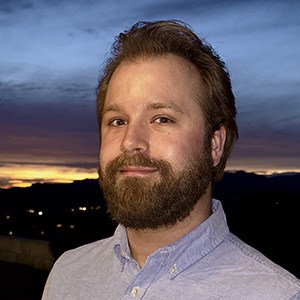
Karsten Jacobsen, DFF
Karsten Jacobsen is an A camera/Steadicam operator. He first operated a camera as a 15-year-old at a local Danish TV station. In the 35 years since, he traveled all over the world for his work on commercials before operating internationally on films. The story is at the heart of his operating and he enjoys being surrounded by the skilled professionals he meets on every job.

Simon Finney, GBCT, ACO
As the offspring of two actors a career in “The Industry” was probably on the cards! However, it was not however until I had finished a history degree that I felt drawn to it. Apart, that is, from my reply, as a five year old, to the question; “Why do you want to become an actor?” My answer? “Because both my parents spend a lot of time not working.” I also spent relatively little time as a child “on set. Following University I attended a two week film course at Crosswind Films in Soho Square; worked on two NFTS projects and was then offered a job as a runner on a feature film. Yes my dad was in it! This was to be the first of six films together. My first thought was to become an editor but, having been lucky enough to spend time on set during the above engagement, I soon realized it was in the camera department that I would be happiest: on the front line.
Back then working in the film and television industry required membership of the ACCT and I was fortunate that JDC, who had supplied the camera equipment for the above production, were in need of a delivery driver. Many thanks to Jamie Harcourt and Nigel Wool for pursuing this and to Joe Dunton for affording me the opportunity. I worked at JDC for four years, familiarizing myself with camera equipment and obtaining said union ticket. I spent one year delivery equipment, one in the office taking bookings and two on the floor prepping gear and helping crews during testing. Each stage provided me with valuable knowledge and contacts for a freelance future. After leaving JDC I spent five and a half years as a clapper loader and seven and a half as a focus puller. I have been operating since 2000. Despite a couple of enjoyable outings as a second unit DP I have no great yearning to move on permanently.
The industry affords us many privileges: collaboration with talented individuals towards a, hopefully, common goal and being paid to travel to places that most would usually pay to visit, among others. It certainly beats working for a living. I am fortunate to have met countless wonderful people along the way but I would like to mention John Jordan, Chris Plevin, Gavin Finney and Remi Adefarasin for all their support and the opportunities given.

SPECIAL THANKS TO OUR ADVERTISERS

