

F1
Prepared for Anything
A Conversation with Lukasz Bielan
By David Daut
Fresh off the historic success of Top Gun: Maverick, director Joseph Kosinski took the approach to shooting vehicles in motion at incredibly fast speeds that was pioneered for that film and adapted it to a new form. F1 launches like a rocket from its very first moments, putting audiences in the driver’s seat of cars that can travel more than 200 miles per hour.
Immersing audiences in the high-speed world of Formula One racing was no easy feat—it meant developing new technologies and new techniques for filming these races at extraordinary speeds.
To learn more about what went into shooting this film, Camera Operator sat down with Lukasz Bielan to discuss the challenges, triumphs, and unexpected curveballs that made working on the movie so memorable. We also reached out to 1st AC Dan Ming to get a detailed look at what went into building the unique camera systems developed for this film.
Decades after a catastrophic crash knocked the young Formula One driver off his path to success, Sonny Hayes is left with an itch he can’t quite scratch. Sure, he still races in Daytona, but after coming so close to achieving a dream, living in the shadow of his own potential has become a burden. When he’s approached with an offer from friend and former teammate—now owner of the last-place APXGP racing team—Hayes joins only to find himself butting heads with the team’s young rookie, Joshua Pearce. F1 is directed by Joseph Kosinski from a screenplay by Ehren Kruger and stars Brad Pitt, Damson Idris, Kerry Condon, Tobias Menzies, and Javier Bardem.

Camera Operator: How did you come to be involved with shooting F1? I know you’ve worked with Joseph Kosinski and Claudio Miranda in the past on Oblivion. Is that what established the relationship that led to this?
Lukasz Bielan: Definitely. I also have a very close relationship with Claudio. We’ve done five movies together, including Life of Pi and Oblivion. We really got along with Joe on Oblivion. We did some commercials together after that, but unfortunately the timing never worked out for the movies they did. Every time I couldn’t be available for them because they overlapped with something that I had already started or was just starting. Same thing with Top Gun: Maverick. I almost did Top Gun, but I wasn’t available for the pre-production shooting. They wanted somebody from the very get-go, so I missed out. Finally, this came about, and we were able to get the team back together. This movie is Joe’s passion project. He came up with the concept with [producer] Lewis Hamilton.
CO: From the car-mounted cameras, remote control panning, and POV shots, you can definitely feel a lot of influence on this film from John Frankenheimer’s Grand Prix. Just about every car movie made in the last 60 years owes a debt to Grand Prix, but F1 in particular really feels like it embraces that lineage. How would you say the work that you did on this film builds on and progresses the techniques pioneered by the likes of Frankenheimer, DP Lionel Lindon, and camera operator John M. Stephens?
Bielan: Obviously, we make movies because we love movies. We watch wonderful stuff from the past and, one way or another, they have influenced us. Going into this project, everybody thought Joe was going to do it on blue screen or do it on the Volume, but from the get-go, he wanted everything in the movie to be real. It’s real racing. The question, then, is how do you put cameras on what are basically bombs on wheels? Because Formula One is so fast and so precise and so dangerous in many ways, you have to be very cautious with what you’re putting on there.
Dan Ming was the focus puller, but he’s also the genius behind all of this stuff. Dan comes from technology; he’s like an engineer and his head is “Einsteinic,” for lack of a better description. Claudio and Joe came up with all these ideas and concepts for how to shoot the film and Dan worked with so many people and companies to help bring it all together, and I don’t think this movie would have been made on this particular scale without him. He made it work, and he made it adaptable to F1 vehicles.
Claudio and Dan worked with Sony to develop a system of cameras that were placed around the vehicle. We had four cars and normally you would attach an FX6 camera, but those were way too big—not only in terms of weight, but also distracting to actors while driving. They’re not professional drivers, they’re learning just as we are. They’ve been rehearsing and training before the movie, but they also drive every day before we shoot to practice, to get better at what they’re doing. And even then, they’re not driving F1 vehicles, which would have been both too expensive and too dangerous. Instead, they developed a Formula Two car that looks like an F1 but has a smaller engine and is not as fast. The camera bodies have to be small enough so they don’t interfere with what they’re doing.
We had all different positions. There were a couple of cameras that panned. Claudio decided in the very beginning that there’s no point in getting a tilting camera, because it’s all about linear, back-and-forth movement. They had to come up with a head that was small enough and stable enough to do that work, and also be able to withstand all the G-forces, because you’ve got to remember these G-forces are greater than fighter jets. Not only that, you have to find space to get all the guts—the receiver, the transmitter, the codecs, the batteries—inside the car. Claudio, along with Mercedes, designed a car that would be able to fit all of those things, and with Panavision and Preston, Dan and Claudio came up with a remote panning head that would be as fast as you could imagine, one that could keep up with the cars. It was a Preston-based system customized to transmit over a large distance, because the tracks are huge. They’re kilometers long, and we’re based in one space.
We had our control center where we had all the monitors. That’s where Joe and Claudio had their monitors, and that’s where we based out of. For each track that we went to, we had our own space, and we had to be able to transmit across the entire track without losing signal for video or for panning. It took a while to develop, but it was basically a sensor on a stick. It was a Sony FX6 sensor that you mounted the lens on, and the rest of the guts were cabled into the fuselage of the vehicles. There were a bunch of positions, but only four of them could pan, two at the same time. Everything had to be precise, because we were the first film crew ever to be allowed to film during the actual races. Our drivers couldn’t drive with the professional racers, but we were on the same track, and we filmed our dramatic scenes during the races in the boxes and the pit stops.

CO: Aside from all the technology that goes into shooting a movie like this, what is it like for you as an operator from a moment-to-moment perspective? Filming these things that are moving incredibly fast and having cameras mounted to these rockets on wheels. What is it like getting those shots and working with everything needed to make that happen?
Bielan: I was the A camera operator, and Natasha [Mullan] was B camera, and at any given moment, we had at least two panning cameras on one vehicle. For the entire filmmaking process of this movie, first and foremost was precision. You have to be ready for anything that goes. It’s about safety, not just for our team, our cast, but also for the F1 people. If anything comes off the car just before the race, it becomes a hazard for everybody else. So, we always had to be 100% ready and all the checklists had to be gone through.
With the mounts, we had Prestons that moved between points A and B. Joe had in mind exactly what frame he wanted, so at any given moment, he would call out watching the video when he wanted to have the pan done. It’s all muscle memory. You don’t have time to really look at what you’re doing because it’s so incredibly fast. It’s just a flick of your wrist and you go from point A to B. Sometimes it would change a little bit, sometimes it would be a little bit off, but it always had to be precise within the context of what we were doing.
Like I said, we were also able to film on the actual tarmac just before the race—during the anthem—and walk with our cast towards our car that was allowed by F1 to be on the grid. That is unheard of. The problem with that is that we don’t know what’s going to happen, because there are hundreds of people over there that we do not control, and we can’t control because we’re guests over there. We used DJI Ronin 4Ds with very small footprints. Steadicam—as great of a tool as it is—it’s big and it’s heavy. These cameras are very small. We had to be very precise and aware of what we were doing, because you’re walking backwards with Brad Pitt down the pit lane or the starting grid, and you don’t know who’s around. I can’t have a grip with somebody helping me and leading me, because we’re limited. We have to be very independent. I can’t stress enough that precision has to be top notch.
There was a situation during a couple of scenes after the race finishes. At the end, there is a spot where the cars all have to be weighed and checked that everything is flawless, that there hasn’t been any manipulation, because you could be disqualified for that. We were filming Brad’s car during that time. He comes out of the car, walks to the weigh station, and is being congratulated. It’s a tracking shot with the Ronin 4Ds that we call our “turkey heads,” because they kind of wobble like turkey heads. They’re very funny, but they’re great tools. But we were filming around the weigh in and if you even touch the car of another team, they could be disqualified by that. So again, that precision just goes on and on from the beginning through to the end. It was challenging, but that’s what we do. That’s why we’re professionals at it.
It was an amazing experience. One of the best experiences I’ve ever had, because you never knew what was going to happen. Your shot is not going to be dictated by what we conceptualize or visualize, because the reality is there’s going to be a guy walking through with spare tires, and that’s going to change the cast trajectory, and you have to adapt to that. And again, we get one or two shots at it. The grid walk, one shot at it. Made a mistake? That’s it. But fortunately, we didn’t. We did a few scenes like that. Meanwhile you have 120,000 people at Silverstone watching. They’re obviously there for the race, but they know there’s a film being made, so everybody’s paying attention to what’s going on with us. But as an operator, you draw from your experience. You work and you make mistakes—sometimes beautiful mistakes—and you remember how not to do it because on this set, there’s no take two.
CO: I’m sure that’s an incredible challenge. You’ve only got one shot at this, and you’re dealing with all these other factors that you don’t have any control over, but still making sure that you are having your precise camera movement. You’re telling the story the way it needs to be told.
Bielan: Without a doubt. Every movie is different. It’s similar tools—you’re going to have this shot, you’re going to have a wide, you’re going to have overs, you’re going to come up with something cool—but with these things, you don’t know what’s going to happen, really. It’s not predictable. It’s a high as well. When they’re playing “We Will Rock You” full blast, and you’re doing a scene going backwards, it’s a rush, and it’s really cool to be a part of it and do something like that.
And the movie turned out pretty damn good. It’s a throwback to the ’80s and ’90s blockbusters that we lack now, because they feel good. There’s drama, there’s romance, there’s a little bit of everything. I just talked to a couple of my friends who are DPs, and they said it’s one of those movies that you just wish there were 15 or 20 more minutes of it. Most of the things we watch now, the first criticism is that it was a good movie but half an hour too long. So, kudos to Joe and the filmmakers telling a compelling story. When you think about it, it’s a very simple story, but it’s so well done. And when you see it in IMAX, or even at home with a good sound system, you feel like you’re there.

CO: I’m interested in the discussions around finding the visual style for the film. As you mentioned, in the context of the race scenes and shooting on the actual Formula One tracks, you’re more limited in what you’re able to do because there are all these factors that are out of your control. But even outside of the races, there’s a sort of visual momentum that carries the whole movie forward. The camera feels like it’s moving for most of the film’s runtime, and when it does slow down and stop, it feels really impactful. What were the conversations like around keeping the camera moving, and when to find those moments to lock things off and really focus in on something?
Bielan: You know, the movie’s two-and-a-half hours long and obviously it’s all about the racing. That’s where all the drama is and all the adventure, that’s where all the adrenaline goes. We have a few camera positions, but the thing is that you don’t want to sell your moves too early. That was the biggest concern. A lot of that comes down to editing. Joe did an amazing job making sure not to use those moves too early or too often. When you’re making the movie, you’re not doing it chronologically, so you’re filming a lot of things out of context. It doesn’t happen one after the other, it just happens where we are at the time. You’re always thinking, “how is this going to cut? Is he going to use this later?” But he did an amazing job of building up the tension through to the very end. The thing that was genius from an editing point of view is when Sonny Hayes knows he’s going to win, everything goes silent. He’s in his own world, and you have two minutes of pure driving adrenaline. That is absolutely phenomenal the way he saved that shot and let the story evolve that way.
There was a lot of talk about should we get another camera position? Do we need any other ideas for this? But Joe trusted his concept and knew we were going to be all right with what we had.
CO: Yeah, that shot at the end where you’re just flying over the track is incredible.
Bielan: Yes, that’s what it is—you’re flying. It’s that moment he said he always yearns for. If he has that moment, his life is good. That’s the happiness of that particular character. And it’s told in the story in an old fashioned way. There are no gimmicks in the story, it’s not convoluted. It’s very straightforward, and I think it works. They were planning on releasing the movie on streaming this summer, but because it was the biggest opening for a Brad Pitt movie in history, they instead re-released it in IMAX.
CO: You’ve spoken broadly about some of the challenges of making this movie, shooting with the constraints of using the actual Formula One races and locations, but were there any specific moments or specific shots that stand out in your memory as being especially tricky?
Bielan: There was a moment when Joe was watching the monitor in our control center, and he says, “Oh my god.”
We had a special effects rig of a car that gets launched off a rail, and it’s supposed to go maybe 100 meters. We had three cameras on it, but it went three times as far. It just flew like a rocket. We shot it in slow-mo, and I was inside on a remote head. There was another camera on a long lens and another one that was fixed, but none of us had a clue it was going to launch like that. We knew roughly where it was supposed to land, but it went way too far. Not to toot my own horn, but being an operator for many years, you’re ready for anything. You don’t just go from A to B, because you know something may happen. You develop that through years, that if something happens, you automatically pan to the left because you feel that there is something interesting happening that is going to be good for the frame and for the story. Same thing with this. I was the only camera that went all the way with it and had it land. Otherwise we would not have that sequence, because to reset it and do it again, the cost was enormous.
Those are the things where you know the years of working and training yourself paid off. Then again, sometimes you make mistakes. Now I’m doing the opposite of tooting my own horn. We were in Mexico City, on the track before the race, and they have the racers of each team driving old cars throughout the track, just as a spontaneous thing. Every team has an old vehicle, and we were going to do it only in broadcast. The broadcast cameras were going to pick it up from Mexico City. I said, “Hey, Joe, you know what? We have a long lens. Why don’t we get something from the ground?” He goes, “Yeah, let’s find a place.”
So, I found a great spot, and they said, “Okay, Brad and Damson Idris are going to be the last cars. Don’t forget about the other racers, because we want their reactions, but Brad and Damson are going to be in the last vehicles.” I’m on an 800mm lens. Normally I have my eyes open when I operate, but if it’s a long lens, you have to concentrate, so I close my other eye so I don’t have that peripheral vision. When they’re coming at you, it’s a bit of a zigzag as one car goes out of frame, there’s another one that comes into frame closer. I got so carried away with the other drivers that I completely missed Brad because he went faster than the other cars.
What happened is, as he was going, he got covered by another car that I didn’t see. At the last second, I opened my other eye, and he passes by. This is embarrassing, especially because this was my idea. They gave me so much crap. They of course laughed because it was not a necessary shot, but for my ego and for what I trained to be, I dropped a big bomb on that one. The whole sequence never made it into the film because the film is long, and it’s got to move along.

That’s another thing I’ll remember. Natasha and I had a few different positions on different tracks where we wanted to be close to the cars going by. When they go by, if you blink, they’re gone. With these cars, you can’t do a bunch of takes, because these cars have to be checked every so many miles. You have to save your driving time so you don’t waste it, because that’s money and time. You have two takes to get it right, and there’s no practice take. You don’t know how fast they’re going to be going, you just have to go with the flow.
Our first thought was maybe we’ll do a whip pan with a fluid head. No way. Okay, maybe we’ll put a normal remote head on high speed. There’s no way to keep up. Even with your muscle memory, it’s gone. So, we took off the mounts that we had on the cars, and we mounted them on sticks and put them at the angle we wanted to pan through when the car comes through. It worked perfectly. We nailed it every time. A lot of the time, we were in positions where you don’t even see the car coming. It comes around the curve at the last second, and you pray that you hit A and B precisely. And we did.
I have a lot of respect for the camera operators who shoot the races. Obviously, that’s what they do for a living, and they have the gear for it and years of experience. The great thing is that we became very close with the F1 people. We thought the film business is huge, that we have the largest circus on wheels in the world? We’re peanuts compared to F1. The way they move, the way they operate, the way they function, and how much money is involved in there is unbelievable. It was a great experience working with them. It’s funny, we spent two years going to the tracks, and the people there started to expect us. After the movie ended, I sometimes get emails or text messages from the F1 people wondering where we are.
There’s a documentary they make for each racing season called Drive to Survive. In the past, they did normal handheld stuff—like a typical documentary—but since we worked with them, they’ve adapted our style of shooting these races into their work flow. So, that was cool.
CO: That is really cool. I think all of this speaks to what you’re saying—like with the special effect that misfired—about having that instinct to just feel where the camera needs to be.
Bielan: Yeah, even if you know it’s going to stop there, you have to be ready for anything. I think everybody who works doing this job for a long time develops that instinct. It could be instinctual in some cases, but more than that it’s practice and experience. That saved my ass for sure.
Claudio is very good at homework, preparing things and being ready for almost anything. Quite frankly in this business, you never know what’s going to happen, which is a beautiful thing but also a dangerous thing. There’s always a curve ball that’s going to come out, and you have to be ready for it. Make the decision to change something and still make it work and still make it relevant. I used to work with Jordan Cronenweth many years ago. I came up with Jeff Cronenweth, who was my best friend for many years, and I had the opportunity to be a second assistant for him and his dad. Jordan said of filmmaking, people say it shouldn’t be a compromise, but it is the art of compromising. Ninety-five percent of the time, wherever you are, something’s going to come up that you will have to compromise on, but the word compromise doesn’t have to be a negative thing. It’s just doing something different. Maybe even better, sometimes. It’s not what it’s supposed to be, it’s not intended, but you use your instinct, intellect, and experience to make that compromise, and that’s what’s so cool about this business.
That’s what drives me. I’m not exaggerating or being cute when I say there’s not a day on the film set—whatever it is—that I don’t learn something new to put in my bag of tricks. And many times it’s things you remember not to do in the future. It all makes you better and more experienced.
I have to tell you, I always wanted to be an actor. The reason I’m behind the camera is because I wanted to be in front of it. When I came to the stage when I was young, I thought I was God’s gift to acting, but then I realized—especially in L.A.—wherever you go, everybody’s an actor. The waiter is not just a waiter, he’s an actor. They have to have that determination and that self-confidence to say, even though I’m serving you a hamburger, I’m the best actor since Shakespearean times.
I didn’t have that. I came from a communist country, and we were always kind of taught low self esteem. So, I thought maybe if I do something else, I’ll have a better chance of getting there. I went to film school for cinematography. After two years of studying I got an opportunity to work on a movie set, and I never went back. I was there with a DP by the name of Sven Nykvist, who did all the Bergman movies and the Allen movies. He did over 130 movies, and he became my mentor. I stayed with him for 10 years, and I just climbed the ladder. I’m still climbing that ladder. Every step is a new challenge, but it’s so much fun. And they pay me!
F1
Strapping Cameras to a Rocket
By Dan Ming
It was a fun challenge to develop the system we used to film the onboard racing footage. Joe [Kosinski] and Claudio [Miranda] wanted to go at actual race speeds and also be able to get a live feed and operate the cameras. Because of the speeds we were going to film at—up to 180 miles per hour—a chase vehicle to operate from was not an option. We also ended up needing to shoot as many as four vehicles with four cameras per vehicle, all while staying out of sight during crowded Grand Prix race weekends. It quickly became apparent that we needed to develop a system with a fixed operating base.
Working with RF Film, we adapted their systems to create a low bandwidth data mesh network that could carry Preston control, camera control, and voltage monitoring protocols. From that, we built a head with Panavision that used the Preston motor protocol. Mesh radios would be set up around all the tracks to bounce the signal back to our mission control. Joe and Claudio knew that the shots were very linear from the beginning, so we could design pan-only heads with adjustable locking tilt, but they had to be fast and extremely solid. Panavision also built the electronics distribution system to power everything in the vehicles as well.
In the UK, we were working with Hornets-Tech and Wireless Wizards to spec out the wireless video system with minimal latency and full track coverage. It ended up being a 4K transmitter in each vehicle split into quad-HD to carry the feed from the four cameras. Because of the signal bandwidth, low-latency requirement and number of vehicles, a fiber network would have to be set up with receive sites around the track, sending the feedback via fiber to our mission control.
While all this was happening, Claudio and I were collaborating with Sony in Japan about a custom, tethered camera solution that would fulfill the production’s requirements: IMAX-quality, small size, robust, with a low-bandwidth network protocol. We ended up using the FX6 sensor with an E Mount, fixed in the smallest housing possible. We also added manual internal glass neutral-density filters because we knew we would be using wide angle lenses that would make front-attached NDs impractical. We also considered electronically operated internal NDs, but decided against it because of size and robustness concerns.
Once we had all the components of the system figured out, Panavision was able to finalize the Panapan head design and electronics distribution voltages based on Sony’s Rialto-C camera specs, and RF Film could program their control components using the protocol the system would use. Then we came to the final part of the system design—fitting it into the vehicle.
The Mercedes AMG F1 team was our partner in the design of our APX team race vehicles. Claudio and the action vehicle team had several meetings with them about where we needed camera angles so that they could design mounting points into the chassis of the vehicles, which were being built from scratch. Based on those positions, our limited camera tether length, and space in the vehicle, they decided to house our equipment in the side pods of the vehicles. We did as much as we could in CAD to figure out how to get the camera system in the pods, but it wouldn’t quite fit in the CAD models. Ultimately it came to us just having to do it with the actual vehicles at the Silverstone track in the UK and getting creative. We managed to fit it all in with millimeters to spare.
Next, we tested the systems installed in vehicles. Lukasz and Natasha [Mullan], our operators, gave feedback on the control interface (custom built knobs) in terms of being able to set limits and throw distance. Due to the need for a solid connection for smooth pans, a variable buffer system was programmed which increased latency but would automatically smooth out any signal dropouts. This did increase latency up to 12 frames, depending on how congested or limited the RF spectrum was and made things more challenging for the operators. But Joe, the operators, the stunt coordinator, and the drivers were all on comms and could coordinate when and where all the specific actions were taking place and they could anticipate exactly when pans needed to happen. As focus pullers, we would watch the operators’ hands to time our focus pulls rather than the monitors, so that we would be in sync, since the buffering system latency applied to both focus and pan in the same way.
Another great use for the small Sony Rialto-C and Panapan heads we developed were for some trackside shots where we had to 180-degree whip pan the vehicles flying by. Because of their size and mass, they could execute a 360-degree pan in about half a second, so Lukasz and Natasha could stand well clear of the camera with remote focus handsets, set exact pan limits, and basically trigger a full speed 180-degree pan right as the vehicle went by. For them, it was about watching the vehicles and triggering the pan at the right moment, they were going so fast, it was almost useless to watch the monitors for those shots!
BEHIND-THE-SCENES
Select Photo for Larger View


Camera Operator Fall 2025
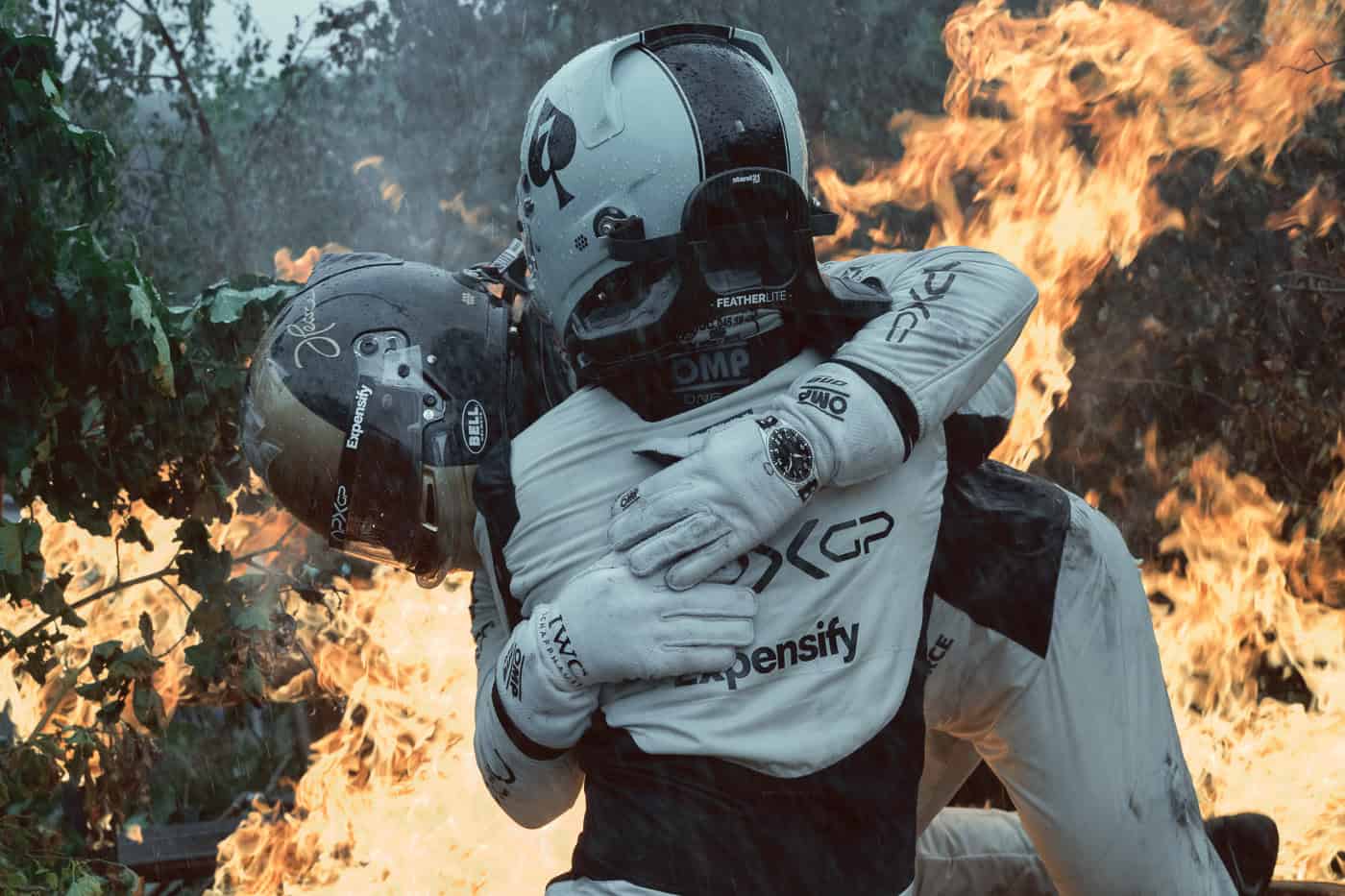
Above Photo: Lukasz Bielan shooting a scene for F1
Photos courtesy of Apple
TECH ON SET
DJI Ronin 4D Camera
Sony VENICE 2 & Rialto Cameras
Fujinon Premier & Premista Lenses
Panavision Primo 70 Lenses
Sigma FF High Speed Lenses
Voigtländer Lenses
Zeiss Loxia Lenses
iPhone 15 Pro Max
RELATED CONTENT
Lukasz Bielan
Learn more about Lukasz’ career and projects at IMDb.com
“Being the Ricardos: An Exercise in Trust,” Winter 2022 Camera Operator
Content Portal
SOC Lecture Series, Class 7: The Role of the Operator / In Collaboration with the Actor
Dan Ming
BEHIND-THE-SCENES
Select Photo for Slideshow
SIGN UP FOR THE FREE
DIGITAL EDITION OF
CAMERA OPERATOR
Click Here
ENJOY PAST ISSUES OF
CAMERA OPERATOR
Click Here
Lukasz Bielan
Lukasz Bielan was born in Warsaw, Poland. He started studying cinematography at Columbia College Hollywood. After a few years, he took a leave of absence to work with Sven Nykvist as his personal assistant and camera trainee on Chaplin. He stayed with Nykvist on the next nine films, including Sleepless in Seattle, What’s Eating Gilbert Grape, and Only You, climbing the camera department ladder from 2nd assistant to camera operator. His operating credits include Life of Pi; Deadpool 2; Alien: Romulus; Rustin; Spectre; and Bullet Train. He has worked on most of the Transformers films and collaborated on many projects with Michael Bay, Peter Berg, and Michael Mann. He lives with his wife in Palm Springs, California.

Dan Ming
Dan Ming is a camera technician and focus puller, focusing on how to develop and improve filmmaking technologies with various companies, especially for focus pullers. He has worked on various films over the last 28 years, from dramas (Lincoln; American Sniper; The Founder; and News of the World) to complex projects that push the limits of existing technology, such as Life of Pi; Top Gun: Maverick; and most recently F1, all lensed by Claudio Miranda, ASC.

David Daut
A writer and critic for more than a decade, David Daut specializes in analysis of genre cinema and immersive media. In addition to his work for Camera Operator and other publications, David is also the co-creator of Hollow Medium, a “recovered audio” ghost story podcast. David studied at the USC School of Cinematic Arts and works as a freelance writer based out of Long Beach, California.
SPECIAL THANKS TO OUR ADVERTISERS

