The Terminal List: Dark Wolf
Into Darkness
An interview with Kenny Niernberg, SOC
By David Daut
Arriving two years after the successful first season of The Terminal List, the prequel series The Terminal List: Dark Wolf trades the more straightforward revenge structure of James Reece’s story for a trip into the shadowy underworld of covert ops and moral ambiguity with Ben Edwards. This darker, grittier corner of the story in turn called for a visual language that was complementary but distinct from the earlier adventure.
From the logistics of operating around the series’ gunplay to crafting elaborate, show-stopping oners, Camera Operator spoke with Kenny Niernberg, SOC, series A camera and Steadicam operator, to find out what went into finding the unique look of Dark Wolf separate from The Terminal List.
Years before the events of The Terminal List, we meet Ben Edwards as a member of SEAL Team 5, fighting ISIS in Iraq. When a mission goes awry and Edwards executes a high-value target, he is drummed out of Navy, only to land on the radar of CIA spymaster Jed Haverford. Tantalized by the promise of a path back to his former station and a chance for revenge, Edwards accepts Haverford’s offer, but in this world of spies and double agents, nothing is as it seems and morality is no longer a simple question of good guys and bad guys. The Terminal List: Dark Wolf is created by Jack Carr and David DiGilio, and based on the novel by Carr. It stars Taylor Kitsch, Tom Hopper, and Chris Pratt.
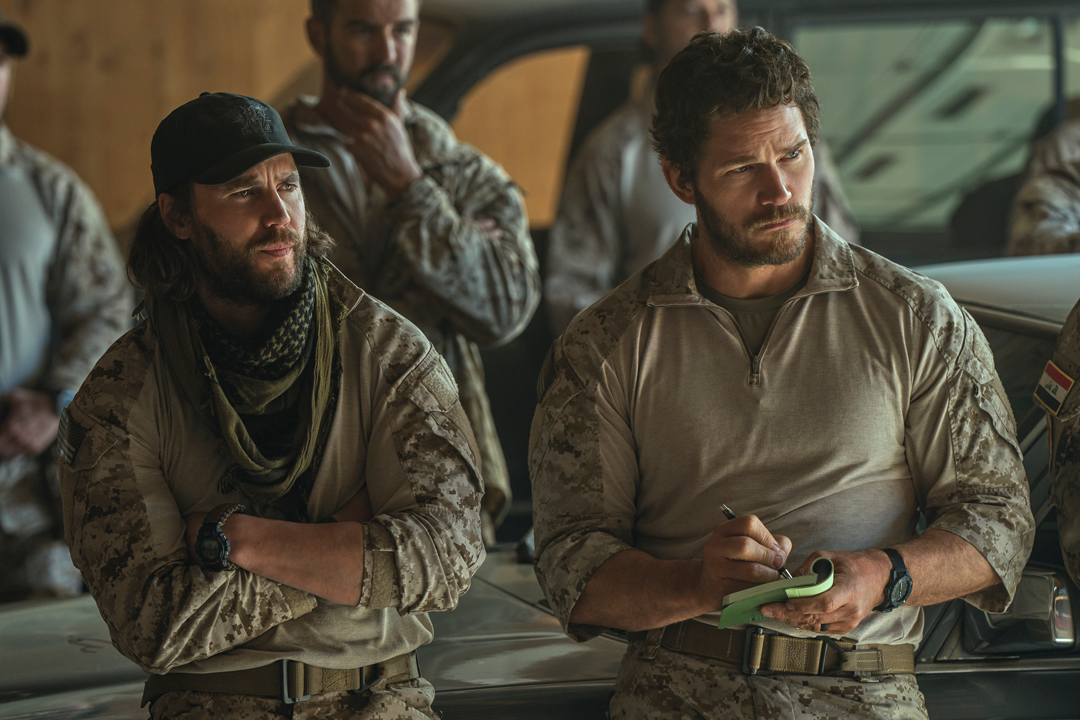
Photo by Justin Lubin
Camera Operator: I know you were not involved in the production for the original Terminal List series. How did you come to be involved with Dark Wolf?
Kenny Niernberg: Dark Wolf was kind of an incubator of a relationship for me and a DP I’ve never worked with, David Stockton. I met David while I was day playing on a FOX show called 9-1-1: Lone Star, and the two of us clicked. We only worked one day together, but after, he and I really started developing a great working relationship. Dark Wolf was given to him before the strike, and once the strike happened, they had a bunch of time for pre-production, so Stockton brought me in from the beginning. We spent some time at Otto Nemenz playing around with lenses to find the look and feel of the show, and we did a ton of research about how we wanted to approach this show visually.
CO: Because this is a prequel series to The Terminal List, how much leeway were you given to find a unique visual identity for this series, versus having to match what had come before?
Niernberg: We were given a lot of leeway, actually. The showrunner, David DiGilio, and producers all decided that they wanted this to be a standalone prequel series, and to have a look of its own. The Ben Edwards character deals in more of this dark, kind of off-the-rails CIA world which is different from the conspiracy world that James Reece faces in season one of The Terminal List. People said Dark Wolf felt like a more gritty version of Terminal List, and I think that’s really what we were going for.
We shot with anamorphic lenses, which added a lot to the visual look. We used the Caldwell Chameleons with a 2:1 crop, so that’s already different than the first season, which shot spherical with a crop for 2.35:1. David and I talked a lot about how we wanted the show to feel. We really wanted to make it something unique outside of James Reece’s world. I watched a ton of war movies and spy movies to get some inspiration for the direction I wanted to go with as far as camera movement.
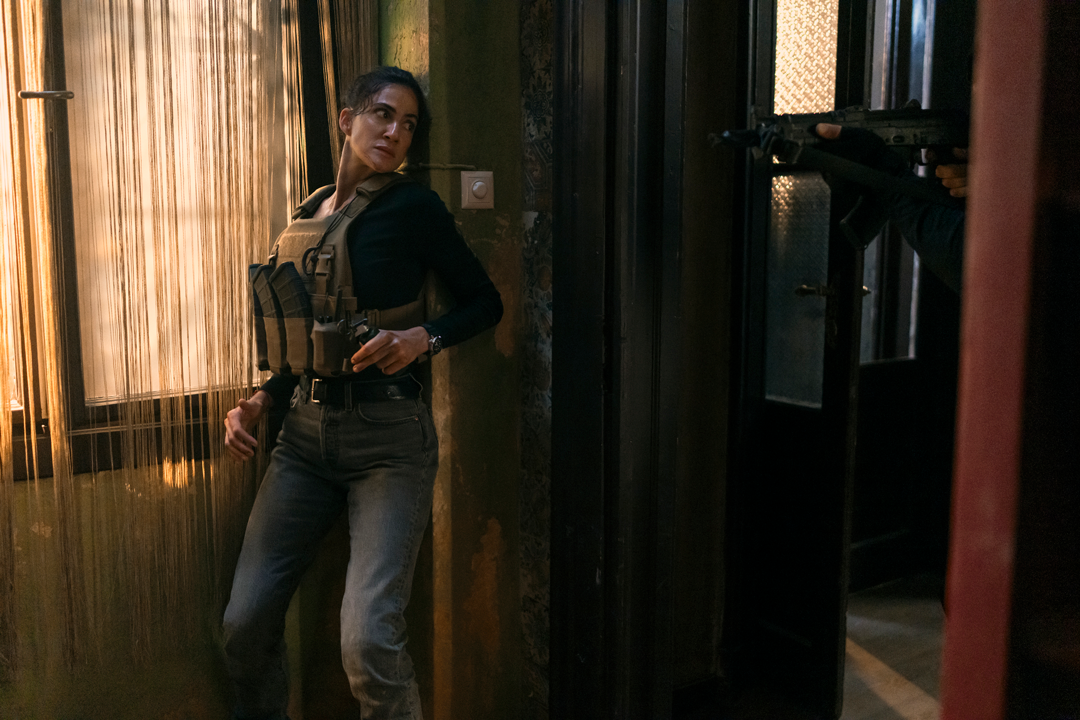
Photo by Attila Szvacsek
CO: I think a lot of that comes through in the way that the series is constantly building up tension as these characters go deeper and deeper into the covert ops underworld. As a camera operator, how does the work you do affect that tension and release cycle?
Niernberg: That’s a good question. Tying in with the previous question, we had a particular lens set on this show, the Ottoblads. Otto Nemenz took some Hasselblad glass, re-housed it, and then put a detuning adjustment on the back of the lens. So, there’s the focus ring, there’s the iris ring, and then on the very back there’s a detuning ring. Essentially, that ring created this really beautiful fall off. You can push it to the point where just the middle of the frame is sharp and everything else is falling off, or you can make it more subtle. It gives the image a little bit more of an anamorphic quality.
For more intense moments with Ben’s character, we used the Ottoblad to create a sense of the world going soft around him and he has an intense dark focus on his thoughts. We ended up calling it the ‘Dark Wolf’ lens, and those moments became ‘Dark Wolf’ moments. That lens along with certain focal lengths created this intimate, dynamic feeling where you’re in Ben’s headspace without pulling you out of the moment. It doesn’t call attention to itself, which I think was really important for us.
We also used a lot of really orchestrated Steadicam moves to create that tension. When I was brought onto the project, I started watching a lot of war shows and CIA shows, and something I noticed about Navy SEALs in particular is they have this very delicate dance that they do when they’re moving in through spaces. Even though the situation is out of control, they always have control over the situation. For me as an operator, I wanted to emulate the feeling of being a military operator the best I could. I wanted the camera to move through a given space with these very talented military operators and make it feel like you’re on the edge with these guys. I wanted the audience to be an additional SEAL right over our characters’ shoulders, covering their backs.
CO: There’s a lot of great Steadicam work in this show, but it does occasionally switch to handheld as well. How did you figure out when was the right moment to be in Steadicam and have that feeling of control amidst the chaos, like you said, versus going to the more out of control handheld look?
Niernberg: I think for the first four episodes, we primarily kept that in-control feel. There was one scene that we shot handheld in the barracks when Commander Cox is giving a pretty moving monologue. We decided we wanted a more vérité feel during that scene to bring it out of the very regimented military world.
As you get deeper into the show, we agreed that some scenes could be a bit more out of control, specifically in the hostel raid where Ben and Eliza are being chased by the QUDS Force. I brought in a ZeeGee rig to shoot a lot of that fight sequence. When we were chasing them down the hallway, that was Steadicam, but when I got into that really gritty fight, we were able to keep a more controlled handheld feel to it.
Ultimately, I think we always defaulted to more studio Steadicam and reserved handheld for really particular moments where it made sense, and then it’s gone again, right when you register that we’ve gone handheld.
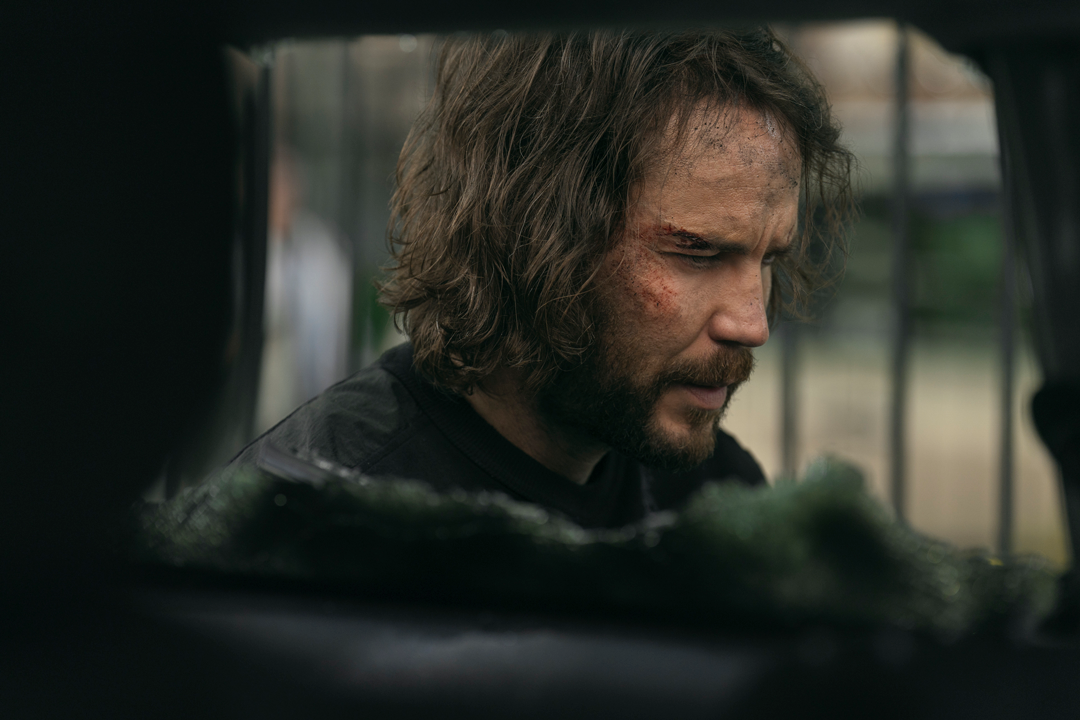
Photo by Attila Szvacsek
CO: I did want to get into some of the more specific moments from the series. As one might expect from a military and covert ops show, there’s a lot of gun play in this, and some pretty spectacular action setpieces sprinkled throughout the series. There’s the POW exchange in episode one, there’s the attack on the airplane in episode six, there’s—I think—a three minute oner at the end of episode four. Could you dig into what went into shooting some of these big setpieces for the show?
Niernberg: This whole world of The Terminal List is based on a novel by Jack Carr, who was a former Navy SEAL. One of our executive producers is a former SEAL Team member, and one of the writers is an Army Ranger. The executive producer really likes to honor what these guys do, so we have what we call the 80/20 rule. We really try to keep the show 80% as authentic as possible, so that when people who understand what military operators do watch it, they feel that authenticity. But then you still have to have the 20% that’s Hollywood. For me, that was a big challenge: to honor what they do, but still make it look good on camera.
We have this great military advisor, Ray Mendoza, who actually left our show mid-season and went on to direct Warfare for A24. I would really try to work with Ray and one of our producers, Jared Shaw, to try to better understand what it feels like in these scenarios, and then try to capture that on camera. I’d ask them to watch the monitor to see if what I’m shooting registers with their experience. We developed this really beautiful language between the three of us to the point where, when stunts was rehearsing the bigger gun battles, I would actually get a little bit of time away from set to go watch the rehearsals.
It’s rare for an A operator—especially on a streaming series—to leave and watch the stunt rehearsals and have conversations about camera movement and positioning with the stunt team and military advisors. It was a very special experience for me to be brought in for a lot of the creative on some of this gunplay and how to make it work for camera.
For all of the gunplay we used blank fire, from full to one-eighth loads. Sometimes we were using solid plug rifles on the silenced weapons. These still eject a round, but no gun powder or muzzle flash comes out of the barrel. Because of this I could safely cross in front of these weapons or get much closer to them as they’re being fired. It was really important for me to talk with our armorers before every scene to see where I could be during each setup. Up until this point in my career, I hadn’t done a whole lot of big gunplay, so this show really opened me up to what’s possible as an operator and how to be safe working around certain weapons. All that said, I think because I worked so closely with the military advisors, stunt coordinators and armorers, we achieved a really dynamic and more authentic look when it came to gunplay.
CO: I’m thinking about that in context of the oner at the end of episode four. Obviously a oner requires a lot of rehearsal and planning anyway, but then you add in this aspect of safety around the guns and everything else. What went into specifically shooting that sequence?
Niernberg: The bridge sequence in episode one was the first big action piece that we shot. We did some stuff in the States prior, but the bridge sequence was shot in Hungary, and we did it over five nights. It was a big sequence, but it was the first episode, so we had the budget to make that possible. By the time episode four came along, they wanted to do this big tunnel heist sequence, but we just didn’t have the days in the schedule.
The director, Liz Friedlander, approached me with that episode’s director of photography, John Grillo, and said they wanted to do this sequence as a oner, and they wanted it to feel like the camera is always traveling with the briefcase. We start the whole sequence with the German operative grabbing the briefcase and his in the hotel. We then take him outside where he gets in his SUV. The oner starts with the German waking up as the car slows for construction in the tunnel where he’s intercepted by Ben and Eliza.
We broke the scene down into five chunks, and it was another instance where I got to leave set, let my B operator be the A operator for the day, so I could go rehearse. We wanted to make it continuous, but I didn’t want to make it feel too much like Children of Men with a motorized slider on the roof. We still needed to find a tool that let us be in the car with this guy, operate in this really tight space, and then come out of the car and follow Ben and Eliza as they steal the briefcase. I’d heard of the Stabileye remote head for a while and really wanted to use it. They used it a lot on 1917 for its robust design and compact form factor. Stabileye built us a head that could handle our heavier build and still be super compact. We removed the SUV door, put a six-foot slider into the rear passenger seat, and then our key grip Dávid Kecskeméti built this amazing platform with the speed rail system. I was harnessed in outside the car, sitting on the slider, and able to move the Stabileye while I had my B operator, Matt Windon, do the wheel work. It’s really a coordinated effort for that first bit, but it came out great.
That first section takes you up to when Ben and Eliza grab the briefcase. We come out of the SUV, I lift the Stabileye off of the mount that we had, and chase Ben into the van, and there’s a match wipe into the next shot. For that, we built a similar rig, but now we’re inside a van with more room, so we just put down a four-foot slider running from the back seat. It was a mix of the Stabileye on sliders, Stabileye handheld, and then Steadicam once the proverbial shit hit the fan when they’re coming out of the car. There’s another wipe when they come to after the explosion. You get that slow motion while Eliza is banging on the door saying, “Ben, Ben, wake up!” Meanwhile, Ben’s all foggy and trying to wake up. I wiped through the seat, and then that’s when we transition to Steadicam. I basically extended the rig into the back seat of the van and then yank it out, and we start that sequence there. That tied into a Grip Trix run, where I had to lead Ben Edwards as he ran into the tunnel. We built a small platform off the back of the Grip Trix that I could step onto and get off of with the help of the grips. This made it possible for our actor, Taylor Kitsch, to do a sprint for about 70 yards down the tunnel. We were operating on cobblestones too, so the Grip Trix couldn’t be super low, which made the step-ons pretty physical for me. Basically a lot of single leg deadlifts for me in the Steadicam rig a number of times.
Ultimately, the whole point was to be with this briefcase, be with these operators as they’re facing this enemy threat that you’re not sure, as an audience, where it’s coming from. I talked to Jared Shaw about some of his deployments, and he said this scene gave him that feeling of being back there in battle and not knowing where the threat is because you don’t physically see the enemy most of the time.
Overall we only had two-and-a-half days to shoot the scene, plus a full day of rehearsal. I was talking to Nick Müller about the big oner sequence they did in Stranger Things for that last season, and they had multiple days for rehearsal. We kind of did it in a very scrappy way, snappy and quick, and we had to deal with rain and elements and everything like that. But overall, very successful.
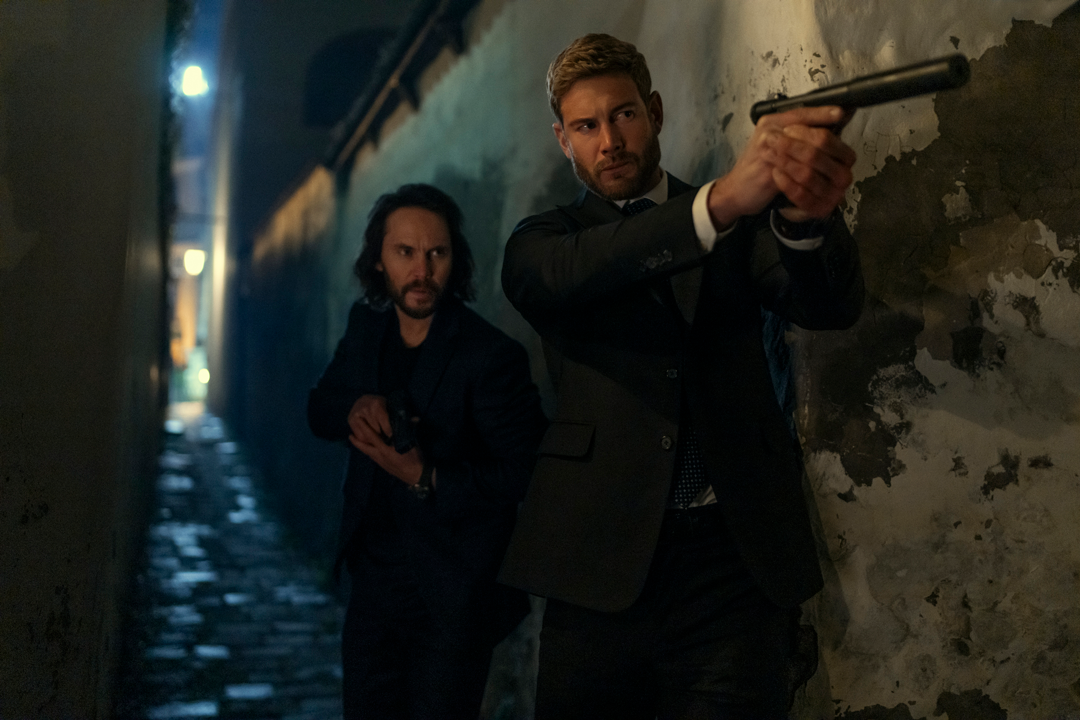
Photo by Attila Szvacsek
CO: Yeah, there’s the planning and coordination and rehearsal that goes into these shots, but there also, inevitably, is an element of finding things in the moment and just being prepared for what happens live on set. Can you think of any examples from your time on the show where there was something that you found in the moment?
Niernberg: I’d say a lot of the scene work we did, especially in episodes one and two. Fred Toye really gave me a lot of freedom to move the camera around. There was that big scene where Ben loses it on the CIA guys. Taylor [Kitsch] and I built a really good relationship throughout the show, so I really started to get a feel for his acting. He’s a powerful actor, and for that scene in particular, he really lit it up. There was a moment where I got to be in close with him, and we’re shooting on anamorphics, which traditionally don’t have great close focus unless you put a diopter in there. I was pushing forward more and more, and I could feel my first AC starting to clench a little bit, because he knew I was getting close to minimum focus, and then Taylor just overshot a little bit, and then came back into focus. It was just a moment in his acting, but I think it really worked because it was so raw and unfiltered and not rehearsed; we were just there doing it.
There’s another great moment at the end of episode one, where Ben’s saving his friend’s daughter, Zaynab, and he’s carrying her down the steps. David Stockton had lit this beautiful light coming through this lattice window, and I wanted to capture some of those light rays in a more visible way. Right before the take, I had the special effects team come in and do a little dust sprinkle around, almost like pixie dust. We tried it a couple times to time it, but then we just had to go. Effects would come in right over my shoulder, then Taylor comes out of this dust plume, which is great, because he’s just gone through this crazy operation where they raided this terrorist organization, he kills the main terrorist leader, and he saves his friend’s daughter. It’s such a powerful moment where he comes through this dust, he walks by me, and then the camera settles on this young child’s face looking up.
CO: Are there any other sequences or moments that stand out as being either particularly challenging or memorable?
Niernberg: Obviously the oner was definitely one of the more challenging bits. Episode three, oddly, was one of those episodes where there wasn’t a whole lot that happens, but we fell into this really great visual language for that one where we started using some live zooms, almost channeling The Conversation, and setting up a lot of the tension with the chase sequence using those zooms.
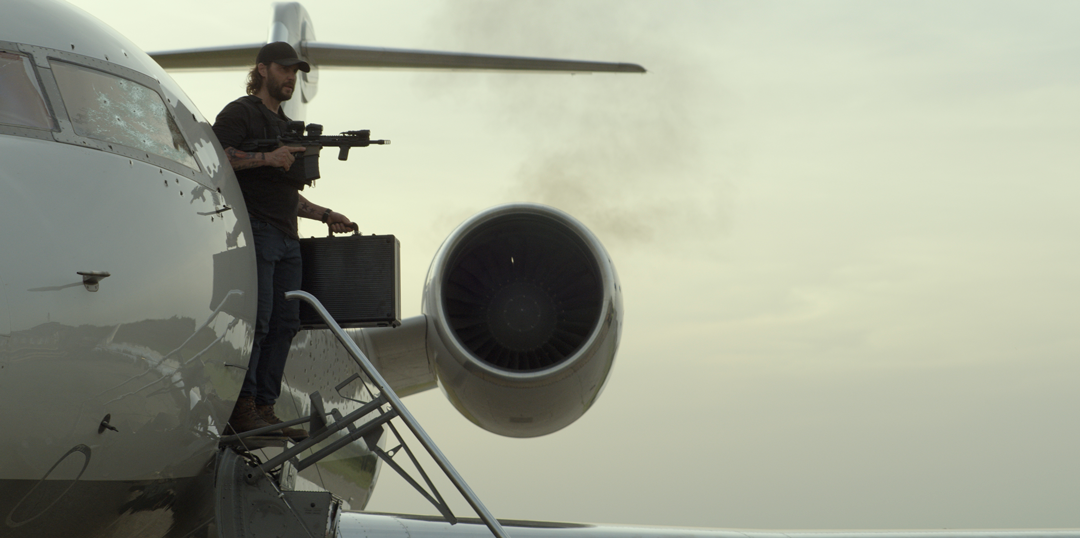
The airplane shootout was really challenging. It was one of the hottest days of the year, 90% humidity; people were going down, getting sick left and right, and I’m stuck in this airplane fuselage with my Steadicam rig and 20 other guys. We’re trying to get this shot of this guy getting blown to pieces, then Ben comes on and cuts the guy’s hand off and takes the briefcase. I was just chugging as much water as possible because I knew there could only be one operator on the plane. That was a really physically challenging day for me, because it’s a tight space—it’s a private jet fuselage, and the aisles aren’t that great. I’m operating in low mode, and it was all Steadicam, and there are not a whole lot of places to mount or dock the rig. But that sequence came out really well, and really captured the ‘badassery’ of these guys finishing off the one of the main terrorists.
We were talking earlier about gunplay, and that was one of those moments where I’d gotten so comfortable with the guns and the different blank loads. Ben’s using a fully automatic weapon, and I was talking to Mike Panevics, who’s one of our lead armorers, about where I could be in terms of distance. That gun has to use full loads, because in order for it to chamber another round, it needs gas from a full load, so it has to be handled a certain way. Mike says, “At six feet, three-quarters, you’re out of the blast radius. As long as you’re comfortable, I’m good with that.” That’s how we were able to get such a great shot of Ben using this harsh machine gun to really blast through this airplane fuselage. I built such a great relationship with the armorers and became more comfortable—not complacent, but comfortable with the gunplay itself—that I was able to put myself in a safe position that was still out of harm’s way, but could get a great shot and tell the story for that sequence.
I think it’s important to recognize that this production shot for a couple weeks here in the States, but then made its way overseas to Hungary. For me as a U.S. operator, to be able to work over there and be brought over with the show, I have a huge debt of gratitude to my DP, David Stockon; our director, Fred Toye; our showrunner, David DiGilio; our line producer, Nicolas Stern; and Jared Shaw and Max Adams, our other executive producers. All those guys really championed me being there in Hungary when they could have hired someone based in Europe. I really am appreciative of that.
The crews in Hungary were phenomenal! I had the most amazing key grip, and as some operators know, your key grip is also your A dolly grip when you’re in Europe. Dávid Kecskeméti was just phenomenal and really built some amazing rigs for us, and really had my back throughout. Also, amazing focus pulling by both Stephen Taylor-Wehr here in the States, and another great A first, Chris Summers, in Hungary. Those guys really had my back throughout the entire show. And I have to give huge props to David Stockton and John Grillo, our other DP. David really was instrumental in getting me into this show. It’s nice to be a major part of the creative with these guys. I just wrapped Terminal List season two with these guys. They brought me to South Africa, Toronto, Morocco, and again, everyone made me feel like part of the family—made me feel like part of the creative process. I feel like I have these creative fingerprints all over the show, which makes me feel pretty good as an operator.
BEHIND-THE-SCENES
Select Photo for Larger View
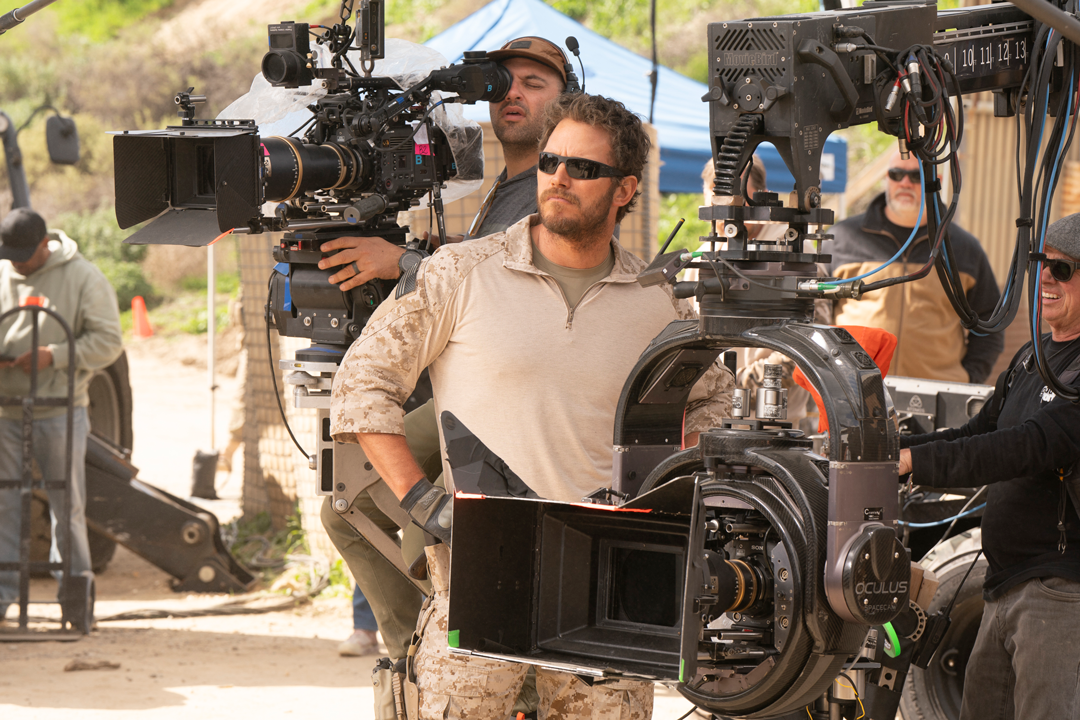
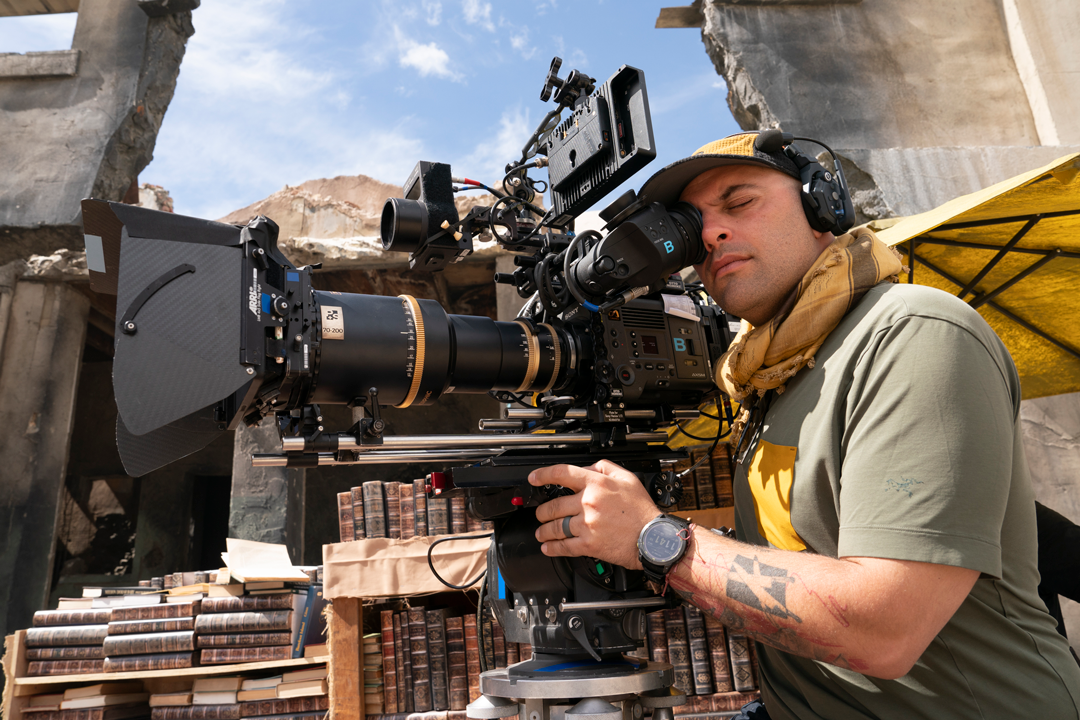
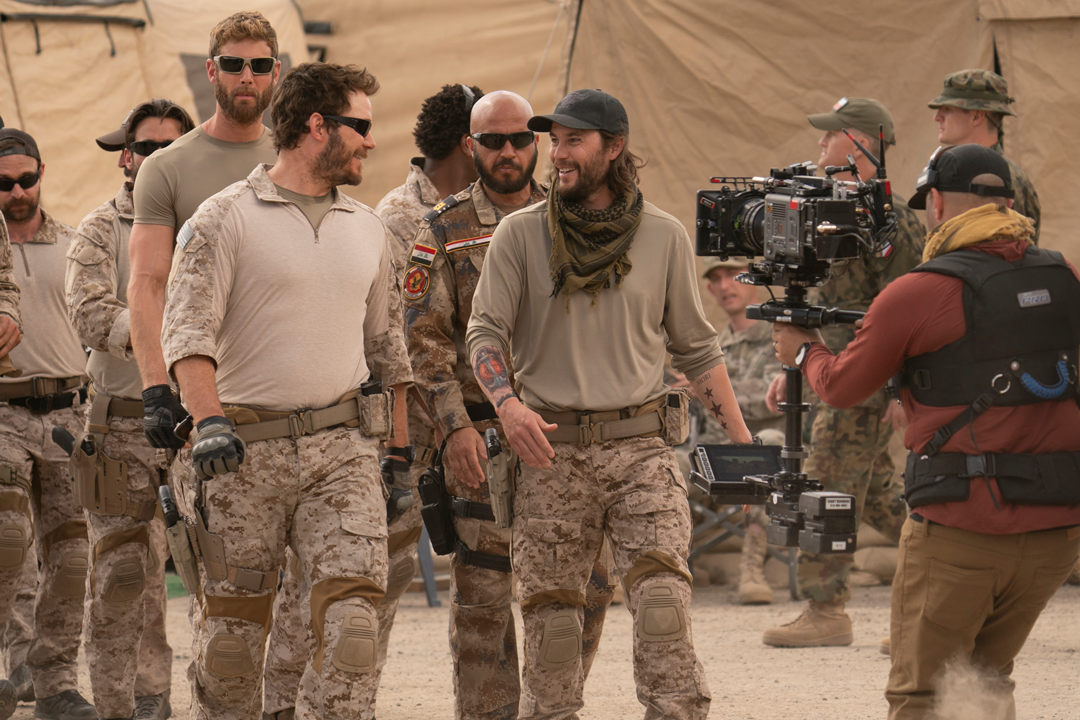
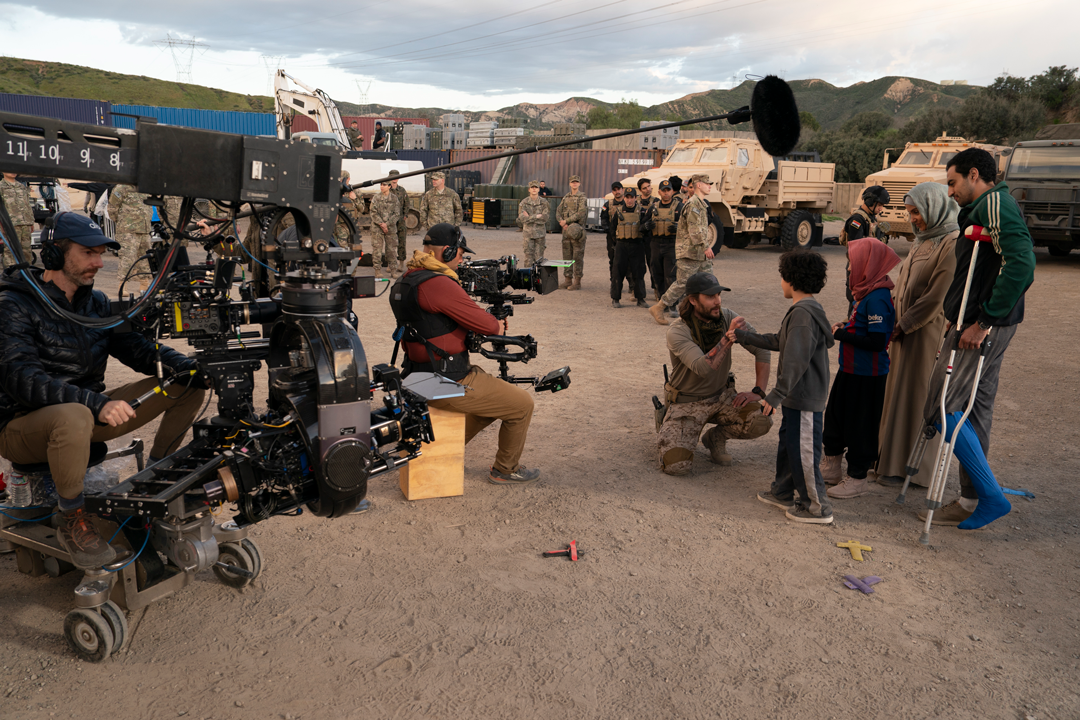
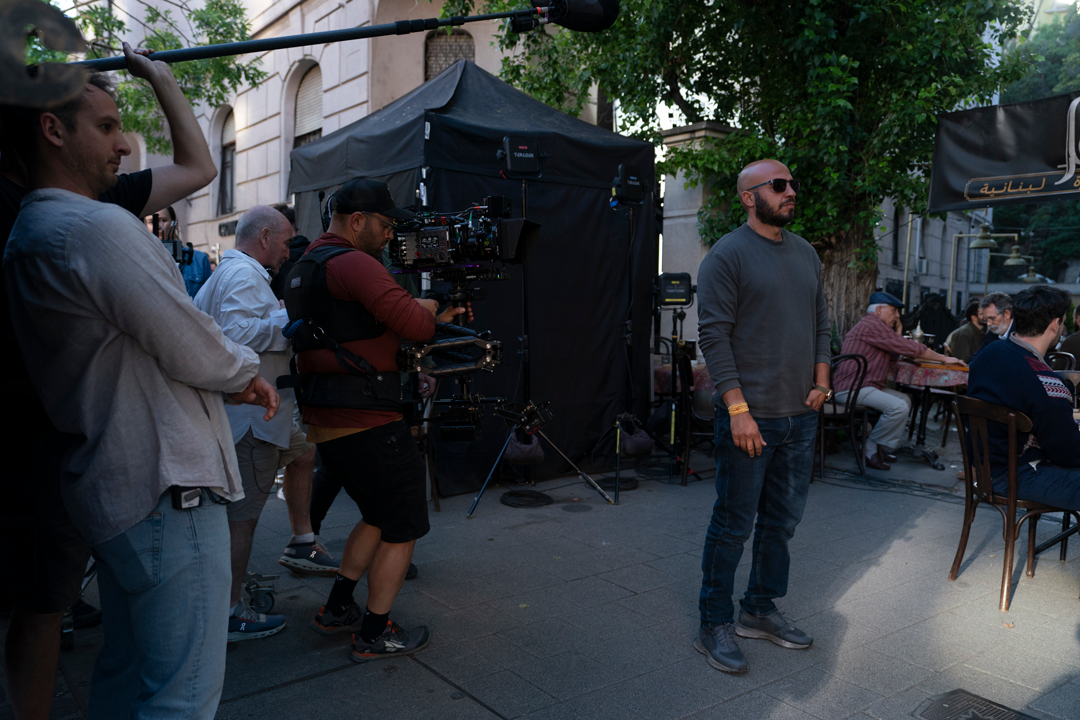
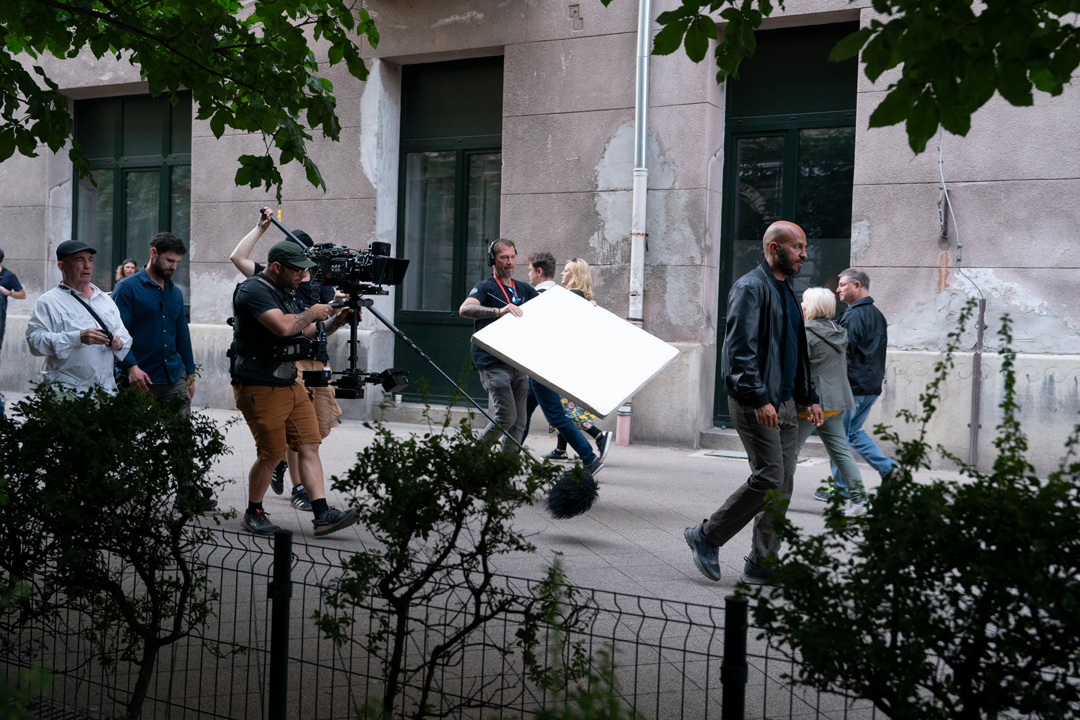
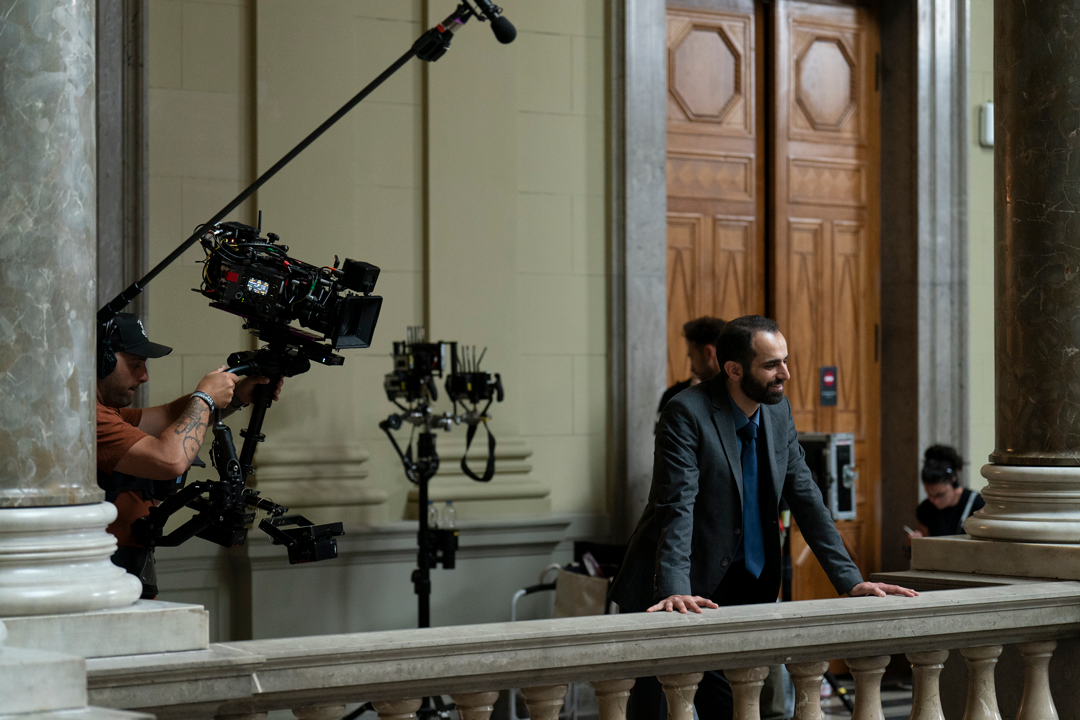
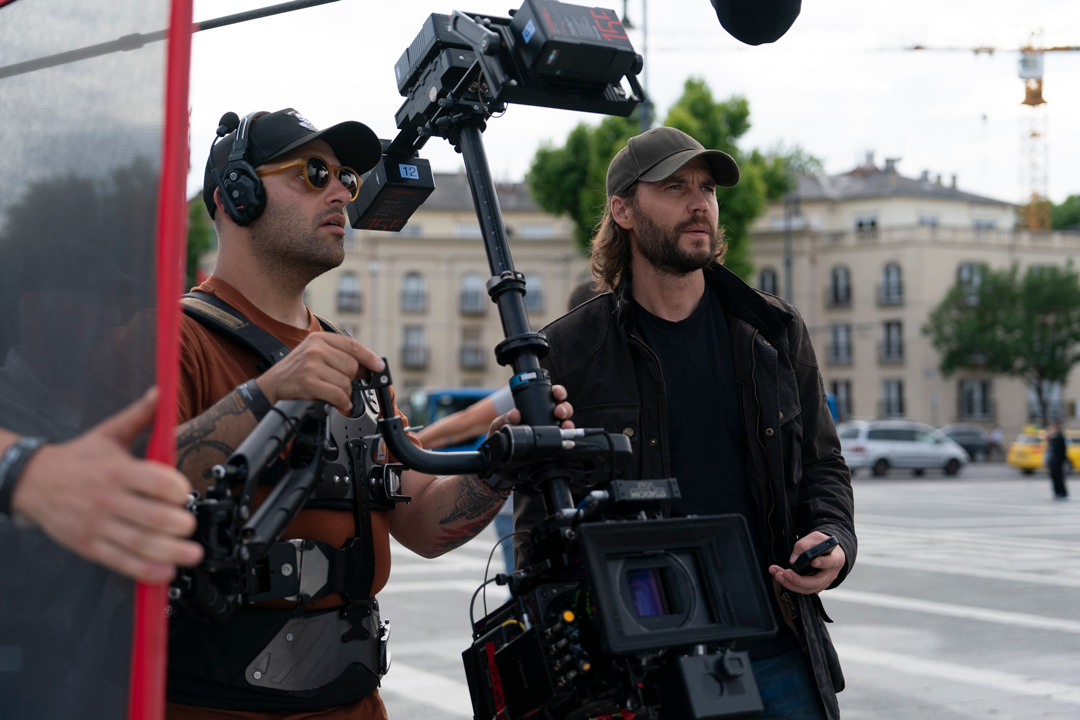
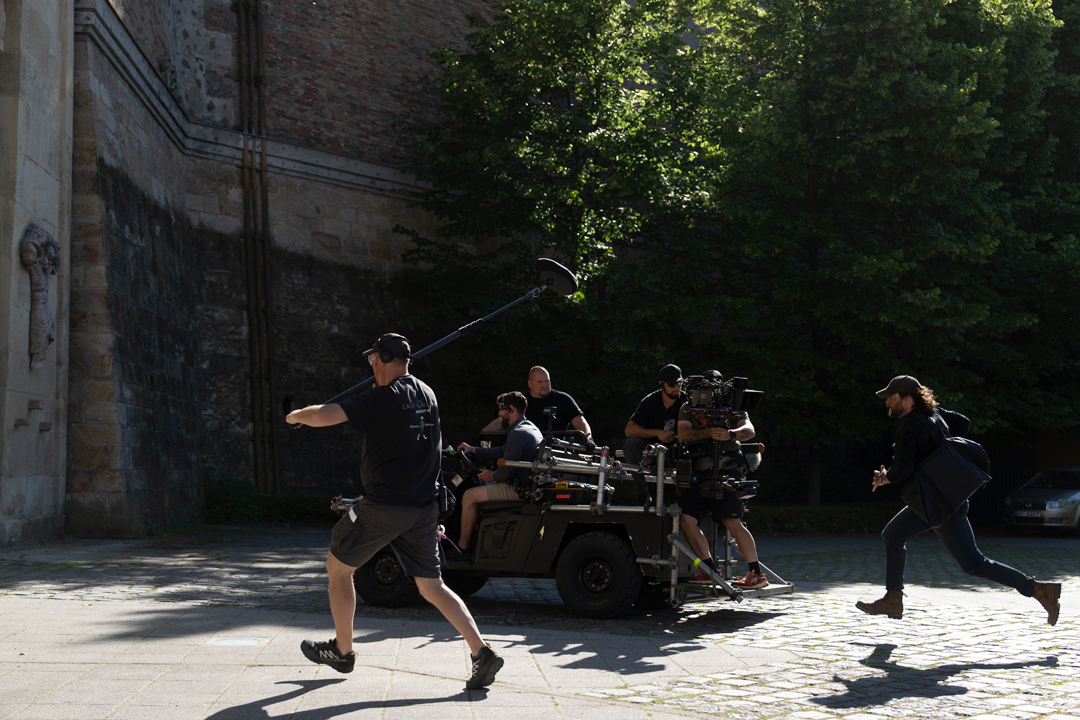
Camera Operator Spring 2026
Above Photo:
On the set of The Terminal List: Dark Wolf.
Photo by Attila Szvacsek, courtesy of Prime
TECH ON SET
Sony VENICE 2 camera (w/ 6k sensors)
Caldwell Chameleon anamorphic lenses
Ottoblad spherical lenses
P+S Technovision lenses
Sony Rialto camera extension
Stabileye remote head
Filmotechnic Technoscope F27 and Flight Head FALCON
Matrix remote head
Various Scorpio cranes
Chapman/Leonard and J.L. Fisher dollies
RELATED CONTENT
Watch the trailer for The Terminal List: Dark Wolf
Kenny Niernberg, SOC
Learn more about Kenny Niernberg’s career and projects at IMDb.com
Content Portal
Making the Transition from Unscripted to Narrative
ITS (Insights, Tips & Stories) Breaking Down Scenes Instinctively
Camera Operator Magazine
SOC Creative Spotlight Presented by Hulu
Camera Operator Summer 2020 – Making the Transition from Unscripted to Narrative
BEHIND-THE-SCENES
Select Photo for Slideshow
SIGN UP FOR THE FREE DIGITAL EDITION OF CAMERA OPERATOR
Click Here
ENJOY PAST ISSUES OF CAMERA OPERATOR
Click Here
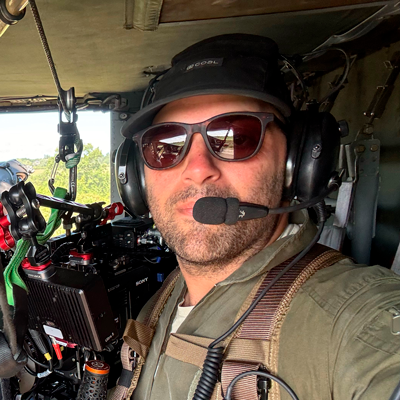
Kenny Niernberg, SOC
Kenny Niernberg is a camera operator and Steadicam operator with nearly two decades of experience in film and television. Raised between Santa Monica, California, and Philadelphia, Pennsylvania, he developed an early passion for visual storytelling through skateboarding and snowboarding films, which inspired his pursuit of a career behind the camera.
After earning a degree in Film Studies from the University of Pittsburgh, Niernberg began his career in action sports, working primarily on snowboard films. Following two years spent filming in the mountains, he relocated to Los Angeles to pursue opportunities in narrative filmmaking. While working as a prep technician at Birns & Sawyer in 2007, he discovered Steadicam and enrolled in the Steadicam Operators Association workshop in Philadelphia. The experience sparked a lasting passion for the craft, and by the end of 2008 he had purchased his first rig and was building experience on independent films and music videos.
As the 2008 Writers Guild strike reshaped the industry landscape, Niernberg transitioned into reality television, where he spent nearly a decade honing his skills as a camera operator while continuing to work on narrative projects whenever possible. In 2017, he made the decision to focus exclusively on scripted storytelling, a move that marked a turning point in his career.
A major breakthrough came when Niernberg was selected as A camera/Steadicam operator for Season 4 of HBO’s Insecure. Since then, he has established himself as a sought-after camera and Steadicam operator across both episodic streaming and feature films. Most recently, his work can be seen on Netflix’s The Boroughs and the upcoming second season of The Terminal List: True Believer. He also recently completed production on the western feature Blood on the Promontory, filmed on location in Utah.
Photo courtesy of Kenny Niernberg
David Daut
A writer and critic for more than a decade, David Daut specializes in analysis of genre cinema and immersive media. In addition to his work for Camera Operator and other publications, David is also the co-creator of Hollow Medium, a “recovered audio” ghost story podcast. David studied at the USC School of Cinematic Arts and works as a freelance writer based out of Long Beach, California.
SPECIAL THANKS TO OUR ADVERTISERS