


Thunderbolts*
New Look, New Techniques, New Avengers
A Conversation with Paul Sanchez & Matthew Petrosky, SOC
By David Daut
With 36 feature films since 2008 (not to mention numerous shorts, mini-series, and TV movies), it’s safe to say that the Marvel Cinematic Universe has been something of a cultural force for the past decade-and-a-half. The downside, however, of such a successful run is that there is increasing risk of the product becoming stale. Thunderbolts, in turn, is something of a departure and a refresh for Marvel Studios’ brand of superhero films, centering around a group of anti-heroes—painting them in slightly darker tones, dealing with heavier subject matter, and eschewing some of the VFX-heavy style of earlier films in favor of a more grounded aesthetic.
To talk about balancing these new elements against the tried-and-true Marvel formula, Camera Operator spoke with Thunderbolts A camera operator Paul Sanchez and B camera and Steadicam operator Matthew A. Petrosky, SOC.
After being “blipped” back from oblivion only to discover that her sister—Avenger Black Widow—died in the intervening five years, former assassin Yelena Belova finds herself understandably questioning her place in the universe. Sure, she still takes odd jobs from Valentina Allegra de Fontaine, the shady director of the CIA currently under investigation by the U.S. Congress, but her heart just isn’t really in it. She ultimately agrees to “one last job” that ends with her trapped in an incinerator with Valentina’s other loose ends, including the disgraced ex-Captain America and some guy named Bob. Together, this ragtag group has to work together to survive, take down Valentina, and maybe do some good in the process. Thunderbolts is directed by Jake Schreier from a screenplay by Eric Pearson and Joanna Calo and stars Florence Pugh, Sebastian Stan, Wyatt Russell, Olga Kurylenko, Lewis Pullman, Geraldine Viswanathan, David Harbour, Hannah John-Kamen, and Julia Louis-Dreyfus.

Camera Operator: So, Matt, I know you’ve worked on several projects with Marvel now, but Paul, I believe this is your first film with Marvel Studios. Is that correct?
Paul Sanchez: I did Spider-Man 3 years ago with Sam Raimi, but I guess that wasn’t yet a part of Marvel Studios. I definitely got much more involved in this one.
CO: Sure. Well at the very least, since it’s been a little while, I’m curious what it was like for you stepping into this world. And for you, Matt, how would you say Thunderbolts was different from other Marvel productions you’ve worked on in the past?
Sanchez: For me—at least initially—it wasn’t really different from any other larger film. I’ve worked on other big, franchise movies before, and there’s always the concern of wanting to stay loyal to a larger idea, balanced with a desire to do something unique and different. The audience has certain expectations; they want something new, but they don’t want something too new.
It wasn’t until later on—even after principal photography—when I really started to understand how they put this film together, and who gets involved. I was invited to a test screening to see what my reaction was to it. That’s pretty unusual. I like the fact that friends and family really are the focus group, and then we started to add more to really understand what kind of story needed to emerge. In the end, I was really impressed. It’s the story we intended to make, we just had kind of a difficult time figuring out how to get there. Fortunately, with Marvel there are resources to do that.
CO: And for you, Matt, you’ve been around the road a few times with these movies. What was it like from your perspective
Matthew Petrosky: Yeah, I think Paul touched on a lot of it. It’s interesting working in the Marvel universe. There is a certain expectation, which puts a bit of pressure on everyone—not just for the storytelling to be at a certain quality and level of craft but also to be something new and exciting. I think the biggest thing with this one comparatively was that there was very much a desire from both Marvel and the filmmakers—Jake [Schrier, director], Andrew [Droz Palermo, director of photography], the art department, special effects, everybody—to do a lot of things practically and in-camera.
This was something that sort of started with another Marvel project I worked on called Werewolf by Night, and Thunderbolts kind of continued along those lines. It’s obviously still a movie that features a lot of visual effects, but a lot of the approach is different. Instead of creating whole worlds with visual effects, we’re using them to augment, extend, and enhance what we were doing in-camera. It was honestly really challenging and exciting. I got into movies because I like the practical craft. When you have real sets and real props and real things that the actors are interacting with, you just get a more nuanced, genuine performance out of everyone in front of and behind the camera.
This was a different kind of project for Marvel in that regard. We worked hard to do the stunts, explosions, special effects, and camera movement practically, and it adds realism. Even though it’s a big story with larger-than-life superheroes, it’s also a story that’s very intimate and personal. I think that choice to do a lot of things practically adds to that.
CO: Digging into that a little bit more, there was an interview in Variety with director Jake Schreier talking specifically about the “shame room” sequences. I guess Kevin Feige had given a mandate to really make those sequences feel different from anything else Marvel had done before, and shoot as much in-camera as possible. Thinking about those scenes specifically, can you talk about what went into shooting those sequences?
Sanchez: They were quite complicated and really exciting to do. To Matt’s point, early on we talked about needing this story to be grounded, and that was something everybody wanted to do. It was only later that we shot more characters in front of grey screen—we didn’t use green or blue screen—but almost everything else was practical. Each shot was really well designed, and it was complicated because every moment had to connect. There are all these match cuts, but the camera often did unusual things, like twisting into the next shot.
It was really magical to see, particularly in the forest. Yelena (Florence Pugh) is there with the younger version of herself, and she runs away from them and hits a wall, kind of like in The Truman Show, and eventually she breaks through. We did a number of shots—both Matt and I—in this whole sequence of events in that forest. I tracked her with a Grip Trix vehicle, and she ran and busted through the wall into a black limbo. And then we match cut to a shot in which she was suspended in air, probably 25 feet up?
Petrosky: Yeah, 20 or 25 feet. And then a descender rig with the camera that matched that.

Sanchez: Yeah, and the camera was linked, so we had a decelerator that dropped the camera at the same time she dropped on top of a table. That was tricky, because I had to twist the camera. These are very difficult shots to do and land each one. They happen so quickly, we had to figure out how to engineer each of these shots. We had the right tools, but it takes quite a bit to really finesse and get each frame right and to engineer the inertia, because you’re moving the camera so quickly. In the end, it was really something fun to watch. We really want our audience to wonder what’s going to happen next, and I think the shame rooms were really well done.
We also had the benefit of having the editor on set every day, cutting the footage as it came in. Once a shot was done, I’d walk off set to Harry [Yoon], and it would already be assembled. That was a great benefit as operators to see each shot, each cut, and how it worked within the sequence.
Petrosky: Yeah, having the editor there was unique and helpful. There are so many people, it’s a lot to coordinate—stunts, special effects, visual effects, grip rigging, and all sorts of other things. They’re very complex transitions that—like Paul was saying—happen in just a few seconds. It’s a unique way of interconnecting all these rooms and making the world feel really twisted and also kind of boundless and seamless. You really don’t know where it’s going to go or how it’s going to go there, and it’s just visually interesting. Some of those transitions are things I’ve never seen done before, like rolling a camera, handheld, while someone comes out of a floor. Changing the dimensionality of these spaces so they feel sort of twisted on their head in a way that matches the state that the characters are in.
Sanchez: The interconnecting shots are often 90-degree twists on nodal. So, there’s a gymnastics move with the camera. That’s a difficult transition to operate a camera—often handheld—and to twist it and land on those frames. I have to say, we had a remarkable crew. Not only were they experts and so good at what they did, everyone was just such a good human being. We really worked well together, and with a crew that size, that’s pretty exceptional. I give a lot of credit to the producers for doing that. It really does matter that we work well together. Just because we’re good at what we do, if we’re not good at working with others, the whole thing doesn’t work.
Petrosky: I agree. Just a great experience from a cast and crew perspective. And it starts with Jake and Andrew who asked a lot of us but also supported us immensely. It was an absolute pleasure to show up every day. It was incredibly collaborative, and I think we all elevated each other in that way. Brad Rea and Kenny Bolton, our dolly grips; and Bill Wynn, our second unit dolly grip, really shined on that front too. They are so invested—you don’t have good camera movement without good dolly grips.
CO: You’ve both talked about the look of the film and how there was the desire to make it feel a bit more grounded than perhaps some of the other Marvel movies have been. It’s an interesting film because you still have these big, fantastical elements that the Marvel Universe is known for, but it’s packaged inside a slightly darker tone, with a story about depression and isolation. How did dealing with those themes define what you both were doing as camera operators?
Petrosky: I feel like the camera was very connected to the characters, and that happened in different ways. Even in the fight sequences—like the incinerator at the beginning—it was not at all haphazard. It was very purposeful and exacting. And we wanted to connect and marry the camera to some of the characters and their movement.
In the process this interesting thing happens where subconsciously you build a connection between them and the audience. Sometimes it was as simple as just being very close and intimate, like when we were in the attic shame room. I remember Paul and I being crammed in close with Florence and Lewis [Pullman], and we are all sitting on the floor, and it was just a very intimate, calm, quiet set, until the moment it becomes unhinged.

Sanchez: It’s more of a larger thing. We walk in, and it is a full set. We’re not surrounded by blue or green screen, which is really helpful. Then there’s the lighting, and then the actors come in in costume, and they have their ideas, and so we really read the room—the tone of it all. As an operator, I try to decide when it needs to be a snappy move or when it is a moment that two characters are connecting and you’re moving the camera in a way that matches that. You have to kind of listen to the music; youreally have to sense what the tone is. And those aren’t directions we get to begin with. Any operator—most of us—we line up a shot, and then if we’re going to do a push in, we choose the speed. After that we get directed—whether it’s too fast, too slow—but the director can’t change what’s not there. Directors need to have something to change, and that’s sort of what we do.
That’s an important part of everyone’s contribution to this thing. We’re given a script and characters and certain kinds of parameters, and then within that, we think, “Okay, this is what I would do, and this is what I would want to watch.” So, to your question about tone and about isolation and mental illness, I think there was a serious quality to it, but there was also a lightness to it too. These stories have to be funny in a way. They have to have humor and wit, and they do. I remember, we started with the fight sequence in the vault, because that was the only set completed and ready to go. It was a very ambitious and difficult thing to get all of us together to get that done in 10 days. But it wasn’t until after we shot that the story started to come together for me. When you start off with so much action, it’s hard to understand what the real story is. You read the script, and you understand it, but it takes on a life of its own once you see the characters and you see these actors bring those characters to life.
For me, it really clicked when Yelena and Alexei (David Harbour) are on the New York street, and she is just fed up with the whole crew and she runs away. Alexei catches up to her, and they have a father and daughter discussion about what had happened and how they’ve hurt each other. This scene really seemed to me to be the pivot point, particularly in the fact that this was about Yelena’s story. It’s from her point of view. Once we did that scene, I got it. I understood more about what this story was really about.
Petrosky: It’s interesting hearing you say it like that. And it was, again, a testament to the quality of everyone—the cast and crew—that you can create the connections at that scale.
Sanchez: There was a lot that was asked of us. This was a very ambitious schedule. I know everyone gets the idea that films like this have a big budget and long schedule, but that’s not how I felt about it at all.
We did a lot of work—sometimes five pages or more a day—with very complicated stunts, within 10 hours, because that was the mandate. That meant we didn’t get a lot of takes. Everybody had to be really focused and really know what we were trying to achieve. We didn’t have time to figure it out on the day. It was firing on all cylinders, every day.
Petrosky: There was an intensity to it. There were a lot of moving parts, and like you said, to get all of that in sync within a couple of takes is not an easy feat. You’re really pushed to try to set yourself up for success and to coordinate things with a lot of other departments. It was a pleasurable experience, but it was an intense experience.

CO: Oh, yeah. I bet. Any big movie like this has its own set of challenges, but especially when you’re working on a more compressed timeframe. I’m sure, like you said, you had to be at the top of your game all the time.
Petrosky: Yeah, you don’t want to miss something when there’s a huge reset, because the wall has to be rebuilt or someone has to take a fall in a descender rig again. And then, even on a big movie, the sun still sets. Time itself is a limiting factor, and there’s a lot to do in that time.
Sanchez: And there were long takes, which meant running around with these cameras and all that reset. It was a very complicated thing to do. I want to mention that Matt and I had never worked together before. Thinking of the relationship between multiple cameras and camera operators, most of the time it’s pretty good, but it’s not always that good. Sometimes there’s conflict, and sometimes it’s a real struggle to make it work. That said, it really was such a pleasure to work with you, Matt.
I’ve said this before, but we have very similar responsibilities. Sometimes I have the shot, and sometimes Matt would have the shot. I don’t do Steadicam, Matt does. There are certain specialties that he has, and there are times when we sort of leapfrogged. Matt would get ready for another shot while I was shooting, and we would leapfrog from shot to shot that way sometimes.
But each job—A camera, B camera, C camera, D camera—those are all specific skills. The skills you need for A camera can be similar to B camera, but B camera has its own specific skills, and you have to be really good at B camera. Matt can do A camera, and does A camera, but you also know what the job is for B camera. Understanding where you can go and what you can change. When I do B camera, I want to make it really clear to the A camera operator that I understand this is a different job. I’m not going to try to be an A camera operator on a B camera. It doesn’t work. In the end, the hope is that it’s seamless, that we’re just a bunch of cameras.
Petrosky: I appreciate that. It’s very kind of you to say that. And I feel like Paul and I hit it off immediately. Before we started shooting, Paul and I jumped on a FaceTime call just to kind of connect and feel each other out; we thought maybe 10 or 15 minutes to meet and say hi. An hour-and-a-half later, we’re like, “We’ve got to wrap this up. Let’s setup another time to chat again.” We just clicked as filmmakers and as people and that continued on set.
I really enjoyed the collaboration with Paul. I’ve had other good collaborations over the years, but this was unique in that I feel like, Paul, you have an exceptional eye, and are truly a well-rounded filmmaker. Paul also teaches and is a passionate storyteller, a lot of our conversations weren’t just technical things. It was more like, how does this serve the character and the story? I really enjoyed that experience. And also lots of morale support. I would do another movie with Paul in a heartbeat.
Sanchez: I think it’s important. Danny Boyle said he surrounds himself with filmmakers. They may specialize in being a script supervisor or lamp operator or dolly grip or focus puller, but ultimately, they’re filmmakers. He just happens to be the guy who likes to get up in the morning and tell people what to do.
When things aren’t clear to me, I don’t quite understand what the shot is telling me or what this character is doing or what that line in this scene means, and I can’t get past that. I always want to investigate, “what does this mean?” So, my relationship with the director is important and I can go to them and ask when I’m unclear as to what this line means, or I’m unclear what this scene is about. I know I’m sort of exposing my ignorance, but it’s important for me to do so, because then I can get behind what everyone’s doing. I have a clearer understanding and purpose, and so all my decisions are based on knowing that meaning.
Petrosky: I think it helped, too, that you had a bit of a history with Jake. You guys did Skeleton Crew together, right?
Sanchez: That’s right.
Petrosky: That was honestly helpful for me, because you could go to him and have those conversations, and I just kind of piggybacked on that. I was like, okay, cool, Jake wants to talk about this stuff. Sometimes he didn’t, but usually he would give us his reasoning and that—like Paul said—was really helpful, because then we know not just what we’re doing, but also the purpose behind it and what the end goal is.
Sanchez: I wish I had a more concrete example, but it’s just an overall philosophy and approach that I’ve taken early on and found there was a benefit to. It also establishes with the actors and with the director that you’re concerned about the story we’re all trying to tell.
I have to say, Jake was dedicated to this thing. He was enormously focused. There are a lot of really great directors, but there are not a lot of directors who can work inside of a franchise like Marvel and do it as well as he did it. You need a very specific kind of skill and a temperament in order to get through that.
But was he always approachable? No. That was delicate sometimes. Did we have differences? Definitely. He and I had differences about it all, and I expressed them. He’s the director and ultimately it’s his call, but that didn’t keep me from expressing my point of view. Even when you get pushback, I think it’s still important to keep trying to be a part of that creative process. It may not mean they don’t want your contribution, it just means they just disagree with you.
Petrosky: Jake did come prepared, he really did his homework. Again, you think, oh, big budget movie, lots of time. Meanwhile, Andrew and his grip and electric crews are pre-lighting and trying to rig stuff to stay ahead every weekend. It’s a lot to do and not have a padded, long schedule. I think it’s a great-looking film, and that wasn’t an accident. A lot went into making that happen.
Sanchez: Yeah, definitely. No one had it easy. No one.

Sanchez: One thing we haven’t talked about is the very first shot of the movie. That was a very challenging shot to do because of where it was. It was on the 118th floor of the second tallest building in the world. 2,700 feet high. The problem was there’s a giant needle on top too, which also works as a lightning rod. We got a camera and a crane up there, and every time we were trying to rehearse this thing, we’d hear, “lightning strike!” Then everybody has to find their way down and wait for half an hour after the last lightning. We did that five times, just for rehearsal. The following morning is when we were able to get the shot. And we weren’t sure whether Florence was going to do the stunt more than once. It’s a little unnerving to do that as the first shot of the movie; start on an extreme close up and then have her jump. Fortunately, she was able to do it several times. She enjoyed it, I think. After that, we had a base jumper that jumped at least five times. We had multiple cameras and drones on that sequence.
It’s a huge logistical thing to shoot at the top of that building. We went through safety courses and all kinds of stuff in order to do it. And then we went down to the plaza area where she leaves. She’s walking through this marketplace plaza in Kuala Lumpur, and turns around to watch the building blow up. We did it in one take, so we were able to complete those two shots in one day, which is pretty remarkable. And we did really blow up that building. It was probably enhanced with visual effects, but the base of it is practical. It’s a tightrope of everybody doing their part and getting the timing of it right. It was really a great way to end the shoot. It was a rare opportunity to be at that height and to try to pull that off.
CO: There was another specific shot I wanted to dig into a little bit. Towards the start of the third act, there’s the sequence where the other members of the team finally meet back up with Bob (Lewis Pullman), and he’s in his full Sentry regalia, and there’s the big fight scene. What’s interesting about it is, rather than following the action bouncing around to all the different characters, the shot stays locked on Bob while all the other characters kind of come in and out of frame. Can you talk a little bit about how that shot came together?
Sanchez: Bob was a tough one. Even amongst all of us, we were talking about, what’s his story? How is it going to connect with the team? Particularly that moment where Bob is now Sentry, and has, in a sense, betrayed the group. We all kind of wondered, how is this going to go? He’s this moral problem of good and evil, that struggle. We see that there’s this struggle that happened in his personal life, and now he’s full-on evil—at least as the other characters see it. But the strength is that we hadn’t seen his powers yet. The shame rooms come when he touches people, so clearly had some kind of influence on the environment around him. But now he is this new person, and his power is on full display, so he just stood there. Everybody came at him with everything they had, and nothing seemed to help at all. Moving the camera around would create action, but it doesn’t help suggest where the character is in that moment. He’s apart from the others. He doesn’t have to move from where he is.
Petrosky: It’s sort of a visual representation of the power and gravity that character has that even the camera can’t look away. It’s all sort of anchored to him.

Sanchez: Yeah, he’s the hub of this thing. We even push in on him too. He has this gravitational force. He’s a force of nature now. People practically bounce off of him. Alexei goes after him and gets thrown out of the building.
It’s an interesting thing; the skill of trying to figure out what the camera does and how to design this. That’s the thing about these larger films: so much has been prevised and worked out in advance. The stunt sequences are often prevised now with the stunt coordinator and camera, and then they cut it so we know exactly what the screen time is, because it’s really important as to how this fits into the larger run of the film. We come in and we shoot as much as we can within that framework. Sometimes when we’re on set, we do certain shots and it’s like a part of a mosaic. It’s one piece of a bigger picture. I can’t quite see the forest through the trees. Looking back on all of it, that is why that worked. At the time, I don’t think I understood that entirely. It just seemed like a good shot. It seemed appropriate to what he was doing. It was only later that Sentry—with Valentina (Julia Louis-Dreyfus)—paces back and forth, and the camera follows him as he’s questioning his role and his presence. He starts to question, so then he starts to move.
It’s interesting to really deconstruct what we did. There are so many parts in it that we don’t know what we’ve done until we look back and see it all cut together. There was a particular scene after they’ve escaped the vault in the early part of the film. They get blown out of there, and now they want to know what’s up with Bob. Walker (Wyatt Russell) is very confrontational with Bob, and Bob says to Walker, “You’re an asshole.” When we shot it, I thought he was just stating a fact that, yes, Walker is not likable. But in the screening, it was changed to Bob sort of being confrontational. It was the beginning of Sentry in him to call Walker an asshole. After the screening, I mentioned this to Jake, and he said that was changed in the edit in order to try to reinforce the idea early on that there was this other side to Bob. Sometimes we do things and we think it’s one thing, and then in the edit it becomes very different. But as I said earlier, and I still stand by this: it is the story we intended to tell. You just have to finesse these things to make sure it’s clear to the audience with all these different stories going on at the same time.
CO: I think it speaks to what you were saying earlier about it being a collaborative process. Making a movie is managing all these moving pieces, and it doesn’t come together until it comes together. It’s not until you’re in the editing room putting all the pieces together that you get the full picture of what it’s going to be. That’s why you have to have that trust in the script, trust in the other people on the set, and be able to trust the process even when you’re so zoomed in that you can’t necessarily see the full scope of the picture.
Sanchez: I don’t know if anyone does that at every moment you’re there. Shooting the film is just a very short period of time in the life of making a movie. From the very beginning of writing the script and going through all the different drafts to finally when the cast is brought on. What we actually do is a very short window, but it is the moment in which a lot of pieces have to come together. A ton happens in post to really sculpt a story and bring it to life with music and sound and all that. We suspend our disbelief that this is going to be a good movie. I just assume that it’s going to be. Maybe in the last week or two, I might wonder if the movie is going to add up to something, but for the most part, I’m there to try to figure it out.
I don’t have the luxury to choose those things that I know are going to be great, and I don’t know how to choose that. All I can do as a crafts person—because that’s what I am, ultimately—is to build the house. I want to build something that’s really well constructed, that is what the blueprint said it was and that is what the clients wanted. Would I personally want to live in that house? Maybe, maybe not. But that doesn’t mean I can’t try to understand what it is that we are all trying to do. My personal belief as to whether this is good or not matters less than doing good work. Honestly, almost every movie I do I like to think is good, because it took so much effort to make it.
But I have to say, for this movie—and I don’t say that for everything I work on—I was quite proud of what we did. I really stand behind the work. I think everyone did a great job, and it’s all up there. It wasn’t an easy thing to pull off, and it seems like the audience and the fans really liked it. I think we really pushed this story, this franchise, in a direction it needed to go, and I think the fans were really enthusiastic about it all. I think that’s awesome. I would do it again. And I don’t often say that—particularly about something the size of a Marvel movie, I don’t usually get super excited about these kinds of stories—but yeah, I would do it again.
Petrosky: I agree. I’m proud of what’s on the screen, and I think that it’s a testament to just how good everyone was and how hard everyone worked. It’s all there, and that just feels good.

Camera Operator Summer 2025
Above Photo: Operators Paul Sanchez (left) & Matthew A. Petrosky, SOC, filming a scene for THUNDERBOLTS* with Florence Pugh. Photo by Chuck Zlotnick
Photos courtesy of Walt Disney Studios/MARVEL & Matthew A. Petrosky, SOC
TECH ON SET
We primarily used ARRI ALEXA 35 cameras and customized Panavision Ultra Panatar II anamorphic prime lenses and shot a combo of 2.39:1 and IMAX 1.90:1. We also used zooms, spherical lenses, low-angle prisms, ARRIHEAD geared heads, O’Connor fluid heads, Cartoni Lambda heads, TANGO/SWING heads, Steadicam, a custom “rickshaw” with moon tires, SlingShots and Easyrigs, gimbals, drones, arm cars, and helicopters. We also had a variety of Chapman dollies, and we had a full complement of sliders. In the U.S. we used Hammer and Chapman cranes, and Chapman M7 Evo remote heads. In Kuala Lumpur it was a Filmotechnic Flight Head Colibri and a Technoscope F17 on the roof for Florence’s jump.
For Steadicam, I used an XCS UH3, 1.75-inch post with the Tiffen M-2 Volt gimbal, a Pro Vest (that I’ve loved for twenty years) and a Klassen vest, and both a PRO and NB Stabilizer arms.
—Matthew A. Petrosky, SOC (with help from maestro Jamie Pair, Key 2nd AC)
RELATED CONTENT
Watch the Trailer for Thunderbolts*
Paul Sanchez
Learn more about Paul‘s career and projects at IMDB.com
“The Old Man: Not Moving the Camera,” Spring 2023 Camera Operator
Matthew A. Petrosky, SOC
Learn more about Matthew‘s career and projects at IMDB.com
“The Six Triple Eight: A Tale of Two Steadicams,” Winter 2025 Camera Operator
Content Portal
So You Want to Be An A Camera Operator, Atlanta, GA, June 29, 2025 (Audio)
PHOTO GALLERY
Select Photo for Slideshow


SIGN UP FOR THE FREE
DIGITAL EDITION OF
CAMERA OPERATOR
Click Here
BEHIND-THE-SCENES
Select Photo for Slideshow
Paul Sanchez
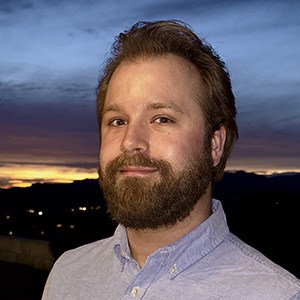
In 1984, Paul Sanchez left the small seaside town of Santa Cruz to pursue photography at the San Francisco Art Institute. Ten years later, he found himself working as a second assistant on the set of Mrs. Doubtfire. It started a career that included operating on The Matrix: Reloaded; Sideways; 3:10 to Yuma; Walk the Line; Mad Men; The Old Man; and most recently, Thunderbolts*. In addition, he has made many award-winning documentaries with his wife, Mary Trunk, over the past 35 years.

Matthew A. Petrosky, SOC
Matthew Petrosky, SOC, became enamored with cameras from an early age in his hometown of Pittsburgh, PA. He eagerly pursued this passion, graduating with a BFA in cinematography from the North Carolina School of Arts, where he also joined the SOC as a student member after meeting the late great Bill Hines. After graduation Matthew moved to Los Angeles, CA, and while working on indie films saved up his days to join Local 600. After building his career for 18 years in LA, Matthew relocated to Atlanta, GA. Matthew’s passion for filmmaking has, so far, resulted in nearly 80 operator credits that include Mud; Pineapple Express; Midnight Special; Our Brand is Crisis; The Tomorrow War; Fast and Furious Presents: Hobbs & Shaw; Werewolf by Night; and Thunderbolts*.
Matthew lives with his very supportive wife, their two young daughters, and a scruffy dog. When he’s not playing with cameras, or trying to keep up with his daughters, he is pursuing his passion for aviation as a pilot and looking for any excuse to get outdoors.

SPECIAL THANKS TO OUR ADVERTISERS

